[00:00:02] Speaker A: If your supply chain runs through Asia, why not work with a company that has been connecting Asia with the world since 1971? DiMerco Express Group.
Welcome to the Freight Buyers Club. I'm Mike King. The last time Jeffrey Sheet, the CEO of Democo Express Group was on the was in May 2025. The US and China had just called a 90 day tariff truce and everyone was racing to beat the deadline. Eighteen months on, the tariffs have been rebuilt on a different legal footing. Taiwan is exporting more than at any time in its history and a single crate of AI servers can be worth millions of dollars. So today we're going back to the Asia trades with a forder that lives on them. The Trans Pacific Intra Asia Sourcing Taiwan tariffs and what AI is doing both to the cargo and to the business of moving it. Jeffrey, welcome back to the Freight Buyers Club.
[00:01:11] Speaker B: Mike, how you doing? Jeffrey, long time no see and no top. Yeah,
[00:01:15] Speaker A: no, I'm very well, I'm very well. It's very good to see you again and I've got a lot to ask you today. But before we get going, if you're watching on YouTube or Spotify, please do hit subscribe on YouTube. We're trying to reach 10,000 subscribers by the middle of next year and every hit really does help.
So Geoffrey, when you were last on the show, everyone was rushing to ship before the truce ran out. Looking back, what did shippers get right and what did they get wrong, would you say?
[00:01:48] Speaker B: Yeah, I think that because the geopolitical issue for a couple years already. Right, including those, the war in Europe and the tyrann between United States and all the country.
So when I from my perspective, when I look at the shipper, what they have done in the last 18 months, which is I think is right. First they're going to expanding their supply chain based on the pre booking selective the freight forwarder who have the MQC or the BSA for the L3, I think this is important.
Second, they will prolong a little bit there the lead time from the traditional lead type. Maybe add on some buffer in order to maintain and to sustain the supply chain feasibility. That's how I look at what shipper was doing in the last 18 months.
And of course front loading is part of the planning when they are doing those ocean freight for Trans Pacific eastbound particularly.
[00:02:52] Speaker A: Well, any change in the trade rules we get a spurt of front loading essentially.
[00:02:57] Speaker B: Yeah, yeah, correct.
[00:02:58] Speaker A: Back when we last spoke you were saying that the move of manufacturing out of China into Southeast Asia would keep going.
How would you describe the rate of that. Has it gone faster or slower than you expected?
[00:03:12] Speaker B: I say it depends on the industry.
So as you know, I visit customers quite often. So particularly last year I went to the southern part of China.
If you talk about those communication related industry, actually they shift because some of the tariff issue come into the United States.
But unfortunately certain industry, the skill set in Southeast Asia country, particularly like Malaysia, Thailand or even Vietnam. So some the high skill set certainly they already slow down or even we see some move back to the China.
So I think this is something I appreciate. Yes, yeah. But of course you also have the Taiwan plus.
So a little bit different because earlier I'm talking about the Chinese owned manufacturer. But when you look at the Taiwanese owned manufacturer, they already set up in China, particularly over 30 years ago. But because China plus one and Taiwan plus one, they ship some of their manufacturer into for example Thailand, Vietnam or even Malaysia, but that one will stay in the Southeast Asia country. So I think a little bit different for Chinese owned and Taiwanese owned manufacture.
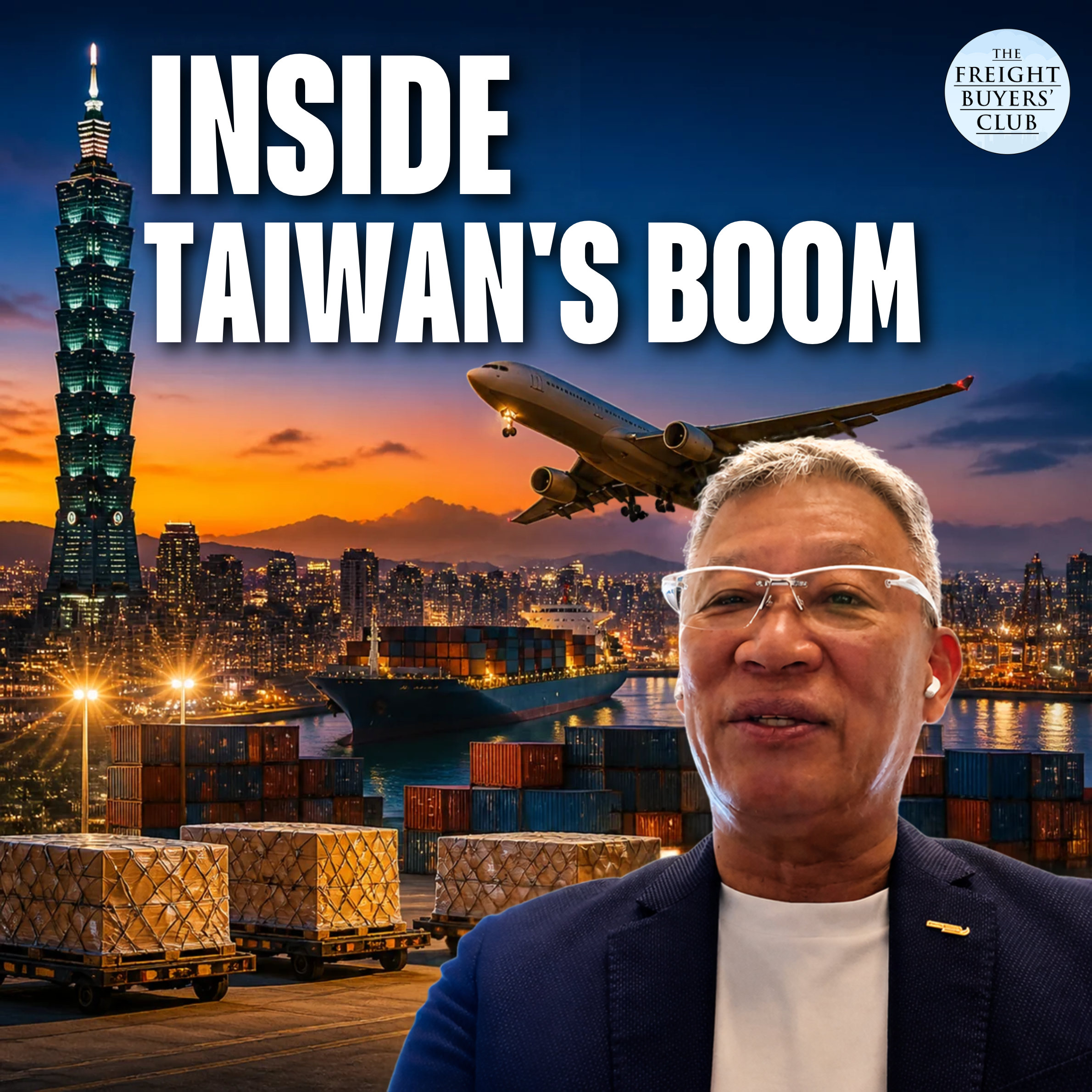
[00:04:33] Speaker A: So it's slightly different than what's going on in Thailand or Vietnam or Indonesia, for example. Let's go into Taiwan a little bit because Taiwan's monthly exports in September hit a record $87.2 billion, up about 61% on a year earlier. Shipments to the US more than doubled and exports to Southeast Asia nearly doubled too.
That's 35 months of growth in a row. And a lot of it, or maybe almost all of it is down to AI servers and chips. So DiMerco, as everyone knows, was founded in Taiwan. What's it like on the ground when you go and visit there, Jeffrey, is this the busiest you've ever seen it?
[00:05:14] Speaker B: Actually it is true. I think this is probably once a lifetime we can see the growth from Taiwan, especially Demirco, established back to 55 years ago.
So this year or coming year, I think the AI related infrastructure built in United States actually you see the tremendous growth.
So even for Demerco, the first three quarter, actually we're going to have the board of directors meeting. Actually the number is a significant growth. Not only the revenue but also the profitability wise. So I think that is something I can share. But for the coming future, because the infrastructure actually not only United States, some of the Southeast Asia country, they also built the size of the data center. Of course China in the future they will build their own as well. We already see some of the opportunity for the Merkel, for the future of growth.
[00:06:15] Speaker A: So Taiwan is. People often forget we talk about hyperscalers in the Us all the time. And obviously it was a big factor during the midterm elections. But maybe people forget that over in Southeast Asia. People are building them there as well.
[00:06:29] Speaker B: Yeah, that's right. That's right.
[00:06:31] Speaker A: Can you break down the cargo a little bit for me? I mean, how much of it is AI servers and how is it all moving with in air cargo unpacked? We've been talking about this. I've talked about this a lot with Neil Jones, Sean. We've had some great info from the likes of Avian about how important it's been for the air cargo market. But these are big businesses. It's not all there, is it? It's I guess some of it ocean, I guess some of it project.
[00:06:54] Speaker B: Let me put this way. They say before two years, the infrastructure bill of the AI in the United States, the air export tonnage out from Taiwan probably between 25,000 to 30,000 ton a month. Only right now in between 50 to 55,000 tons and including the last three months, we see the cargo charter flight out from Taiwan to United States. For example, September over 70 cargo flight, October over close to 80 flight. This month the market already project close to 90 cargo flight into United States. Which you don't see this in the past because this is all majority for the AI related product because the commercial flight China airline only have the close to 20 freighter and the EVA only 9th freighter entire their company.
But you know that Taiwan is the hub for all the Asia, including China, Southeast Asia or even some of the Oceania. So the human will come into Taiwan. For ocean you have the, you know the Yang Min line, Evergreen and Wanhai. But Yang Min line and the one and the Evergreen, I think they have more capacity into United States.
So for the AI server complete after the configuration of each customer required because the old model called the GB200 and GB300 which is over million to 3 million or even up to 4 million. But the next generation called the Vera Rubin will probably more than 7 million to 8 million with the estimate of the AV customer configuration of each crate.
[00:08:48] Speaker A: So that's like one crate is worth up to. So you said 2 or 3 million before like even just a year and a half ago. And now it's like 7 and 8.
Wow.
[00:08:56] Speaker B: I went to the Texas to visit some of the customers probably two, three months ago and one of the famous one, the company, not a major one, but the second tier one, they just need to import more than 3,000 to 4,000 AI server crates and 90% alpha in United States. And that is the second tier, if you talk about the first tier one you talk about like a meta like Microsoft, Google or even Amazon. I think there are probably more than 5,000 crates they need to ship. That's why you see a lot of the capacity increased outflow and more than out from Taiwan to United States.
[00:09:41] Speaker A: So a couple of things come to mind there, Jeffrey. I'm guessing that if you're flying this valuable cargo there's got to be a lot of security around it. And I guess the other thing is if you're trying to fly something else out of Taipei, it must be very hard finding space.
[00:09:55] Speaker B: Oh yeah, that's right. That's why the you know the airframe rate right now is much higher than other Asia country from the go through Taiwan to United States because the capacity out from Taiwan is very constrained at this moment. And then you know the pixies and traditional pixies are coming up. So even worse.
[00:10:17] Speaker A: Well, if anyone wanted to check out the Freight Buyers Club newsletter this week, you'll see on there the latest numbers from Baltic Exchange and TAC index that shows that the freight rate right now this is the global average the BAI00 they are now clear of not only last year's peak season but also what we had earlier this year when we had a substantial peak in freight rates after the outbreak of war in the Middle East. So it's certainly worth it's only early November so there is more scope for this to go up and a lot of this is AI driven.
Is it quite hectic at the moment, Jeffrey?
[00:10:55] Speaker B: It is true, it is true because for Taiwanese company actually they've been set up their contract their manufacture in United States on Mexico border over 3040 years ago when they were doing the computer peripheral. So now they all convert to do something related to the AI server. So California, Arizona particularly now the Texas is all growing.
So most of the free we see to those three major areas but of course we can utilize the different gateways such as including Chicago west coast and now you can ship to Dallas directly for ocean you can ship through the Los Angeles and to El Paso or even from miscellaneous and come back to the United States. And Houston port now also becomes very important of the future growth particularly you know that the pole congestion and the contract negotiation in between PMA and the icwu. Right. So this is something and created airframe has a more capacity demand and this constraint.
[00:12:11] Speaker A: A very good point, Jeffrey. We spoke to Gene Soroka from the port of LA last weekend and there is a thing threat of a small number of workers going on strike at LA and Long Beach. But that because because of the rest of the dock workers are not expected to pass the picket line. If that strike does happen and that dispute isn't resolved, then that could be a big problem for that west coast gateway, which let's not forget they have had record volumes coming in through the west coast. And you can see that in the rates. Again, I'll reference the newsletter. We've got some great numbers from Niecex there. The difference between the rates into the US versus from Asia compared to Europe is really quite stark. Asia Europe has been on a downward spiral for quite a number of weeks now months.
Whereas the US rates are holding up really well.
And Noel Hachigaba at Port of Long beach and Gene Sirocco are both very bullish on expecting those volumes to hold up, subject to strikes, of course, as we head into the early Chinese New Year. But just back onto the cargo itself, Geoffrey. So you're managing these supply chains whatever the mode. But when the cargo is so valuable, what happens if a crate of AI related chips goes missing? I mean, who carries that risk? You've got to have a lot of security.
[00:13:29] Speaker B: That's true. Okay, so if I just using one of the example happened probably late August or beginning of the September. You know, the Nvidia is the number one AI the chip company they lost six skip over 11.4 million just for routing from Oakland to Texas.
[00:13:52] Speaker A: Wow.
[00:13:53] Speaker B: So I think that somebody watching on those high end products.
But because the chip they can ship to some other location.
So the way the company like us we have to be sure the security.
So now in the marketplace there's a couple of the different device which you can track from the loading site which is out from the Asia all the way to the final destination.
You can steer the trailer other than the device to track every crate or AV pilot.
[00:14:30] Speaker A: Presumably it travels with a security guard with highly armed as well. No, I don't know.
[00:14:37] Speaker B: Yeah, it is. It is. Now the device you can put into the paddle or even inside of the crate or attach outside of the crate. There's a couple company.
[00:14:48] Speaker A: But do you have like security companies
[00:14:51] Speaker B: you work with them and to purchase the device and attach the cargo.
So now our suggestion because if we talk about the new generation Vera Robin is cost almost 7 to 8 million. Right. You want to make sure because when you attach outside people can take away but you can put inside of the crate. And before you do that you need to click the signal. Then they can automatically connect satellite.
[00:15:25] Speaker A: So even if someone Gets it, you can still find it.
[00:15:28] Speaker B: Yes, yes, yes,
[00:15:30] Speaker A: very clever.
[00:15:30] Speaker B: So when trucker go out for 5 minutes, 10 minutes or not supposed to route for that route over a certain time, they can trigger the alert to notify the freight forwarder as well as the 24, seven people in their control tower. So they can notify the police department as well.
[00:15:52] Speaker A: Just on the exports from Taiwan to Southeast Asia, if I can pivot slightly, Jeffrey, they, they nearly doubled in September. We mentioned earlier that obviously there's, there's hyperscale units being built right across the world, including Asia. But is some of this Taiwanese manufacturers building there or is some of this a stepping stone to the US and how much of it is just Southeast Asian companies and businesses investing in AI there? Because there's a lot of, a lot of big companies and there's a lot of consumers who want it.
[00:16:23] Speaker B: I think for those AI infrastructure, the tier 2 company which we are targeting. So they are like the component company for the contract manufacturer like fastcon, like Pegatron, Withron or Inventech or Qantas. So they have their own manufacturer in Southeast Asia country. For example Qantas in Thailand and the Wishtran also in Malaysia as well as Vietnam. So using this as an example, so certain material they have to ship, let's say from Taiwan to there and merge in transit. For some of the material may be coming from other countries such as China.
Then they will produce but over a certain percent they can make present as a matter in the local country to reduce the tariff in the United States. So September we see Taiwan to Southeast Asia.
Actually they grew significantly. Even the freighter, I mean the cargo wise the volume also increased. So particularly earlier I mentioned about November every week there's a charter freight out from Taiwan to Singapore. Because those AI infrastructure company like Meta, like Google, Amazon, they also built up the data center in Singapore or even the border between Singapore and Malaysia. So one of the major Taiwanese company, they also set up the contract manufacturer in Johor Balu, which you can utilize the cross border between Singapore and Johor Balu. Then they can ship the product out from manufacturer Johor Balu, cross border to Singapore, then to ship to United States. Actually we are helping some customer by doing that.
[00:18:22] Speaker A: Okay, so it goes in into Joabaru in Malaysia and then across the border into Singapore.
Yeah.
[00:18:29] Speaker B: Yes.
[00:18:29] Speaker A: Okay. Well that is very interesting, very interesting trade. I'm going to come back to that as well. A little bit on the shipping side, just on the airports.
I've been getting told about serious issues at Bangkok and long delays. What's the situation there and are you seeing any delays on air cargo particularly elsewhere? I mean Taipei for example.
[00:18:51] Speaker B: Yeah, actually Thailand we see the terminal issue so caused the delay for two to three weeks.
So I think the customer need to plan for that because the major terminal that caused the delay but for out from Taiwan import increase because the manufacturer in Taiwan actually they are expanding.
So like our company, we're doing our import right now much, much better than the export because all the country, all the manufacturer, you name it, for example TSMC globally they're going to expand 17 manufacturer in the global.
But Taiwan they will find the land and grow probably four to five different manufacturers. Other than that, like you know the asc they are the number one of the semiconductor package company. They are also doing the expansion. Then the other company like Delta, they are doing the power and the cooling system.
All the expansion not only in Taiwan, but also in Thailand, India or even Texas.
And some of the racking system also belong to probably top three in the world. Lion they also doing the expansion from the manufacturer of the Vietnam as well with Taiwan and now expanding to Texas United States.
[00:20:19] Speaker A: But is the infrastructure keeping up? Is the delays at Taipei or anywhere else? How's Hanoi
[00:20:24] Speaker B: Taipei a little bit delayed, but the airport wise I think still we can manage that because there are three major terminals in Taiwan in Taipei, Taoyuan Airport. Right. There's the other smaller airport in Kaohsiung. But right now we don't see the major delay of the terminal but we do see the growing. Just like I mentioned earlier, the volume increased almost double compared with the two years ago.
[00:20:54] Speaker A: So I guess the handlers are expanding as fast as they can too.
[00:20:59] Speaker B: Yes, that's right.
[00:21:00] Speaker A: Okay, let's just go to the Trans Pacific container shipping trade. Well, let's go to container shipping. I mentioned before this that volumes into the US west coast have been holding up, but rates into the US I might have plateaued slightly, but they're much higher than. They're about four times higher than they were before the Gulf crisis. While rates Europe did climb sharply into the summer, but have since come off. What's going on in those two markets from your perspective and how does this play with customers?
[00:21:31] Speaker B: Because for example the September particularly actually the port of the Long beach and the Los Angeles they hit a record high over 2 point a little bit over 2 million container a month.
That's why you know, cause a little bit delay particularly if you talk about the IPI through the Long beach or Los Angeles, that's a little bit hassle right now because the volume. Right. But because of this, of course the rate will increase.
Particularly we are entering the traditional peak season, although the ocean is a little bit late if you want to hit the holiday season, for example, like Thanksgiving or like Christmas. But don't forget, upcoming is the Chinese New Year. That is the traditional, a little bit we call the shortest peak season.
Because next year the Chinese New Year will be on February 6th.
So most of the manufacturer, they will try to ship before that.
After that they probably will slow down for one week to 10 days or even up to two weeks. So from now you will see the spacer.
Yeah, yeah. And you know, the carrier also doing some of the blank selling once a while. Right. And the poor congestion issue in the different Asia pool.
[00:22:58] Speaker A: Yeah. Okay, so I'll just run through some of those things for people who maybe don't follow the ebb and flow of the container shipping market. So Chinese New Year is next year is actually quite early. So that skews what happens at the end of this year because what happens in Chinese New Year is factories close down, all the workers go on holiday and they don't always come back within the week of the official holiday. So sometimes they can stay at short staffed for two or three weeks even so. So there's always a big spike before Chinese New Year to get that cargo out. And as you say, we've got quite a lot of port congestion in Asia and those delays at LA and Long beach as well are quite substantial if you want to. The dwell time off the terminal to get on the railroad is five to seven days depending on the terminal from the latest information I've seen. So are you expecting then that these heavy volumes especially into the US will carry on through to Chinese New Year? And if so, if that's happening then what happens in Europe?
[00:23:58] Speaker B: I think so, because you know the upcoming APEC meeting in Shenzhen, China, which is November probably 18 to 21, because the two leaders they're going to meet. Right.
And December, they probably will meet again in United States.
[00:24:18] Speaker A: What Trump and Jim,
[00:24:19] Speaker B: Florida. Yes, for G20 meeting.
So I think that throughout the last two meetings, the first meeting Trump went to China, Beijing, I think that's in April or May, Right. Then August, President Xi come over to United States.
So I think the two countries, the leader, it looked like the number one, number two economic, they tried to work together but also compete together.
But they have to connect all those commercial business.
So I think import side United States, they still need to rely on Asia country, particularly China, because the manufacturer of China if you look at cell phone, right. Particularly like Apple or some other products, still they need to rely on China.
So I think before the Chinese New Year we will see the peak of the cargo out front China or Asia Patu into United States.
[00:25:23] Speaker A: Hey, maybe after the midterms we might see a different negotiating strategy from President Trump in those bilateral meetings as well. Maybe there might be something positive coming out on tariffs or maybe I'm being too hopeful. But we will see.
[00:25:37] Speaker B: We
[00:25:37] Speaker A: will
[00:25:37] Speaker B: see. Yeah.
[00:25:39] Speaker A: Okay, we'll take a short break there. Then we'll be back with America Express Group CEO Jeffrey Xi and we'll be looking at Intra Asia trade tariffs and geopolitics we haven't already.
Are you struggling to manage today's complex tariff environment?
Work with a3PL that combines global shipping with an expert knowledge of trade compliance. Demurco Express Group Connecting Asia with the world since 1971 welcome back, Jeffrey. Intra Asia is the biggest container trade in the world and probably the one that gets the least attention.
But rates there are almost three times what they were a year ago.
Why? What's going on?
[00:26:20] Speaker B: Okay, from our perspective actually Intra Asia traffic usually is a region of the wallet and the vessel much smaller. So you see the particular for example right now there's a quiet semiconductor product coming from Shanghai area to Singapore.
The ocean freight region like you mentioned actually to us more than five times already compared with the normal times particularly from Shanghai to Singapore. And plus you got to get a pre booking and set up ahead of time and you need to project your door to door end to end transit time similar like from Asia to the United States you probably take two to three weeks particularly. So this is something going on supply and demand. That's why the rate increased and because of the regional traffic with a small carrier probably from the 2000 maybe up to 4002 only.
But the demand is more than that right now. So you see the rate increased because they're trying to purchase one been going on and all the manufacturers shift from the China to Southeast Asia country. I
[00:27:38] Speaker A: mean sometimes when I chat to people and they don't seem to follow. I mean Intra Asia there's an awful lot of supply chain moves before final assembly across Intra Asia. I mean some of these supply chains are really complex, aren't they?
[00:27:51] Speaker B: Yes.
I can give you example. When I was in Singapore back to 2000 to 2022, you know my office in the east coast of the Singapore on the 12th floor. So when the weather is nice, my office I can see one of the island called Patan Island, Patan island belong to Indonesia. So I remember 2018, we have one of the contract manufacturer, they had an investment of the 19 million US dollar in that particular island. So they ship the equipment, the production equipment out from eastern China to Singapore and by barge into Batan.
Yeah. And then because they can do some assembly become met in Indonesia.
So the tariff into United States at that time particularly is for the CCTV equipment out front of Bataan. So today when I talk to our management team in Singapore, today Bataan have more contract manufacturers to help customer to do the final assembly out from Bataan. Because Indonesia tariff still lower than most of the Asia country. And that one is just one hour away from Singapore.
So logistics hub, while they are much efficient than other areas.
[00:29:20] Speaker A: Yeah, I mean it doesn't take a lot of effort to get something from Batam into PSA terminals in Singapore, does it?
[00:29:27] Speaker B: Yeah, that's right. Just one hour by barge. Yeah.
[00:29:31] Speaker A: And just on those factory location relocations you told me last time about moving a whole factory from China to Malaysia, more than 100 trucks in 36 weeks. Are you still doing those sorts of relocations and where are factories going apart from Batam?
[00:29:47] Speaker B: I think that right now Taiwan manufacturer, they shift from certain location from China into Thailand, Malaysia, of course Vietnam, because Vietnam is across the border of China. So you see more often of the manufacturer shipping.
So that's including Taiwanese manufacturing as well as the Chinese manufacturing.
So those three major. The other one, I think India is another one.
I was in India a couple weeks ago in Bangalore.
So India is another country for the manufacturing shipping. But right now there's two major semiconductor company invest in Bangalore because those are belong to high tech. As you know, they also plan to grow the semiconductor. Then we have the two major customers who also expanding their manufacture in Chennai area.
One is for computer.
[00:30:50] Speaker A: Okay. Is it easier to do? I know Jamaica has done quite a lot of work in India.
Is it easier to do business there now than it was say 10 years ago? Has there been a big change? I think you once memorably described India as more like the elephant to China's dragon. But maybe things have moved on now because it's a bit quicker to get things done.
[00:31:10] Speaker B: I was surprised when I went there because we hold the internal management meeting as well as the dinner party. Invite the carrier, invite the customer. This time when I make the opening of the dinner party, actually we have over 100 people.
So compared 10 years ago when I visit.
So I see there's a big changes. So one thing we appreciate our Management team under the leadership of the country manager ranchers.
And when you talk about the 10 years ago and 10 years now, I think the infrastructure built much better than 10 years ago.
And DeMurco also expanding all kind of the service including our own custom brokerage bonded warehouse. So I think this is something we can help the customer for the manufacturing expansion into the India.
So for the miracle own I think we see the continued growth for the market. We see the opportunity for U.S. taiwanese company, American Company Semiconductor because you know over 50% of our high tech business of the revenue contribute by those companies.
So whenever they go then we have the more opportunity to grow together with them.
[00:32:32] Speaker A: And just before we I want to look to the US where you're based at the moment. I just want to have one more question on cross border trucking in Asia. We sort of touched on it before but I guess does trucking become a. Your trucking network, your ability to move cargo by truck around that area. How has that helped you with things like the problems that you've got a Bangkok at the moment for example or maybe moving things into Vietnam or Singapore. I mean you've got the ability to interconnect those places with trucking.
[00:33:04] Speaker B: Because when of course the trucking is less expensive than air, more expensive for ocean. But because of the poor congestion issue, actually the trucking you can deliver to customer directly to their manufacturer. They say in Thailand for instance, you can ship some of the product from southern China or eastern China. Right. Do the cross border custom clearance. The first one will be in China and Vietnam, then Cambodia, then into Thailand.
From Thailand you don't need to go through the custom in Lan Chabang for example or port of the Bangkok. You can just doing the custom clearance into the free trade zone or Bundy warehouse. Then the customer picker from there instead of go through the traditional the custom brokerage process. So demerico also expanding those business opportunities to help some of the customers which we are doing right now.
So you can control the time more accurately instead of the shipment stuck in somewhere in the port. Right. Or the airport or congestion, whatever. But the trucking you can ship under your own control better.
[00:34:25] Speaker A: Okay, that's.
I find that trade fascinating. Yeah. Okay. I want to just switch back to the US So we've had IA tariffs struck down by the Supreme Court earlier this year replaced by well a series of different tariffs, 301 tariffs. What's actually changed for your customers and have they been able to get the IPA refunds back?
[00:34:45] Speaker B: I will separate two parts. The first part July 15th we celebrate 55 years in Taiwan so we share one of the information actually the miracle helped customer to do the ERPAT refund At that time we have the 59 customers so out of the 39 is the customer based in the United states the other 20 is the overseas customer.
Okay so at that time we already get approval for almost 50, almost 60 million Yapa refund. Okay but the second part I think just happened these two last two days for future YAPA refund you got to have the foreign company you need to have the. You need to apply ctpat then you need to use the CTPAT approved custom broker in order to apply the EAPA refund. So I think this is the two different information I like to share and Demerico of course we are the Citi Pack custom broker back to over almost 25 years ago so importer of the record from overseas the customer need to apply ctpat we also helping customer to do that in the meantime we are the Citipat so they can get a refund properly and quickly than normal.
[00:36:18] Speaker A: Okay, I've got it. Yeah but I mean are you hoping that we'll maybe we'll see a lessening of this constant tariff flux after the midterms or are you expecting prepare for the worst?
[00:36:30] Speaker B: Yeah, because like I say the 2D they're going to meet
[00:36:34] Speaker A: maybe
[00:36:35] Speaker B: coming week then December in G20.
So although they are set up some January 9 next year maybe they can enrich some consent but hopefully we will see more the refund but it all depends, you know
[00:36:51] Speaker A: anything could happen. All bets are off at the moment which brings me to looking forward to 2027.
So I'm assuming based on the rest of this conversation basically that you think the biggest risk on the horizon is geopolitics But I mean firstly how do you help customers plan around it and secondly how do you rank all the risks?
[00:37:16] Speaker B: I think the geopolitical is something nobody can control it. Right, but how we help to the customer because we signed up the BSA for air freight we signed up the MQC from the ocean liner we work with the coal carrier and the copper carry airline majority from Taiwan and Asia so for us we signed additional the corporate airline agreement for the globally and we're going to expand that to help customer growth with more assurance of the space for ocean we also signed the MQC with all the Asia based the carrier like Yang Minai, Evergreen Wanhai, CMA and Costco and oc I think those are something for us to protect Customer interest. But from the customer perspective we also request them to give us a forecast. I think this is very important.
Maybe like a two to four weeks forecast ahead in order to block the space internally and externally with the carrier for the security.
Because AI infrastructure product is something we are targeting because we already doing some import from other Asia country into Taiwan. But for the United States we are targeting California, Texas and Mexico. So we can expand airframe ocean free even country logistics in the Texas area. Including all the boundary warehouse, including the trade compliant. I think trade compliant we will continue to pursue the business growth then the cross border between Mexico and the United States. So I think those are the additional service we like to pursue for our 2027.
[00:39:13] Speaker A: And presumably your advice then if you're a freight buyer moving out of car, moving cargo out of Asia, even if you're looking, I mean is it probably is get your planning done early. But even if you're looking forward to sort of Trans Pacific contracting season later on in 2027, is it start thinking about it early just because of the nature of the market?
[00:39:33] Speaker B: Yes, that's right. Because we have to think about it earlier and plan ahead and to work with our partner to grow together to overcome all the challenge. So that's how the miracle can be sustained the business particularly 2027.
Actually 2026 we are doing pretty good in terms of the planning and the execution and the final result. So we are coming to the next two months already.
So we have to plan for 2027 earlier to overcome all the challenges.
[00:40:06] Speaker A: And a last question Jeffrey. What else has DiMerco got in the pipeline? Any big shows you're attending, any new services or initiatives?
[00:40:15] Speaker B: Actually earlier I mentioned about the import, we are doing pretty well export right now we are focused on those USA bound traffic because the AI server growing and the high tech company we are participating.
And no matter airframe, ocean freight and the contract logistics in United States, I think this is the area we have to grow. So we are putting heavy investment in this area including the merger acquisition, the target we try to grow in the United States. So United States still our number one customer grew in terms of the revenue followed by Chinese, then Taiwanese. So we see when we combine all the Asia connecting Asia with the world. United States, the area we want to continue grow and Europe particularly is another area we also want to grow and put in some heavy investment. Looking for some of the opportunity to do merger acquisition or integrate our survey with our current corporate agent to work together in the coming year.
[00:41:26] Speaker A: And will I see you at tpm in Long beach next year for a beer.
[00:41:31] Speaker B: I'm not quite sure because we have the annual management meeting in Asia. Most of the time
[00:41:40] Speaker A: it clashes.
[00:41:40] Speaker B: If I go back. Yeah, if I go back to Asia, then I need to come back in probably one week.
They have to go back to Asia after three days, so I cannot promise you.
[00:41:53] Speaker A: Oh, well, I'll save the price of a beer then. I was offering to buy them as well.
[00:41:59] Speaker B: Oh, yeah. Maybe I see you in Thailand.
[00:42:03] Speaker A: Well, I'll see you somewhere. Jeffrey, she CEO of DeMurco Express Group. Thank you very much for coming back on the Freight Bar Club.
[00:42:11] Speaker B: Thank you, Mike. Yeah, have a nice day. Yeah, bye.
[00:42:14] Speaker A: And thanks, everyone for watching and listening. And a big thank you to Karen Ball for all her work on this episode. You can find us on all major podcast
[email protected] and of course, in video on Spotify and YouTube. If you enjoy what we do, please take a second to, like, subscribe and leave a comment. It really does help, so click one of those buttons, please.
I'm Mike King. This is the Freight Buyers Club. See you next.