Episode Transcript
[00:00:03] Speaker A: Hello, Mike King here at the Freight Buyers Club. We're over at the worldport Conference organised by the IAPH at Olympia in London.
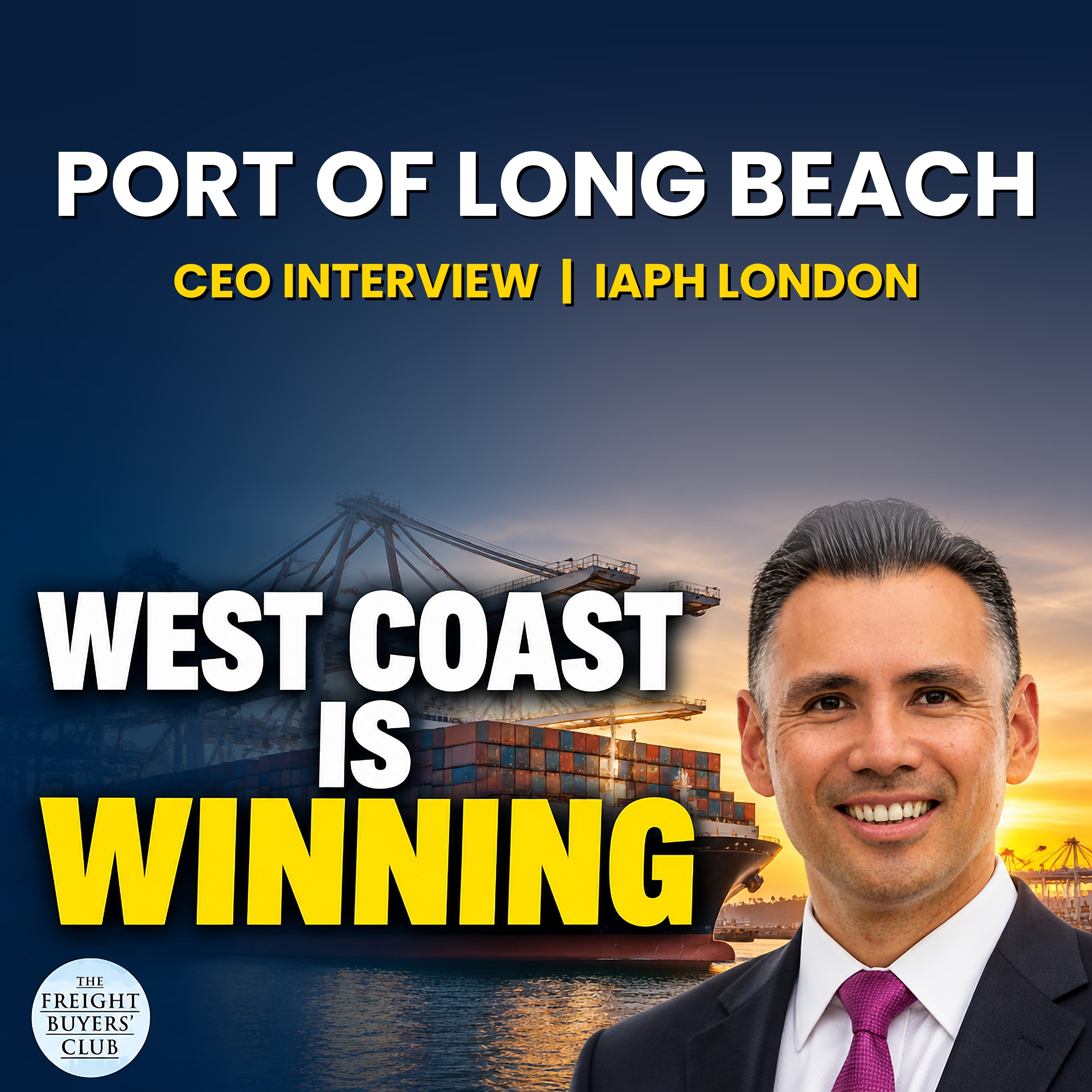
The Freight Buyers Club's content from here is supported by Freight Suite, the modern alternative to legacy TMS platforms. This multimodal TMS was built by forwarders, you know, the operator's day inside out, and it's been transformed by AI. So check out freightsweet.com and I'm delighted to say I'm here today with Dr. Noel Hachigaba, who is the CEO of the Port of Long Beach. Noel, welcome back to the Freight Buyers Club.
[00:00:38] Speaker B: It's great to be back with you and here in London. Mike, thanks for having me.
[00:00:41] Speaker A: Well, it's like a precipitous day. It feels like we're here. We're recording. The midterm results are just out. What do you think this means for trade policy and your customers at the port? Thank
[00:00:52] Speaker B: you. I think it's too early to speculate on what the outcome of the election means for trade policy, but I think for anyone who's watched the news over the last month should not be surprised at the outcome. What's going to be interesting to see is how priorities shift, how policy priorities shift. And I'm hopeful and remain optimistic that our policymakers will continue to see the importance of ports like ours, the global supply chain, and how vital we are to the national economy in the United States and really to the global economy.
[00:01:20] Speaker A: Are you expecting any sort of major changes in Poland, possibly in tariff policy or maybe in labor relations, or maybe you'll get some more funding for maintenance and infrastructure?
[00:01:30] Speaker B: Well, the last time that the Democrats controlled the House, there were record amounts of funding that were made available for infrastructure projects. And so if that's any indicator of what may happen in the coming months, that would be good for ports. But again, as port authorities, our job is to be ready for whatever policy outcomes emerge from the new Congress and whatever policy priorities they have in mind. Our job is just to make sure that we keep cargo flowing, to keep supporting the U.S. and the national economies.
[00:02:00] Speaker A: And in terms of keeping that cargo flowing, it's been rather a busy year this year.
You guys have had some big numbers in the last few months. But can I just wind back slightly in the lead up to those changes in tariff policy in July, everyone was talking about front loading. That seemed to be the. Everyone was pretty in agreement that things would probably slacken off maybe in August and we'd have an early peak season. Hasn't worked out like that. You Had a record September. I don't know if the October results are in as well.
What's happened?
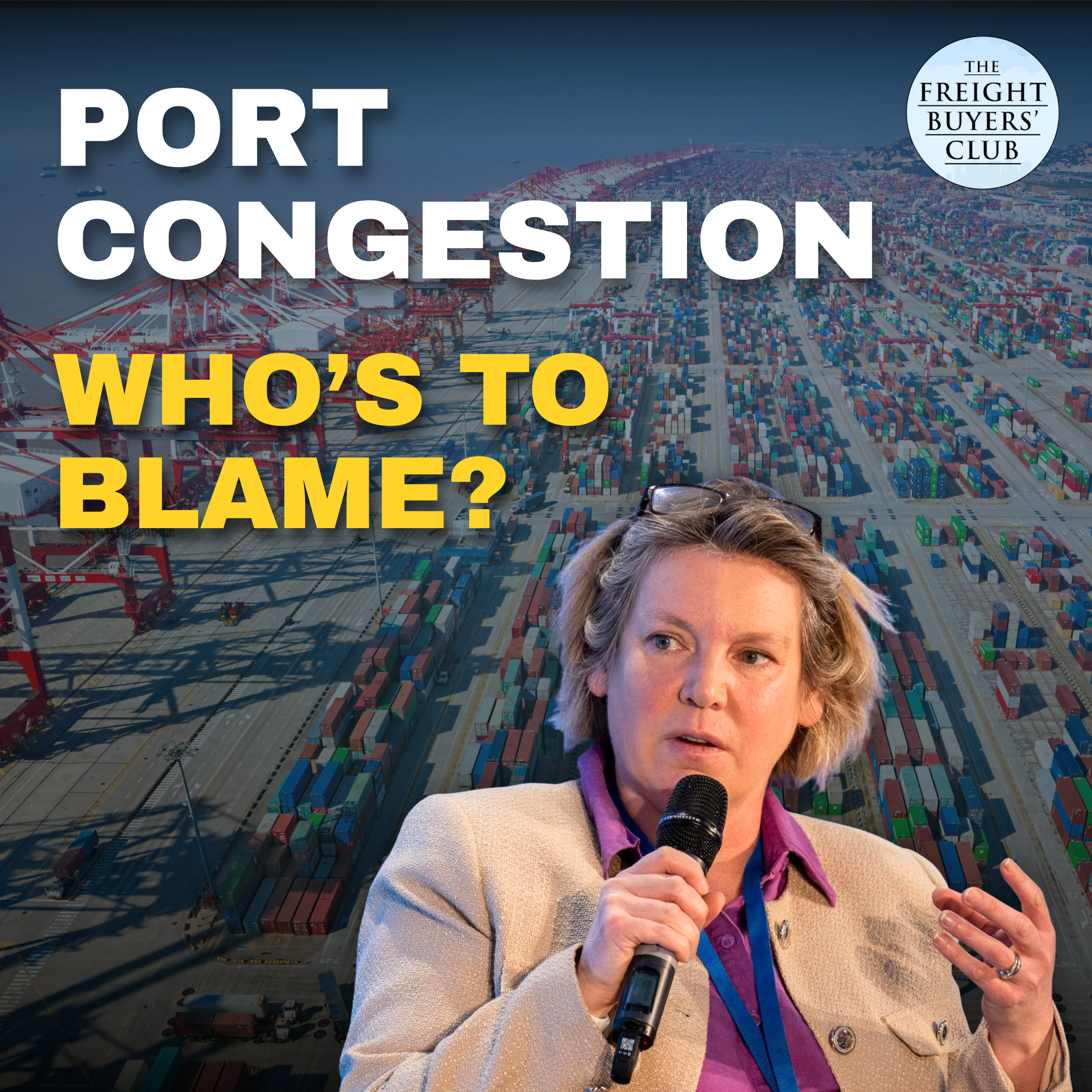
[00:02:30] Speaker B: You know, Mike, we're busier than ever before and our dock workers have stepped up to the challenge. We're keeping cargo moving through our port in record numbers without any congestion, without any backlogs or delays, which is incredible. In the month of September, we handled 997,000 TUs. The closest we've ever come to handling a million TUs in a single month. Turns out to be our single busiest month in our 115 year history. But that's just one month in what has been a record year. We are actually on track to approach and reach the 10 million TU mark for calendar year 2026. And that's in large part to all the front loading that the shippers have employed to navigate. Trade uncertainty, tariff uncertainty.
But other factors include how the shipping lines and all of our supply chain partners are navigating increased costs and fuel. Shipping lines are consolidating services. They're deploying larger ships, taking advantage of economies of scale. And that benefits ports like ours. Who can handle the 24,000 TU ships? Mike, we're discharging and reloading 100% of these 24,000 TU ships. It's incredible. And we're moving more of those containers out of the port.
[00:03:43] Speaker A: But there are some delays on the rail side, aren't they? On the trucking side, there's bottlenecks.
[00:03:48] Speaker B: Well, look, we are moving at the pace of busy.
Our average rail dwell times have been elevated because
[00:03:56] Speaker A: is it about five to seven days? Is it now?
[00:03:58] Speaker B: On average it's been about four days over the last 12 months. In recent months it's gone up to closer to six days on average. But there are some terminals that move it faster and there are others who are handling record amounts of volumes that are getting it out. But the important thing is that everyone's working together. We're in close coordination with the Class 1 railroads to make sure that if there are any bottlenecks in the nation's transportation system that we can address them immediately to keep cargo moving through our port
[00:04:27] Speaker A: as we're talking. This may well be resolved by the time that people hear this, but there has been a threat of strike action at the port. And I know it's only involving a small number of people, but people are. The other unions are enlightened across the picket line. Can you get a message about how you go about planning and what forwarders and shippers can expect from you? Because there might be a renegotiating ILWU back in over in 2028. So we might have to look at this again in a year or two's time. So what are the plans that you put in place?
[00:04:56] Speaker B: Well, look, I think it's important to put this in context. There hasn't been a strike on the west coast since the 1970s.
Over the last 18 months, the port of Long beach has been a safe harbor in the Sea of trade and geopolitical uncertainty. And yes, there are some ongoing negotiations involving a local, Local 26, that has a contract with the Pacific Maritime Association. It covers about 250 members.
They're the watchmen. These are the women and men who provide security inside the terminal. And obviously, we're closely monitoring their situation, and we're hopeful that both sides will reach a resolution that's fair and equitable to both parties as quickly as possible.
[00:05:38] Speaker A: Okay, just on the disruption, this volume increase that you've seen, how much of that is a coast versus coast question, by which I mean, have you seen diversions to the west coast because of those disruptions that we're seeing in Hormuz, in the Red Sea, in Suez, that maybe people think, oh, I'll get this cargo in a bit quicker from Asia? West coast is winning on that front.
[00:06:01] Speaker B: When you look at our record volumes, there are three major factors that are driving them. One is the front loading activity by our shippers. The second is the conflict in the Middle east, the closure of the Strait of Hormuz and how that has impacted the energy sector, driving fuel costs up. And that Mike is leading some of our shipping lines to consolidate services to optimize their fleets globally. And that's sending cargo our way. The third factor is extreme weather conditions. Look at what happened in the Panama Canal earlier this year. Drought conditions led to transit restrictions that diverted Carlo to the US West Coast. Weather conditions in Asia also led to delays, departures from Asia. So all these factors converge to send more cargo our way. But the important thing is that we've demonstrated that the port of Long beach has been a safe harbor in the Sea of Trade and geopolitical. And now even weather condition uncertainty.
[00:06:55] Speaker A: I mean, the weather can flip, though. We might have, you know, El Nino mightn't get worse. The Suez Canal is already opening up.
Some of this cargo could be lost as well.
[00:07:04] Speaker B: It could. But again, the important thing for our partners and our customers is we're ready. We're ready for whatever swing in cargo may come as a result of any of these or other factors.
[00:07:14] Speaker A: I'm just getting My facts right here. So in July, you became the first US port to sign a nuclear energy partnership with MARAD on small nuclear reactors. Please explain more.
[00:07:24] Speaker B: Sure. Under our 2050 vision, we are planning to double our cargo volumes to 20 million TEUs and build a port of the future in the process. Mike, the port of the future has to be faster. It has to be resilient, cleaner, more connected. And as we transition to 100% zero emissions, we have to start identifying today carbon free energy sources that are going to power the port of the future. We're already looking at hydrogen, we're looking at offshore wind. It's time that we take a serious look at small modular reactor technology. And that's what this does. It gives a port like us a seat at the table to help shape the safety standards, the operating protocols, the permitting procedures so that by the time the technology becomes available and it's ready to come online in a commercial maritime environment, we have the ecosystem to adopt it reliably and safely. Look, we're still years away from having nuclear power at our port, but the conversation must start now.
Because if we don't start now, it's going to be years before we can start even considering it. We're partnering with a startup, Blue Core Energy. They're now one of our tenants. They're doing the research and development.
So as we work with the U.S. maritime Administration, U.S. coast Guard, Department of Energy, the Nuclear Regulatory Commission and our state partners, our private sector partner is doing all the R and D. So here's what we're doing. We are leveraging federal leadership and private sector innovation to identify, explore and study SMR technology in the port environment.
[00:08:56] Speaker A: Is there any other investments we haven't discussed so far that you want to tell the Freight Buyers Club audience about? You've got some, I know you've got some things going on on the rail side, haven't you?
[00:09:04] Speaker B: In pursuit of our 2050 vision,
[00:09:06] Speaker A: this is the port of the future, isn't it?
[00:09:08] Speaker B: Yes. In order to build the port of the future today, we've already committed $3.3 billion to in capital infrastructure investments. Mike, these dollars are committed. And over the next 10 years we're going to be tripling our on dock rail capability. We're going to continue to strengthen our wharves and future proof our port so that we can handle bigger ships more reliably on a more consistent basis. And all of this is in an effort to densify, electrify and modernize, move more containers out of our port more reliably. And the reason we're going to do that is because we're not going to double our volumes by doubling our real estate. It would just simply just take too long. It would be too expensive. So how we're going to do it is we're going to densify, electrify and modernize and move more containers out of our port on rail.
[00:09:55] Speaker A: Noel, thank you very much for joining me once again on the Freight Buyers Club.
[00:09:58] Speaker B: My pleasure. Thanks for having me.
[00:10:00] Speaker A: And thank you all for listening. This content was sponsored by freightsuite.com your alternative if if you want a modern, non legacy TMS system, check out Freight tweet.com and thanks for listening. Please follow and subscribe. I'm Mike King, this is the Freight Buyers Club.