Episode Transcript
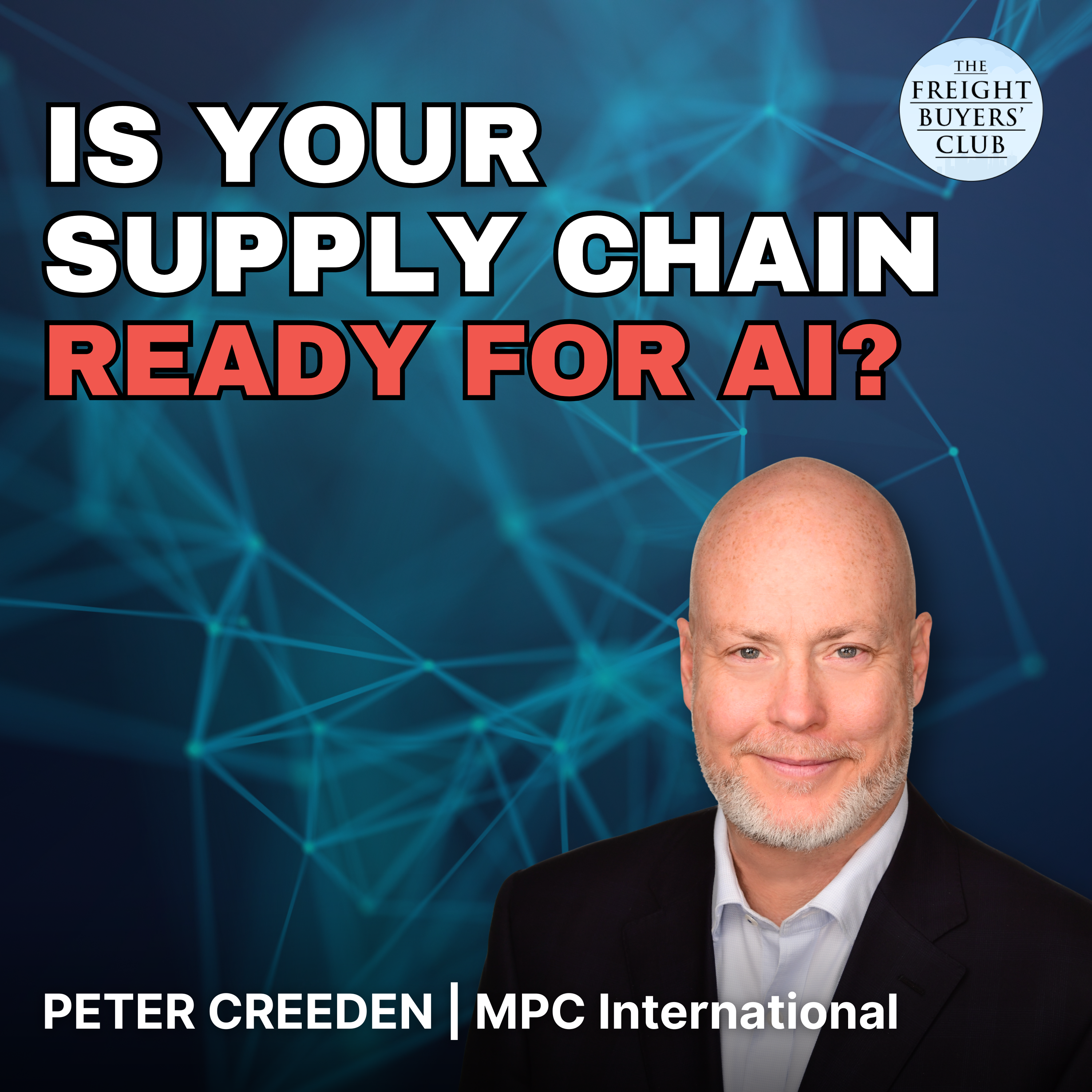
[00:00:03] Speaker A: Hello, everybody. Mike king here at TPM 26 in Long Beach. This content is brought to you by Demerco Express and I'm delighted to say I'm joined by a seafaring veteran of more than 25 years in operations and tech. He's an advisor and he runs the liner game with Lars Jensen. But he's definitely not, he tells me, a consultant. Peter, please explain the difference between an advisor and a consultant.
[00:00:34] Speaker B: Well, When I left Hamburgshood after 20 years, I was quickly told by somebody, a consultant is somebody who cons you, then insults you.
And I've taken that to heart because all I do is fixed term projects. I try to help management teams, senior managers, solve their actual supply chain problems, their management problems, their M and A problems. And I do it on fixed term basis. I don't do it on billable hours. I get into a project, help them out, move on to the next project, and that's what I prefer to do. That's very much in sync with the teaching that I do at university.
[00:01:11] Speaker A: Peter, we were talking off camera. Everyone else here is very much focused on AI, but you're really thinking about some different things in our industry. Please explain what's on your mind.
[00:01:22] Speaker B: I guess I'm a little frustrated with people sending emails and saying AI is going to change the world. AI is going to do this?
Yes, AI is going to change the world.
One of the big questions that I've seen being bantered around at the more theoretical levels is are we in an AI bubble or is everything else a bubble? And I think that is a profound statement. But our industry, we have a lot of layers that we have to build up to. AI works off of data. If you have garbage in, it's garbage out. So I think there's a lot more to it than just putting AI on existing systems. If you are thinking that AI can plug in and change your company as it is today, you're sadly mistaken. You have to focus on a lot of cultural change, a lot of data change, and there's a lot of different layers about that.
[00:02:16] Speaker A: And while everyone else is looking at Silicon Valley, you're looking more at the IMO in London. That's the International Maritime Organization. Why turn to the UN instead of the Tech Bros?
[00:02:26] Speaker B: Well, because it goes to the standards. It's really important to understand that to have solid data structures, you have to have the right definitions, the right standards on how we go forward. So I've been heavily involved in the International Task Force of Port Call Optimization.
NPC has just recently ratified or endorsed the PCO Guide, which goes up for a vote at the FAL meeting at the end of March. And this will set out a course for auditing ports and their digital standards. This is an important step forward because then there is a basic standard set of rules saying this is a minimum standard of what a port should have. These are the minimum definitions of what port a port call really is. And a lot of people talk about predictive port calls and all of this stuff, but they actually don't know what the definition of the berth or the ETA is.
This guide will actually set out what the definitions are, what are the rules and what are the roadmaps to get us to a point where it becomes really predictable so we don't have to allow vessels to go to anchor, whether it's container or bulk.
[00:03:38] Speaker A: And if you're a freight buyer watching this interview, why should they care about that innovation? How does that help them and when will it help them?
[00:03:46] Speaker B: Because there's a lot of malarkey that's out there. A lot of people are telling you, like visibility platforms. All they're doing is scraping websites and there's no basis of the data, there's no commonality of standards. That's what we have to set first. If the IMO is doing this, that really helps us actually create this benchmark and then we have to build upon that.
[00:04:11] Speaker A: So what's the timeline for this, though?
[00:04:13] Speaker B: First it'll start off the decision is the end of March of 2026, so it'll immediately come into effect where most ports will have to say where they are in that standard. First we have to get the ports to acknowledge this. And then over the next 10 years, I hope we can get the ports to all agree with the overall PCO guide and the implementation of what's called a GLN, which is a global logistics number set out by GS1. GS1's a close.
All your freight buyers know GS1 from the barcode side. They do a lot more in setting up the data standards across the supply chain.
[00:04:54] Speaker A: The Freight Buyers Club will do its best to get along to IMO to check out what's happening later in March.
Peter, you talk about the digital supply chain as like a cake. Please explain what you mean by that.
[00:05:06] Speaker B: Going back to.
I was having an online discussion with a few of the TPM tech fellows and all of this AI hype, I tried to describe it. AI is like icing. Icing on a cake with no foundation is just icing that'll slip through and fall. The cake that we have to build in the supply chain is, is first and foremost you start off with that base of standards. You have to know the definitions, you have to structure the data. Then the next level is actually going to the supply chain layer is the movements. How do we actually lock in the movements, which of those movements are valuable? Which of those movements can be used as transactional basis. Once that's done then it's about changing this manual base of reporting of data. How we do it today is people re keying in data from one system to another to another. Now with IoT devices, both passive and active. So Hapek Lloyd is a good example of the active smart containers. They have GPS devices on all of their containers, bcos.
[00:06:10] Speaker A: And so this is then becomes clean data. And it's not dirty, it's not, it's
[00:06:14] Speaker B: not data, it's actual from the source. A machine has created it so you can trust that data. So there's another company that's pursuing more passive data which is an E electronic E seal. Those passive datas are much cheaper than the active data. But all the freight buyers should be looking at that and saying how do I get data from there? Am I willing to pay for that data at that level? Because I know it's clean, especially if I want to run transactions. So that's the first three. Then it's about where do I share that data.
These open interoperability platforms, GSB1 as off camera we spoke about, they're an exchange platform for E bills of lading.
So when E bills of lading actually come in as a standard, all shipping lines said by 2030 e bill of ladings will be mandatory.
That makes the data hard coded and standard and then it's actually tradable. That means derivatives can be driven off of that, indices can be driven off of the E bill of lading data. That is a big change in our industry.
So that's the next layer and that's coming to smart contracts. When you buyers and sellers can say hey, that our cargo is now on board, the transaction is automatic.
So that's why that layer cake AI fits around all of that. You will use AI to optimize vessels, optimize things, project, do analysis. But you have to start from the basis and all of those standards. AI will be impactful on all of that. But it's this core stuff that is really important that if it's, if it's garbage, it's garbage in, garbage out. And that's really important to understand. You can't just slap on AI in any of the freight management systems and hope for the best. You have to train your staff, you have to actually change the way we are doing things a lot.
[00:08:10] Speaker A: How, how do freight buyers or anyone else who's looking at vendors and different platforms, how do they go about filtering out the dross from the people who've got like this access to veg in data that they can then use these AI systems to improve their businesses?
[00:08:25] Speaker B: I teach a digital transformation course at the Australian Maritime Academy and how I teach the students. You start off, head inside the boat, you look internally in your systems. What are all the systems that you have? A, are they cybersecurity? B, do you have a single source of truth? How do you actually gather all that data into usable data? Once you have that, then how do you share that data with your partners?
That is this interoperability and where are they at on the digital supply chain curve? Are they low or are they high? How do you actually exchange data in this secure network and build from there? Once you get both your external partners and yourself at a high degree of automated and digital processes that you know what's going in and what's coming out, then you can apply AI, you can apply IoT devices, you can apply all the great technology that's there. It's not about technology, it's about how your organization adapts to it and actually changes to use it. Going from doing the task to managing the task is really important.
[00:09:31] Speaker A: MPC International has been involved with Mackay Container Depot over in Australia.
It's due to go operational, I think, in September. You said, tell me a little bit more about how you've been involved and how that ties into some of these things we've been discussing today.
[00:09:44] Speaker B: I guess going back to the sustainability question, you can't decarbonize if you are not digitized. They go hand in hand. And there's a big move, especially in Australia, where all companies who report over who have $100 million of revenue or more have to report their scope 3 emissions by 2027. All companies who are at $25 million of revenue must report their scope 3 emissions. Because of that, people are relooking at how their supply chains are built. So I've gotten involved in North Queensland bulkports and we are building a new container terminal there. So Mackay is traditionally a bulkport, exports grain, sugar and coal, but the commodities that can be containerized. There's a lot of mining equipment that comes in by a truck from Brisbane and other regional ports that have to truck over a thousand kilometers that is a scope three emission nightmare. So they're looking for more all water options and people are actually now getting the courage to how do we actually change our supply chain to meet these requirements? So we're building a small container terminal. We got involved early on in the Discovery piece. We're now in the supporting of the building out and fitting out of the facility and it's a great, it's a great small port to work with and I think there's a lot more regional ports can do that can actually build up on this. I know in the UK there's some discussions about the regional ports taking more of an active role as well.
[00:11:19] Speaker A: For sure. For sure. Peter Creeden, thank you very much for joining me today on the Freight Buyers Club. It's been a pleasure.
[00:11:24] Speaker B: Okay, thank you very much, Mike. It's good to see you.
[00:11:27] Speaker A: Thank you everybody for listening. We'll be back with more content soon. Please do subscribe and like and comment.