Episode Transcript
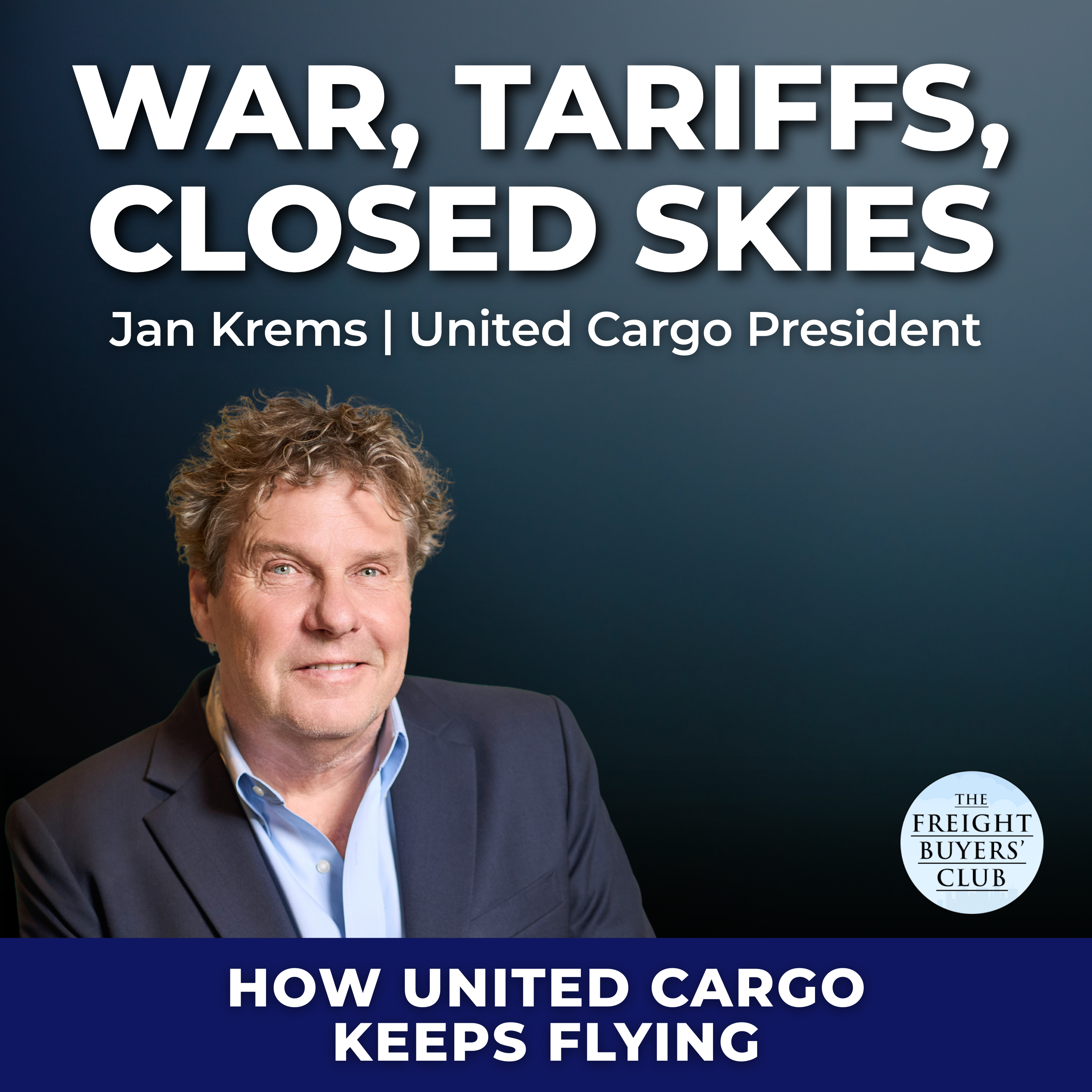
[00:00:03] Speaker A: Hello, I'm Mike King and this is the Freight Buyers Club and we're coming to you from IATA's World Cargo Symposium in Lima, Peru. And I'm joined today by Jan Krems, the president of United Cargo. Jan, welcome to the Freight Buyers Club, Mike.
[00:00:17] Speaker B: Thanks. I think we tried already for a couple of times to connect, but finally it works here in Peru and I'm happy to be here.
[00:00:24] Speaker A: Of all the places and of all the times to be here, troubled times, I would say.
Just want to look back over the last five or six years and what it's been like from an insider's perspective. We've had Covid. We've had war in Ukraine and the closure of Russian airspace for Western carriers for a prolonged period, problems in the Middle east, problems in parts of Africa, and now we've got the closure of Middle east airspace and war in Iran. Can you just give us a view of how you've been coping with those disruptions over that period?
[00:00:53] Speaker B: Yeah, and I think what you mentioned, there are many more disruptions anywhere, even weather related or whatever, but at a certain stage you get a bit used to it. That's not totally true, but you will see what is happening and you really try as an organization to see how you cope with it. I mean, in principle, 95% of the capacity that we use is our own capacity on the passenger side and the other 5% is the capacity we hire and we lease as a freighter space. But yeah, we have to cope with it. We have to find alternatives. We have to find different products, different routes if it's possible. But yeah, we have to deal and we have to live with it. And to be honest, you get a bit used to it, but it's no fun at all.
[00:01:32] Speaker A: I don't want to get too stuck on what's going on in the Middle east because things are changing by the hour. But just as one scenario, what happens if this carries on long term and this becomes a structural issue for the industry? What's the workaround?
How would that affect United?
[00:01:47] Speaker B: Yeah, as United as an airline, it will affect us dramatically. I mean, if you look at the fuel prices already at the moment, I think kerosene is about 60, 70% higher than it was just before the incident started or the war started. We look at alternatives, opportunities that we can work with. I mean, at the moment, for example, Tel Aviv, we don't fly, but we found a freighter provider that is using us and helping us to fly from New York to Tel Aviv for our customers. So we find alternatives. Sometime to play with. If we have disruptions like this and on the passenger side, we have to live with what is happening there. But on the. And with the cargo we do because most of it is on the widebodies. But then we hire freighters and we. And we play that game to go around it.
[00:02:34] Speaker A: What we know now as we're talking on, on the 10th of March, is that there's definitely going to be lots of cargo abandoned by shipping lines in places like India, in Colombo and in many other places. How do you see the role of United or the air cargo industry in general in helping those shippers out?
And it's how. I don't. This is an opportunity as well, isn't it?
[00:02:57] Speaker B: Yeah, it's also an opportunity, but we have to be very careful to see where it is. I mean, we have backlogs in a lot of places around the world. I mean, I think 21% of the freight capacity has to deal with the Middle East. For us, that's not the 21%, it's much less. But we have to see how we play that game, first of all with our friendly forwarders that we say, hey, where is the business? How can we help each other? And it's not to increase rates or whatever, it's just to see that we move our cargo further them from A to B. Next to that there are opportunities enough because we also have the fuel is coming up. So we have to find a way to deal with the rate increases not to. To overcharge, but to be realistic in what the real cost will be. And that's what we try to do. And then there maybe are some opportunities for new markets or new business because the sea freight is also hurt at the moment. But it has to be realistic and it has to be fair also to the customers because that's I think, very important. We're all in the same boat here and. And I think it's important that we deal with it in a fair way.
[00:03:56] Speaker A: Just another disruption that we've had over the last year, obviously in US Trade policy has been tariffs. It's been all a case of tariff on tariff off. Most recently, the IPA Liberation Day tariffs from last year was struck down by the Supreme Court. Lots of people chasing refunds. How did you cope with the whole tariff issue?
How did that affect United and how do you plan ahead when you don't really know what's going on with that policy there?
[00:04:24] Speaker B: To plan ahead is sometimes pretty difficult. But let's say if we start with the terrorists last year, I mean, it Comes from one day to the other. And then you start a discussion with your people and with your customers to see how you tackle it, how you deal with it.
I mean, with a lot of customers we feel that it's not really hurting us because there are a lot of products that we don't fly. I mean, if you talk about E Commerce, E Commerce for United cargo is very small, but part because the capacity that we have is limited and that we want to give again to our friendly forwards who have their products there. And then if there's, if it's a tariff that hurt our business. Yeah, we have to find, or we have to find different products or we have to find a different way of flying. Because that's also what we found out that sometimes from A to B there's a tariff involved. If you go A to B via C, then we could do. We became very clever over the, over the last year with how to deal with the tariff.
[00:05:16] Speaker A: It's a game of tariff avoidance for a lot of people then.
[00:05:19] Speaker B: Yeah. Yes and no.
[00:05:21] Speaker A: It's a tricky, it's a tricky issue. But because there's so many structured tariffs and they've changed so quickly, it's very hard for anyone to navigate, isn't it?
[00:05:29] Speaker B: Yeah, it's very hard because also sometimes, I mean overnight things change. But then how you, how you charge it, how do you accounting wise deal with it? I mean both sides. So it is sometimes frustrating and it's tough, but we found ways around it and again, the conversation with your customers is important. How to deal with it and how to make it work.
[00:05:49] Speaker A: Tied in with this a little bit is the growth of new markets. We've spoken in the past about India and the pharmaceutical market has been very interesting and exciting for United. You guys started a couple of services into Southeast Asia.
Is this just because these economies are coming up? Is it related to US trade policy and China plus one, what's your take on it?
[00:06:09] Speaker B: India, it was always a very important market, I mean especially on the pharmaceutical side. I mean good business. And at a certain stage as United, we flew three, four times daily to India. But with the war between Russia and the Ukraine, we were not allowed to overfly Russia anymore. So all these destination became larger and took more time to fly there. The issue is then it will hurt your payload. So at a certain stage you cannot do everything what you wanted to do. Then we have a partner in Emirates who helps us really to get, to get the business out of India. But still we would love to see flying directly to India again. Over the shortest route. That would help us a lot in the, in the business that we want and that we have with the customers there. If you talk about Southeast Asia, we started to fly first. Vietnam and Thailand are always markets that we'd love to work with. We love to work with partners there. We had interline agreements, but now suddenly we could fly our own capacity there. So we have two flights from L A passenger widebodies to Hong Kong and two from San Francisco daily. And from there onwards we go to, to Bangkok and to SA but there's a lot of cargo to there. But there's also a lot of cargo coming back that cannot be feeded immediately back. So we found a freighter company that helps us to get all the business from Hong Kong into into Guam. And from Guam we go into our entire U.S. network. And that works very, very well.
[00:07:36] Speaker A: At the moment we're, we're down here in beautiful Peru.
How do you serve the South American market and where are you finding the best growth and what your plans for the future?
[00:07:48] Speaker B: Yeah, so South America is always maybe a bit weaker for us on the cargo side.
On the passenger side, we have a lot of narrow body flights from the US in, let's say from Houston into this part of the world. We find ways again with partners with capacity that we can play with to get into these markets. But it's sometimes tough to deal with. We have a freighter flying from Miami to Bogota that works, but we try to get much more into the area with much more partnerships if possible. But it's, it's, it's not for us the strongest, but we, we try to grow there.
[00:08:25] Speaker A: What, what's your policy on freighters? I think you've said in the past that you're not, you're not too keen on owning freighters. Why is that? And what's the strategy moving forward? Maybe that'll change. Maybe I get a scoop.
[00:08:37] Speaker B: No, again, I will tell it again and again. I don't want to own freighters, but I like to have access to freighter capacity. That's what we do with a lot of partners. We play that game. So we have a freighter that flies daily to Micronesia for the mail or a couple of times a week like say the Tel Aviv one that we fly now from New York. We do the Bogota, Miami with a partner. We have many more opportunities. We do the ones we fly from, from Hong Kong to Guam and we try to get even more opportunities there. So. But the moment, we cannot work with it anymore. I mean, it is a maximum of two months That I can, can say goodbye if I own freighters. Like I ever said in the past when we owned, in my previous life, so many freighters. And when really the bottom falls out of the business, then, then you're stuck with that. And that's, that's very tough. So no, no owning. But yes, capacity, access to capacity is crucial.
[00:09:35] Speaker A: Well, so no buying of freighters. What can we expect from United in the pipeline in terms of investments, new orders, new services? I don't know, maybe you're doing something in AI. Everybody else is.
[00:09:47] Speaker B: Now, first of all, I mean, the company itself is ordering a lot of 737 maxs. I think every third day we would get one together with the Airbus 321neos.
But in principle those are the narrow bodies. And then a lot of 787s are coming in for cargo, fantastic planes. But I mean, first they have to come in and then we can play with them in the network. And we were also in a lot of cases part of the discussion because where can cargo support the opening of these stations? So that's where we work and do a lot. Then we really try to grow on added value. Really, that's our strength, specialty products. So first of all, we have to make sure that on the handling side that we provide the right quality. I always said quality, quality, quality is the base. If that's okay, we can do whatever we want. And there we have to invest. We have to invest because, let's say pharmaceutical is very big for us. So we have to invest in cool containers, we have to invest in cool facilities, we have to invest in an infrastructure that really makes it easy to get these shipments in and out. So that's where we invest, we invest on the automation side. We really try to get connected better with our customers. We don't do that that well. I also found out that because we not the best there, it's still a people business that we deal with. And a lot of customers said, we're happy that you're not there yet. But I always said 50% of our business, 50% of our shipments is smaller than 100 kilos. Nobody wants to have a discussion on that. Nobody wants to have a call over that. Just automated, just get it in the system, make sure that the bookings go through. 25% of our business of bookings is allocations, as we call it, fixed allocations, that's already agreed upon. You don't want to have discussions there. And then the 25% of the real important business, the added value, the Specialty product or whatever. That's where you want that one on one relationship with your customers. And that's why we want to grow and that's why we want to do so invest. Yes. Also on these systems. Very important. And then really make sure that we have that one on one conversation to really get the important discussions on. And on the AI side we still have to learn. I mean we have an organization that's not very big, we have limited resources. So we have to see where AI really can become more efficient and effective for us. I have to learn every day where that would be. But we found already a lot of areas where we can see where we can gain profitable issues out where we really gain efficiency. We also learn a lot from the passenger side and we can have, let's say piggyback on what's happening there. So that helps a lot. And. But that's. That's where we really see. Yeah. Where we invest in the. We have to invest also in facilities in warehousing because that's also. We did new work past year where we really have a new facility. Great facility. But also it gets so constrained on so many airports. So we have to be careful that we invest the right way that we invest already in time because there's some decisions you have to make that are for the 30s or something like that, but we have to make sure that we do that as well. So I think that that's, that's for us at the moment. Those are the main investments or the main areas we focus on to grow.
[00:12:54] Speaker A: It just struck me there when you were talking about the importance of people in our industry, you came from that, I don't know, like a golden generation of industry leaders that emerged from klm.
I don't have data too much, but a couple of decades ago. Is that where that attitude comes from? And the secondary question that you've been coming up over 11 years now at United, are you still enjoying.
[00:13:17] Speaker B: Yeah, first of all, I think the KLM school is a very good school. I mean if you really see how many people out of that industry came and are still leaders in this industry and still today. So I think that that's nice to see. A lot of Dutch also. That's also nice to see.
[00:13:33] Speaker A: But you always give a straight answer. You Dutch people, you never know where you.
[00:13:37] Speaker B: You never would left wondering sometimes maybe two direct or so. But I also think it's interesting being responsible for the cargo organization with United is that we have a very good mix of different nationalities, different cultures, different ways of thinking that really makes it strong to have the discussion going on and to go to the, to the next level. I really enjoy it because I think already in June this year I will be 39 years in this industry.
12 years. No, 39 and a half. 12 years with United then and 27 and a half at KLM.
But with United, I mean, I love it. I love the way working with people.
I always said in every interview, I think cargo is sexy. I still think cargo is sexy after all these years. I think it's fun to work with people. I mean, that's, that's for me, that's why I travel so much to be with our people, to be with our customers. I think that face to face, really 65% of our business is still personalized is because of how you operate with each other. And that's, that's, that it's personal. How this business still is and I still believe in it after all these years. Yes, we need new tools. We need other ways of working. But I think that is, that is vital. But yes, working with people. We have a fantastic organization. I always say we have the best people in the business. That's always easy to say, but I think we have. I always say the same thing. I think people with a cargo heart is what brings this to the next level. And not everybody has that cargo heart, but I think in our industry and especially in United, we see a lot of people with a cargo heart to that. Yeah. And what will happen?
[00:15:11] Speaker A: Cargo fires still burning strongly, clearly.
[00:15:14] Speaker B: Oh, yeah. Oh, yeah, yeah, yeah. What I will do. I mean, a lot of people ask me every time, when will you retire? I mean, not today. I will always say so, but let's see what, what the future brings. But we have an amazing organization and yeah, whatever happens with me, we will continue what we're doing at the moment.
[00:15:30] Speaker A: Jan Krems, thank you very much for joining me today on the Freight Buyers Club.
[00:15:34] Speaker B: Mike, thank you very much.
[00:15:35] Speaker A: It was a pleasure and thank you all for listening. We'll be back soon with loads more content from Lima, Peru.