Episode Transcript
[00:00:04] Speaker A: Hello.
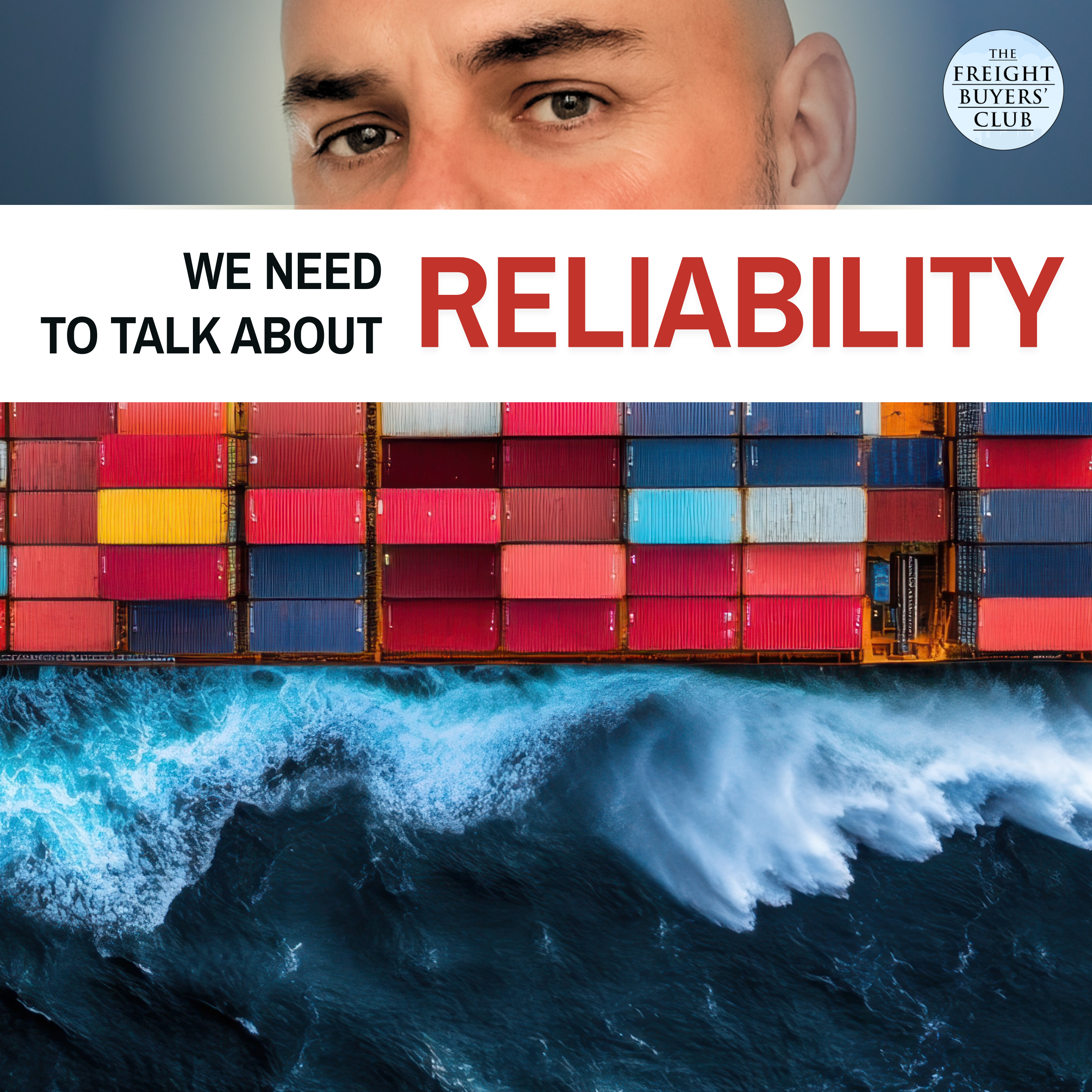
Now, today. Well, we need to talk about.
No, not Kevin. Something far more riveting. Container shipping reliability, no less. Doesn't it just roll off the tongue as easily as the novel and the movie? Let's roll the music.
Welcome back to the Freight Buyers Club one and all. I'm.
And this short explainer is brought to you by Ontegos Cloud, the freight forwarder profitability specialist. Right then, something we don't often get to say. Container shipping reliability has actually been, well, say it quietly improving in 2025. Yes, you heard that right. Ships are sometimes turning up roughly when they're supposed to. Sea Intelligence's numbers put global schedule reliability at 65% in September, one of the best showings in years. It then dipped to 61.4% in October, but that's still 11 points better than a year ago.
Now, let's be honest, the 60% range, it's hardly champagne worthy, even if you've lived through the last five years of pandemic chaos, port gridlock, blank sailings and rollovers. But it matters because shippers are planning for 2026. Here's the Merco Express Group's Cathy Liu.
[00:01:29] Speaker B: What we learned from our customers recent days because it's the period to discuss about Nexea as well. They all mentioned the vessel schedule reliability. That's really the key concern from them because you know one side that for sure, carriers like to keep the rate at certain level. They didn't like to see that the rate down that much.
So sometimes they will carry, cancel some schedules, blank ceilings, this kind of things. And then but for our customers, especially from this year, for the cost reduction concerns, a lot of those cargoes, maybe they change the transportation mode from air to ocean. So they actually they rely on a lot for the schedule reliability.
So if this cannot be relied on, then let's say the deadline might be missed at the destination.
So this is some key concerns from the customer side and we actually, we didn't see any sign that this kind of situation will be improved in next year.
[00:02:34] Speaker A: Before we start celebrating, there's a twist. Those average reliability figures, just over 60% hide some monster differences between carriers. Sea Intelligence found the gap between the best and worst performers has blown wide open.
In the mid-2010s, everyone was well, more or less the same, mostly not that great today. Pick the wrong carrier and you could be waiting longer than the queue for a Taylor Swift ticket. Or more interesting, maybe Oasis. But reliability now is a real differentiator and one group stands out. The Gemini cooperation Maersk and the Hapag Lloyd, their whole pitch is guaranteed that reliability via a new hub and spoke setup. And annoyingly for their rivals, well, it's working. Maersk, 74% in October top month on month, but still way ahead of the pack. And those numbers are for the carrier's entire services individually. Under the Gemini banner, their alliance services reliability has been near 90% across October and September. Meanwhile, some of the other big alliances, including the new Premier alliance, are still trundling along in the 50s. So yes, reliability has improved, but only if you choose wisely. But what next? Mirroring the findings from C Intelligence in October, Zenetta, which has just bought eec, which has got its own set of data, well, they're seeing more of the same in November. Two big forces will be hugely influential on whether this trend continues abates or perhaps worsens capacity and routing.
Since 2018, container shipping capacity has grown about 6% a year. And that tap is still on. Lots of shiny new tonnage is hitting the water. That puts pressure on rates which have been sliding since their June peak. Add to that the fact that in practice, global effective capacity is 10 to 15% lower, thanks to congestion and ongoing Suez Canal avoidance. As regular listeners will know, things have become been calming down in the Middle east and signs are growing that carriers could return to the Red Sea and Suez Canal in the very near future, despite a few calls that turned out to be, well, slightly premature.
But a few carriers have tiptoed back already, especially CMA cgm. When exactly this happens is not entirely clear, but all the sources that Freight Buyers Club has spoken to say this is more about when and not about if.
So what happens when those floodgates open? Well, well, in the early months schedule reliability could be impacted by bunching of vessels looking to load and unload in Asia and Europe. Here's Nils Roche, former liner executive and now at Solven's Advisory.
[00:05:19] Speaker C: All right, so when Suez reopens, the obvious is that we're going to have an influx of capacity, right? So ships have less distance to cover. They will be here early. What it means is that we're going to have more ships calling the ports. You may have noticed that we have congestion. We have Shanghai at three days, we have Rotterdam on the AT depending on the week, right? And strikes. So imagine you add to that 300 chips and then boom. Because one thing is that a ship takes place, right? And the ports are not extensible. So for the same amount of moves, you're going to have a more bigger need for birth length. So this is not going to work.
Rates are going to go down, congestion is going to go up. Two solutions. Either we're going to have a termination of services because of the rates or we're going to have at the opposite side PSS congestion surcharges that are going to come naturally and fairly. There's no steel behind it and make the carriers earn some money thereafter.
[00:06:20] Speaker A: Well, we could see a container shipping market in free fall as the excess capacity was already apparent becomes a massive problem.
Experts we have spoken to say a new rate war isn't off the table and when rates collapse we all know what happens next. Blank sailing vessel layups and all those reliability gains probably. Well, they're right out the window. So while in theory using the Suez Canal should eventually allow for more better and more efficient and more reliable line of services, if carriers start slashing prices, service quality will likely be the first casualty. Choosing your carrier or alliance carefully will become even more important.
[00:07:06] Speaker C: Okay, so you can see that there is already a big gap on reliability right now. If that situation happens and we have congestion rising, there is going to be a big differentiator to know if you can get your ship in or not.
Will a classic model like MSE or OSHA alliance proves better working than a hub and spoke? That's the one million dollar question.
[00:07:31] Speaker A: So yes, reliability has improved this year, but it's a fragile recovery balancing on some very shaky economics. If too much capacity hits the water or if a new rate war breaks out, we could be right back where we started or worse. I'm Mike King. Thanks for watching. That's all from the Freight Buyers Club brought to you by Ontegos Cloud the freight Forward a profitability specialist and here's hoping that next time we talk about schedule reliability it isn't in the past tense.