Episode Transcript
[00:00:02] Speaker A: If your supply chain runs through Asia, why not work with a company that has been connecting Asia with the world since 1971? DiMerco Express Group.
Hello and welcome to the Freight Buyers Club. I'm Mike King and and before we get going, you've just seen a little message there from Demerka Express Group. They are supporting today's episode.
Think of them as your go to for the Trans Pacific trade lanes, Asia logistics headaches and the kind of tariff and compliance issues that tend to ruin everyone's day at 4:55pm on Friday or maybe over the last year and a half, maybe on a Sunday night.
You know what I mean?
Now, the first quarter of 2026 was, by more or less any measure, one of the most disrupted openings to a year that container shipping has seen in living memory. The U.S. supreme Court struck down Trump's IPA tariffs in February. The Strait of Hormuz was then closed. War broke out in the Middle East. We've now got Iranian ports blocked, fuel sale charges popping up everywhere, and Cape of Good Hope sailing still the default east west trade more than two and a half years after the Red Sea was effectively shut for container shipping. But underneath all the shouting and the chaos and the madness, there are some pretty significant structural shifts in how container trade is conducted emerging.
And to unpack what's actually happening in those numbers, I'm delighted to say I'm joined today by Nigel Poucey, CEO of Container Trade Statistics, or cts, the most comprehensive container data set out there.
Nigel, welcome to the podcast.
[00:02:00] Speaker B: Good to join you, Mike.
[00:02:02] Speaker A: For listeners who don't know CTs, can you just give us a quick overview?
What's in the data set? What's the reporting cycle?
How should listeners maybe think about your numbers versus the freight index providers?
[00:02:16] Speaker B: So yes, Mike, So CTS provides two data items. One is the volume global volumes of TEUs broken down to effective lowest level port, but it can be summarized country and regions.
And we get the data directly from the manifests of the big shipping lines. We take about 70, 75% direct from the lines and the rest we estimate from vessel sizes, et cetera, or other commodity data supplies. So we basically try and have 100% of the global data. The second thing we have is a price index and that price index is unique in that it comes from the invoices generated by the shipping lines. We don't estimate anything on that. So what we could do is record how invoices have happened historically and, and our biggest difference with other freight indexes, we're a historical record of how freight has moved as opposed to a predictor of what might happen in the future.
So however you want to use an index that this index has good historical value. Not very good for necessarily predicting the future, but good to recognize what happened in the past.
[00:03:25] Speaker A: Excellent. Nigel, just a bit on your background as well, if we can. You spent most of your career on the carrier side, Merced, Copenhagen, P and O before that.
Just how does that extensive experience shape how you read the data or translate it for people like me?
[00:03:40] Speaker B: So I think I had my slightly unique, I suppose experience is that I'm an accountant by profession. So when I started I spent my life analyzing the manifests and the bills. My job now is the other way around. I'm doing it on a data basis rather than a financial basis. But in between I was chief commercial officer at B and O, Ned Lloyd and with with Maersk Line through the mergers. So I have a benefit of sort of understanding the numbers, been having to unpack them in terms of the commercial trade and understanding that we have from having been on both sides of the fence.
[00:04:16] Speaker A: You're going to be a great guy today, Nigel. I'm delighted to have you on. Before we drift, I wish I had some accountancy experience myself going through some of these numbers we're going to show people and talk through a lot of them today.
Before we get into the specific trades, let's set the scene of the headline numbers. Q1 global container volumes. What happened?
[00:04:38] Speaker B: Yeah, so basically we're sitting with a very rosy first quarter number of 47.2 million, which is up pretty much at 2 million on this time last year, which is 4 million up on two years ago. So some pretty robust first quarter growth we've been seeing represents about 4.4%.
But we'll go back to this later. But that would have been closer to six if we the Middle east and the Hormuz impact in March hadn't taken place and it was similar volumes to last year. So some pretty robust growth still going on and it reflects pretty much what we've seen in 25 and pretty much 24 as well. So it's largely a continuation of that trend.
[00:05:22] Speaker A: So basically, despite all the disruptions, I mean the. There's nothing to be surprised of here, you're saying.
[00:05:28] Speaker B: No, this is just ongoing growth. Yeah, I think it's ongoing growth. I think we might have been a little bit surprised in one or two areas, but I think the underlying trend, we were expecting something of this growth for the first quarter.
The offsets are what we didn't expect, if you see what I mean.
If it had been six, then that would have been a bit too robust. But on the other hand, Far east imports to Europe have been much stronger than we'd anticipated.
[00:05:53] Speaker A: Yeah, well, I think a lot of people would be surprised by those numbers. On pricing, your global price index was sitting at 79 points at the end of Q1, back to around the same level at the end of December last year.
But there's been a lot of variation by trade which sort of is masked by the overall number. But first, Nigel, can you explain the CTS index base year is 2008. Right. So that's 100 points.
What does that mean for what people are paying in Q1 and maybe what they're paying now?
[00:06:28] Speaker B: Yeah. So basically the way it works is the index was set, whatever the freight rate, average freight rate, let's say we take Far east to Europe trade. It basically says what was the average freight rate in 2008? And then what we effectively do have measured the movement in that freight rate over that period for the last 16 years. But the real key for people who use the index is how has the index moved on an individual trade basis or a global basis from one month to the next. So the percentage increase is the key. What's actually been happening month on month. So the index just measures the movement in those invoices.
So we get 99.5% of every invoice on the Far East Europe trade. So we know that if the freight rate has gone down, that's because there has been a reduction in overall invoicing in that period.
[00:07:19] Speaker A: Okay, fantastic.
I don't know, I was thinking we've got this picture overall, globally of I would say sort of resilience on top, but a lot of volatility which I want to pull apart a little bit. Starting with the demand picture across the two main head haul trades.
And for those watching on, on YouTube or Spotify, this is the chart I want to spend a bit of time on because I think it tells the most interesting structural story. And a quick shout out to Karen Ball in production and Florence Taylor at CTS for making these numbers and, and images happen.
What those who are watching now can see is the two big head, all trades from the Far east each month over the last two years or so. First up, you can see the Far East Europe trade month by month volumes. It, it's all very seasonal land shipping always is. But you can see this general upward trend if we draw a line between January 2024 and January this year, for example.
Now, what those watching can also see is the Far East North America volumes month by month over the same period into 2026. Again, very seasonal.
But if we draw the same line, you can see a very different, far less dynamic trend.
Now, anyone who watches the freight buyers book regular, you probably know at least one major reason why we are seeing these different volume growth stories. And it starts with a T and ends with ffs. And that's not the rude version of ffs.
So I think you know what I mean. So Nigel, the two head haul trades, very different volume growth trajectories over the last two years. What are you seeing in these numbers?
[00:09:12] Speaker B: Just I think, you know, ultimately I think the tariffs have driven a thought process in all of those that in effect it's driven different ways of thinking about how to move freight. And in reality the tariffs have changed China's view of how it was going to deal with America. And we'll see that in the numbers. You know, you've seen dramatic, you know, last year overall Far east volumes to North America down 4% and they'd been 15% up the previous year, whereas Europe Far east to Europe were 9% up in both years. So you've got that massive switch during last year. It was tariff driven, but it started much earlier to get countries.
China's thinking was where tariffs is going to disrupt trade, where do we move the cargo to? And I think when you start unpacking that, you start to understand that this is a more deeper economic shift aligned to. Well, if you're going to muck around with tariffs, we're going to find more stable places to move cargo to and we're going to adapt our business strategy around that. You won't be playing ball with us and therefore we need to find different ways of moving cargo to markets that matter to us. So I think there's a sort of deeper understanding about movement of trade that's going on here. The question is will it ever rebound? Will it come back? Interesting thing to back we are going
[00:10:40] Speaker A: to be looking at where some of that Chinese cargo is going and we've, we'll look also who else is now sending stuff to the US because there's some winners out there.
But first, just on, on the U.S.
decline.
[00:10:52] Speaker B: Yeah.
[00:10:52] Speaker A: How, how much of it do you put it down to? Tariffs and policy versus consumer demand softness or, or do we need to wait till later to get into those numbers?
[00:11:01] Speaker B: I think you, I think it's easier when you start of the things there is definitely a softening. I Think tariffs has had an impact on customer international demand. The difficult bit is unpacking in America, whether the softness in demand has been caused by a lack of imports or whether it's just a lack of general consumer confidence.
There's been a lot of money pumped into the American economy, so you wouldn't think that demand was slow. So it suggests that, you know, it's people are turning away a little bit from imports and finding other sources broadly internally where they can.
But, you know, the resilience in the trade. Overall, North American imports are down 4% from anywhere in the world. So that suggests that people are just not bringing cargo into the states and people are not even attempting to try because the complexity of tariffs, etc. So it's as much people turning away from the states as it is the states not wanting to import it, I believe.
[00:12:00] Speaker A: Interesting. Yeah. Some of this doesn't match up with economic indicators that a lot of people will be familiar with. I get the PMIs for Europe and the US and you know, they are very different pictures and they definitely don't shine a great light on Europe. But on the Europe side, what we're seeing there, do you see this as real end demand given some of these bearish economic forecasts? Or is this stockpile in or is it people pulling forward cargo?
And then it just looks like strong growth.
[00:12:27] Speaker B: So I actually think this is when we've gone down and had a look and drilled down and look in the data. I think there are all three of those are happening. So let's start with the top one. There is some growth out there. There are some countries that have seen some massive growth. If you go and look at somewhere like Poland, their 25 over 24 volumes are up 22% last year. So that is big growth. You're seeing it in North Africa, you know, we're seeing quite a bit massive increases. We're seeing here in the Levant as well, and east med, North Africa, Poland's Romania's, Bucharest countries, they're also picking up some significant volumes. So we are seeing that now that clearly wouldn't sustain a 15% growth in the first quarter.
So I'm pretty confident that what people are doing is pulling cargo through. I think the 15% in Q1 is a slightly unusual number because it also reflects the fact that Q1,25 was the reorganization of the alliances. And I think there was a softening during the alliance when people were going to, you know, the Gemini was being set up. You've got the reorganization. There was a hesitant.
[00:13:35] Speaker A: So this is the. This is Gemini, this is Maersk and Hapag from the Gemini cooperation that this. So they were reorganizing their network at the in the first part of 2025 at the same time as MSC is also reorganizing its standalone network. Right.
[00:13:49] Speaker B: Ye. So I think that has. There was a reduction in cargo in that period where customers were just a little bit hesitant. They pulled a lot forward into December 24th, January 25th. So I think it's going to take a little bit longer. But that doesn't mean that that hasn't been a pulling forward of cargo. You know, if people are stockpiling, they've been doing it for a long while because we've had 9% growth in Europe last year. We had 9% growth out of Far east in 24 as well. So there is a demand underlying, there's a stockpiling. I think the particularly Q1 if there's something else going on is we got caught in another world crisis during COVID We're not going to allow our supply chains to be underfunded. And I think there's a lot of caution going on there to make sure that they've got sufficient in the supply chain to deal with any crisis that might happen.
[00:14:46] Speaker A: I'm fascinated to hear what you think about whether this is peak season on, on the Far East Europe trade or not, but also same on the US when that's going to happen. We'll come back to that.
[00:14:56] Speaker B: Yeah.
[00:14:56] Speaker A: I just want to first drill into the US Specifically because the headline number on Far east to US doesn't really tell a whole story inside that as we've referenced already, there's this major shift in origin. What you can see on screen now is first Greater China to USA monthly volumes and now we have the Southeast Asia to USA volumes.
It's a very different flow. Nigel, tell us what's going on in terms of this change in origin share.
[00:15:28] Speaker B: So basically you've seen Great China last year down effectively 10% year on year and that is an equivalence of 1.8 million TEUs in a year. That's a massive number of boxes not going going into the US Southeast Asia is up around a million tus. So you've got a net loss which is around which reflects that 4% and that's pretty much continued into the Q1 numbers. So you've got this displacement out of China that's 10% is significant, but it's being picked up quite substantially in Southeast Asia. And what we're finding is that this, this is a Structural shift possibly from Chinese companies going into Southeast Asia and we can unpack those countries a bit later. But you know, we, we are seeing something which is saying, yep, well we're not gonna, we can't source it from China. It's much more certain to keep it in the Vietnam or Cambodia or whatever. And are those Chinese companies or is it being selected from, you know, non Chinese companies? I suspect it's largely the former.
So it's the China chooses.
[00:16:36] Speaker A: There's a fair amount of evidence to say it is. And it also applies a little bit to Mexico too.
[00:16:40] Speaker B: Yeah, yeah. So what we're seeing is that shift is starting to become, let's say, embedded because, you know, there's going to come a time where the investment to make that worth just needs to keep going. So my, you know, my feeling is that that is going to start to happen. I don't think we're going to get much lower than where we are now. I think we probably reached, you know, there seems to be an on pass on the tariffs that's going to keep this at this level.
There are some goods that will always go from China, but we with the structural change is very significant.
And the net effect is 800,000 boxes not going into America over on an annual basis and we'll probably see a similar number this year.
[00:17:21] Speaker A: So it's not a one to one replacement from China to Southeast Asia. Just volumes in general have dropped. But so when you say it's embedded, what happens, say for example, if say tariff policy, which has been one of the drivers of this, I don't just mean in the last this administration, I think some of these processes were in place from the first Trump administration as well and maybe before that.
So is it embedded? But could there be a change in US Policy that would reverse any of this?
[00:17:50] Speaker B: I think if it goes on, you know, if we're looking for another two and a half years of a Trump presidency, I can't see that changing. I think that's going to be there and once you get to the end of a year shift, you know, you've embedded what is a pattern and why change it when it changes. It's a lot to do now. I see it a little bit in what's happened around the Cape of Good Hope with two and a half years, as you said earlier into that shift and you're starting to find that people actually quite liking that arrangement. They've got their supply chains organized around it now. Switching to Suez could be more of a crisis than just continuing. So I think Here we've also got something where there's an embedded nature of it continuing for a period of time, who knows. But for this, I think for four,
[00:18:36] Speaker A: it's three presidencies in terms of trade policy.
[00:18:38] Speaker B: Exactly.
[00:18:39] Speaker A: There hasn't been that much divergence.
[00:18:40] Speaker B: No, exactly. So I think this is pretty much going to keep going and we'll see. It won't grow at quite the level. I think we've had the one time shift, but I think we're going to see this continuing and a slow trickle out of China into these other countries.
[00:18:55] Speaker A: Okay, the big one then. Nigel, we, we trailed this earlier inside Southeast Asia. Who's winning? Vietnam, Thailand, Indonesia, Singapore, Malaysia.
I could name them all, but I'll let you, I'll let you analyze it instead.
[00:19:09] Speaker B: Let's just, just to give you a feel, 50 of it is Vietnam. You know, so Vietnam is the big winner because that's taken pretty much half of the increase in Southeast Asia over that period.
Thailand in sort of second place with about a third of it and then Cambodia with 10 to 15%. And then smatterings, you know, the Philippines, Malaysia, some of the other countries, relatively small increases. But you know, that's where the big drive has been. Vietnam and Thailand pretty much taking over 60, 70% of the, of the total
[00:19:45] Speaker A: increase just on the U.S. import volumes for the second half of 2026. I mean, we're moving into peak season or traditional peak season territory. The Transpac contracting season's coming into an end, although exactly for how many companies? We are not entirely sure because some people were certainly delaying finalizing those contracts. So there's so much uncertainty.
Where do you think that import, that Trans Pacific volume will end up this year? When do you see peak season happening? Will we have.
[00:20:18] Speaker B: My personal view is there won't be much of a peak season this year. I think, you know, with everything going on, it's going to be fairly flat.
I don't think we're going to see the reductions that we saw last year, but we're certainly, we're not going to see any improvement this year. I think we're going to have a small couple of percentage points softening compared with last year.
The full impacts of the tariffs probably didn't really take place until beyond Q1, but the main drops were in beyond Q1 last year. So I think we'll still see a bit of a drop, but it's not going to be very significant.
And we might see an improvement in Southeast Asian volumes as people see the attraction of doing that type of that type of exports.
[00:21:01] Speaker A: Nigel. So the no peak season on the Trans Pac, Asia, Europe, how are you seeing that? I mean we discussed it already. There's this pull forward early load in possibly. I mean obviously things take a bit longer to get to Europe now so I guess that's a factor. But could we still see a pickup in traffic in Q3?
[00:21:21] Speaker B: I think it's not likely actually. I think there is so much volume pass through in the first quarter and the demand softening has to come.
European GDP is 1.5%, 2% is not supporting a 9% year on year, you know, increase. So despite my point about big other countries that are, are picking up in demands I just don't think that's a sustainable number going into the end of 24 so 26, sorry. I think we would, we must recognize that we're going to get a softening and it'll be a dampened peak season if at best this year just on
[00:21:58] Speaker A: the origin mix into Europe as well. Nigel, obviously slightly different trade policy. Well for now at least are we seeing any shift from China to Southeast Asia for, for where Europe's buying its cargo or is this still very much China dominated?
[00:22:12] Speaker B: It's very much China domain dominated. And you know if you look at it from, you know it's still, you know the growth out of China is still well over 1213, you know so the overall percentage last year was 9 but the growth was all out of China is almost 12, 13% last year out of China into the whole of Europe and to the likes of East Med you're closer to 20%.
So it's a very strong growth. It's all China driven. Southeast Asia has a small and complete contrast to the US situation. So they're very much continuing the China drive, so to speak.
[00:22:54] Speaker A: Could you see that changing if Europe's trade policy changed?
[00:22:57] Speaker B: I think if it did change dramatically in any way to the same degree it could but I think Europe's probably much more akin to what China's doing in terms of overall imports. I think it would be a very difficult shift for the European economies to achieve that.
[00:23:13] Speaker A: The reason I asked for that the trade policy is because I'm sure we're not alone in looking at some of these numbers about European exports and being slightly worried about this trading relationship. And people can see something on screen here.
Your show that In March only 34% of available capacity on Europe to Far east was actually being used for cargo.
So a lot of empties, a lot of empty slots, 2/3 of the boxes are Going back east empty or however you want to look at that.
Yeah, big numbers.
[00:23:46] Speaker B: And I think that actually reflects the challenge of the global networks at the moment in that it's probably easier to take an empty back than trying to sell an export. So, you know, we've seen this widening gap for two reasons. One is the velocity of containers around the network has slowed because of these stretch networks like going around the Cape of Good Hope, it takes longer to get the empties back.
I think that the decisions here are very much an operational one. You know, we make the return on the import box probably cheaper for us as a line to get the empty box back rather than to necessarily price into cargo that you might be making a loss on. You know, the economics of an individual box probably is better to fill it with cargo. The challenge is when you look at the network price of that, is that wise if you're having to leave that box for another two weeks in China where you could turn it around and fill it with relatively high paying cargo?
[00:24:46] Speaker A: So you think that's happening quite a lot. We saw this during COVID especially in the us There's a big kickback against it.
[00:24:51] Speaker B: Yeah, absolutely. And I think we will find that this will get worse for a little while longer. I think the imports probably will soften off a little bit in the rest of the year.
But at three and a half times for every one box coming in.
Sorry, every one box going out of you are at three and a half are coming in. That's a massive turnaround of boxes that you've got to keep doing to feed that import drive.
[00:25:16] Speaker A: That brings us onto this chart, Nigel.
Probably one of the most important out there for me at least. Anyway, I remember you showing this at TPM and I was quite shocked myself. This is the Far East Europe head all buccal ratio as you just mentioned there, 2.4 to 1 in 2023, 3.51 in 2026, a 45.8% increasing the imbalance in three years.
What's going on? I mean, is this the collapse of European manufacturing? This is why I was referencing trade policy and what might change there in the future and how that might affect Southeast Asia, because that's unsustainable to me economically.
[00:25:54] Speaker B: Yeah, I think one of the big challenges, we've seen quite a big drop in German exports in the last two years. I think that at the core, obviously imports are increasing, but we've seen quite a dramatic decrease in German exports across the region in the Far east and I think that has had this import of dragging exports down and effectively being filled with import cargo. They may be the same product, but just coming back in as an import rather than as an internal transfer within Europe. And at the same time Germany stopped taking the machinery that it used to move out to China for building the factories that are now manufacturing what you know, they had previously done themselves. So that sends wind number, I think I was looking at the number. But Germany have lost a quarter of a million exports TEUs over the last two years, two or three years. So it's quite a significant reduction.
[00:26:48] Speaker A: Some of this though, I mean there are one off shipments, but also it's. It strikes me that this sort of ties in with when electricity prices across Europe got more expensive. This is the, this is just coming in, this is 2023 as things start to accelerate in terms of that imbalance. And this is just after the 2022 war started in Ukraine and we had sanctions on, on Russia. Do you see a link to that? Or is this, is this more like Asian mere cantalism? I'm putting you on the spot slightly there.
[00:27:17] Speaker B: I think it's more Asian mercantilism, actually. I think that, you know, you know, the entrepreneurial spirit of saying, well, look, we can take, you know, what Europe's done and we can produce it cheaper. We've seen it in automotive industry. You know, we're seeing massive import into certain countries of Chinese vehicles. You know, some of that's coming by container, some of it's coming by car carrier. But, you know, it is a massive increase. And those were historically machines that were, you know, sent out by European manufacturers to generate manufacture in China for their vehicles. Now it's Chinese manufacturers doing it themselves. As a classic market where we've seen the reversal of the Asian companies making sure that they can produce it using similar machines but at a fraction of the cost that European manufacturers can do.
[00:28:07] Speaker A: Thanks, Nigel. That ties in very well because we've got Chad Bowne, who's the co authored how to Win a Trade War coming on the Freight Buyers Club. In the next few weeks. I hope so, we'll explore how that might play out in terms of trade policy, not just for Europe but, but globally and this increasingly fragmented world and what it all means for you guys who are moving cargo and just trying to get on with your lives and your businesses. Just going back to this imbalance, Nigel, what does it mean for carriers?
I mean, you've already said about the economics of shipping empties back east.
What does a change in that imbalance look like? For the carriers or for what would need to happen for the economy?
[00:28:51] Speaker B: Well, I think the challenge will be, you know, have you got enough boxes? I mean, one of the benefits, I suppose from the carrier side is they bought an awful lot, an awful lot of their own containers during COVID You know, the, the profit margins that they made allowed them to buy a larger percentage of their own boxes.
And I think that may well continue because the more control, if you've got your own boxes, the least cost of hiring a box because you've got a shortage, you're controlling your own asset.
So I think this will continue.
I think we will see the lines needing to be clever about how they manage imbalance. It's probably their one big sunk cost that they have to constantly move boxes around. But I think for them it's about making sure that you've got a constant supply in your major demand points and China making sure that we see China just being filled with boxes for anywhere. It doesn't just have to come back from Europe. Remember we saw Transpac rates tightening about 18 months ago when Greater China. There was no demand in Transpac, but what we were seeing was there was a shortage of boxes, basically because it was now being stretched around the Cape of Good Hope. And I think that process will continue and we're still going to have to find that we need a lot more boxes to fulfill the total global throughput than we did in the past.
I don't know what the numbers are today, but we used to, when I was in running the businesses, we looked to rotate a box around four or five and a half times a year.
I suspect that's a lot lower than now.
So to get that return on that container, you need to just work faster.
[00:30:34] Speaker A: Thank you, Nigel. We'll just take a quick break. Be back with you in a moment.
Is your company expanding into new markets in Southeast Asia and India? Well, why not let the experts manage all your logistics and regulatory requirements to achieve a smooth, compliant transition. Demerco Express Group connecting Asia with the world since 1971.
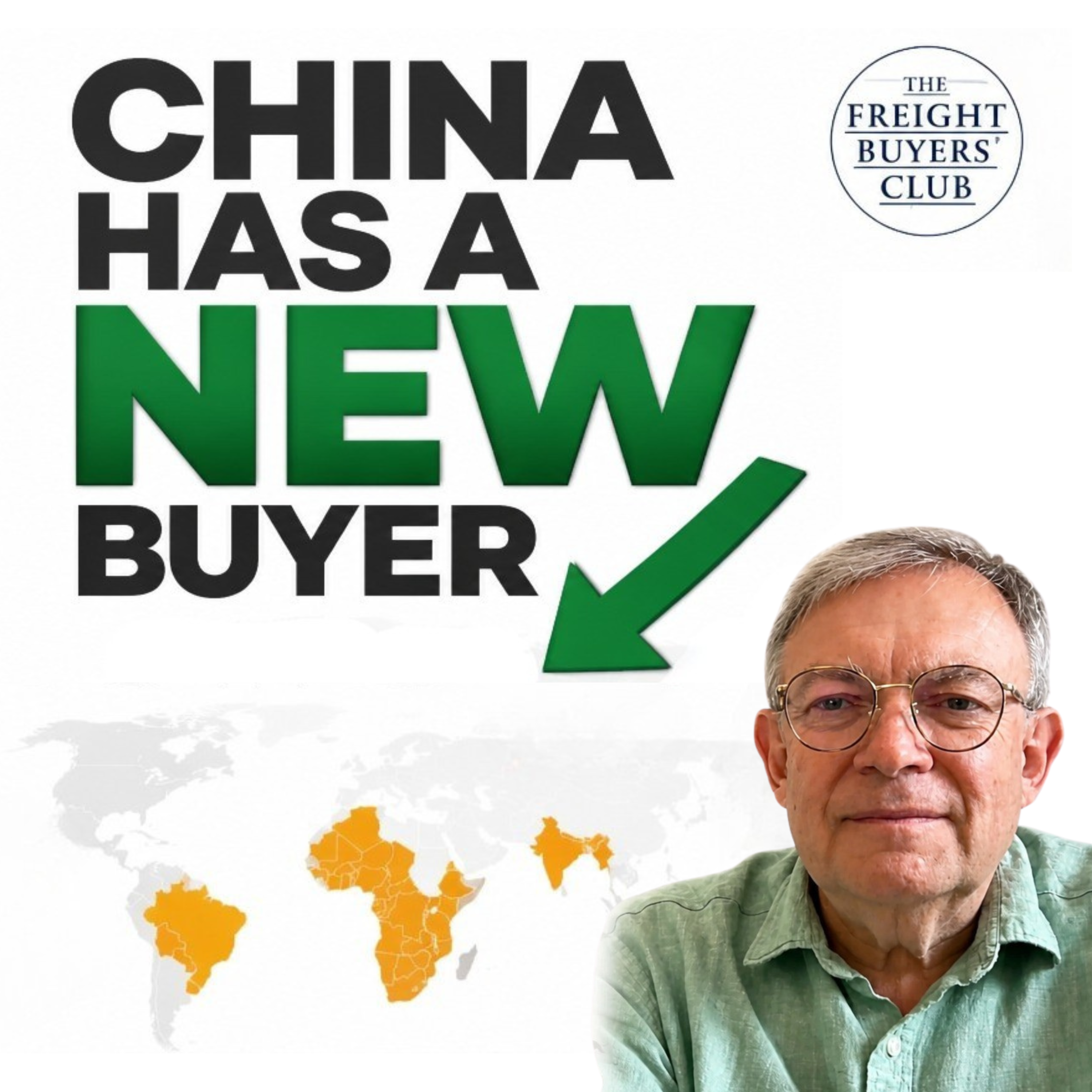
Welcome back. This is Mike King and I'm here with Nigel Pusey, the CEO of Container Trade Statistics. So, Nigel, China losing share into the us Beholding strong into Europe. The Boxers are presumably going from China into somewhere else. I'm hinting we've heard a lot about Sub Saharan Africa and South and Central America as growth market. What are the numbers?
[00:31:16] Speaker B: Yeah, so Sub Saharan Africa, as in first quarter is still up 33%, which is incredible volumes. It's a. I believe it's something like a million to use more extra into cyber Saharan Africa than this time last year, which is quite, quite something.
Pretty much driven all out of China largely to West Africa though East Africa is catching up.
So that's the very big one.
South America, central South America is up 17% and that's pretty much largely east coast, largely east coast, Brazil's etc. And then the other one which is slightly hidden by what's going on in the Middle east is India is 17 also 17% up year on year. So we've got this constant and this has been now going on since the Q3, Q4 24. And that's my point earlier that before Trump was even in place, China had made a clearly conscious decision to start moving cargo and finding other markets because they were going to lose, you know, lose out the volumes to the US and this march into these, the southern state, the southern regions has now continued now for pretty much 18 months.
And I don't see it decreasing unless the oil price gets to the point where it starts to affect the GDP increases in the Nigeria. So this is an investment led at its first level. It's a lot of investment coming in, but it's also an element of consumer demand as well. And that may tail off if the oil price continues to rise for the rest of the year.
[00:32:53] Speaker A: That sub Saharan Africa up 33% really struck me. It just made me start thinking about quite a few of the little other things that are going on economically. This feels to me like it's a long play for China because they've been investing and building infrastructure right across Sub Saharan Africa or large swathes of it for various reasons. Some of it's to get hold of resources, some of it's to build political capital, some of it's to make money on those investments. We've also seen though at the same time massive investments in ports and logistics just from European carriers as well as from China. Is that enabling these sorts of numbers, do you think?
[00:33:32] Speaker B: Yes, I don't think it's something you'd achieve. This volume growth in the likes of Lagos or Timor or if you didn't see some significant improvement in port efficiency. I mean you can load as many boxes off you like, but if you can't get them to their final destinations rapidly, any port congestion as we've seen during COVID years can happen quite rapidly. So I think we're definitely seeing a massive improvement in the quality of port terminals. We're seeing 20,000 TEU ships going to Lagos and this is almost unheard of, you know, even five, six years ago. So yes, you did need port efficiency and largely because, for instance, one of the big projects that we've been looking at is this railway in the Western Africa which is, I think they call it the Great Belt Railway or whatever that has had this massive import of Chinese machinery going in in terms of building that infrastructure project. It's a UN based project, but China's the major supplier of goods into it because they're the only ones with the sort of machinery capability at the price they can afford. So West Africa is having a massive logistics revolution it seems to me at the moment. And it's going to be fascinating.
We're starting to see exports come out the other side, which is a fascinating change. You've got lots of capacity going in there from the lines, which is driving the price index.
I think the price of cargo out of West Africa is half what it was this time last year. And that's largely driven by lines going, gosh, we need to be into this market suddenly getting a large amount of capacity in there and price dropping to cope with that capacity increase.
[00:35:18] Speaker A: Bigger ships, more capacity.
[00:35:19] Speaker B: Yeah, no, exactly. So, and that's the way this trades, what, these trades work?
[00:35:24] Speaker A: Yeah, I've seen that, seen that myself a little bit in East Africa, the new railway from Mombasa into Nairobi and then there's roads right through Uganda filling into the whole Rift Valley area. I mean it's, it's revolut. I don't. There's been a hangover there in terms of what people think about those Chinese investments and who's benefiting from them. But there's no doubt the infrastructure is massively improved and that creates lots of business opportunities for import, export.
[00:35:47] Speaker B: And again there, Mombasa as a classic example of a port which probably didn't function.
Everybody believed it could function. Well, it just needed somebody to come in and manage it, you know, who had the experience and you know, and there are a lot of big international port companies moving into these areas and Mosbasa has had a massive value increase, you know, overshadowed by what's going on in West Africa. But East Africa has similar, similar increases in the last years as well.
[00:36:15] Speaker A: Well, if anyone wants to check out a feature I did last year on South Africa, the Good, the Bad and the ANC that really does dive into how port efficiency can benefit or hinder trade. I think you could probably see what's been going wrong in South Africa has been going right in West Africa.
Just let's switch pivot there, Nigel, to South America. What's that trade picture looking like?
[00:36:40] Speaker B: Yeah, it's again pretty robust, pretty much largely driven by China.
But the South American economies generally have been quite robust. We've had some good exports out of there over the last few years. But again, this one's slightly, I believe, more consumer led than perhaps the sub Saharan Africa as the India one. I think India and South America are consumer driven, you know, increase in GDPs matching imports from cheaper imports from China and Southeast Asia, largely China. But we're seeing some rust bus figures As I said, 17% I think, first quarter and I think that's pretty much what it was for this time. For the whole of last year, 25 over 24.
We've seen something similar.
So yeah, very strong growth and again that's probably more vulnerable to oil price increases.
If that continues then I think that may be a much more vulnerable one than the sub Saharan.
[00:37:37] Speaker A: Just on distance.
[00:37:38] Speaker B: Yeah.
[00:37:39] Speaker A: The EU Merkasaw agreement came into force 1st of May. Obviously too early to see any change in trade. But do you think it'll drive things later a few years down the road?
[00:37:48] Speaker B: Maybe I think it will, but I think it'll be overshadowed by what's happening out in China, to be honest. You know, maybe this is the market
[00:37:56] Speaker A: for Europe's failing exports.
[00:37:58] Speaker B: Well, yeah, you know, I think it's going to be a fascinating thing. It's a very exciting and interesting in trade deal because it covers such a large area. But I think, you know, at the end of it it's going to be particular types of goods and we may not always see those coming over in containers. Whereas I think the Chinese cargo will be largely consumer retail led rather than high tech.
[00:38:23] Speaker A: Just a couple more, Nigel. The China to Middle east price index doubled in Q1 from 105 to 209.
Quite a jump. Yeah, I think we know why this might have happened. Volumes down 23.8% Q4 to, to Q1 and, and March alone down 62% year on year. How does, how do those numbers compare to what's happening outside of that region? Obviously it's affected by war.
[00:38:49] Speaker B: Yeah, so. So I think, you know, basically the whole region has suffered an impulse collapse and that's partly because March was the month where people had to work out. Well above the Straits of Hormuz pretty much survives on container imports. So the economies need that for essentials, not just for sort of consumer goods. So there had to be some radical rethinking. So what we've seen there is people stopping working out how they're going to reposition.
I think the total region lost 840,000 TEUs in the month alone. So that was the one and a half percent we lost in global growth. Was. And that's the whole Middle east, half a million that is above the Hormuz. But it's also affected others because they had to think, well, how are we going to get that cargo? You know, there was uncertainty. People didn't want their container suddenly stranded somewhere because they couldn't get into the Middle east or people were bypassing it.
But we've seen carriers responding to this and trying to find new ways in. And I think that that meant everybody just stopped, took a step back, particularly from the cargo owner's perspective, thinking, right, let's not rush and put all our cargo to go there. Let's work out how we're going to get it there, step back, just keep the cargo on the quay and then come up with a new plan. And I think that's what we've started seeing when we publish our data again at the end of next week. I think we're going to see a uptick in Middle east cargoes as everybody's starting to work out, right, what is it we're going to use as our new logistics plan into this region? And there are lots of fascinating ways how trade has found new ways of coming into the Hormuz area with their trade movements. So I think we're going to definitely see a tick up as people come out of that uncertainty phase.
[00:40:43] Speaker A: We've covered how those air hubs and the carriers have recovered really remarkably quickly, considering there's still a lot of tensions out there.
[00:40:52] Speaker B: Absolutely.
[00:40:53] Speaker A: Missiles flying around.
But I mean, you've just alluded to it there. We're seeing supply chains readjust and big winners on the port side, land bridges set up. Do you want to just walk me
[00:41:05] Speaker B: through that from your perspective Now? There are a couple that are quite fascinating. One is some like areas like Khorfa Khan, which is, you know, a very, was a very sleepy port. Now it's become probably the most strategic one just under Straits of Hormuz. And I was talking to somebody the other day and they were saying they set up with a transport yard effectively for trucks, was created in a couple of weeks out there just to start coping with the land bridge across, you know, through the, the mountains back up into Dubai and Abu Dhabi.
[00:41:37] Speaker A: It's a good time to be in trucking.
[00:41:39] Speaker B: It certainly is. I was saying something, I was, I definitely want to be a trucker in the Middle east and Then the second one of those, which is probably the most lucrative is cargo coming down into King Abdullah and Jeddah. We can't quite see it in all our data, but it's quite interesting that Alderman, you know, collapsed.
But when you go into the detail, Jeddah and King Abdullah, King Abdullah has seen an increase. Jeddah's actually got a slight increase. And I think we'll start seeing that more as we've seen the carriers start coming into Suez from the north and going to Jeddah and turning back and coming back out again, dropping the cargo off in Jeddah and then land bridging across Saudi. I've heard some very valuable rates to be the truck driver when you're driving across the desert to the the likes of Qatar and Abu Dhabi at the moment, there's some very valuable incomes being there, but it's become quite a valuable land bridge for those countries and quite a lot of cargo will be coming that way. It'll be fascinating to see how much when we release in the next couple of months.
[00:42:44] Speaker A: Okay, thank you, Nigel. Let's do a bit of crystal balling to finish two or three things you're watching for the rest of 2026. I hope you can't say Suez opening because I've been doing that story for so long now.
[00:42:59] Speaker B: I'm personally a believer that sue is going to take a long time before that happens. So I'm not even going to say it, but I personally don't think Suez will open much with before the end of the year. People their toes. I think there is a supply chain. There's a sort of equilibrium here at the moment that everybody's broadly happy with.
It's gone much smoother than anybody expected.
It's allowed supply chains to stretch a little.
Okay. There's a higher inventory cost having them on the sea, but there is a certainty to that trade that people won't want to undermine unless it really there's absolute guarantees.
But to me, the big thing this year, and this is what's going to drive global growth if it continues at 3 or 4 above the 4%, is this continued drive in Sub Saharan Africa and South America. And I think the big question for me is will consumer demand be hit by the oil price? Has that gone on long enough?
If there's peace in the Middle east, will oil prices come down?
If they don't and we have six months of oil prices high and it starts to affect consumer demand, I think we're going to see a drop off in latter part of Q3 and Q4. But if the growth in the container market will be in those areas, it's not going to be trans packed and it will be less so in European imports.
So I think that'll be the key fascinations to watch as those southern trades start to gain in importance and volumes. The other one, which we don't talk about much and I think this is a really strong trade at the moment is interasia.
You know Interasia, biggest trade globally. I think we hit 50 million TUs out of 190 last year in interasia alone. That is still incredibly strong. 7 or 8% year on year, first quarter, nothing dissimilar. And I think that will keep motoring and again will have some impact from an oil price but it won't be so great as in Sub Saharan Africa and East Coast South America.
[00:45:03] Speaker A: Nigel Pousey, CEO of Container Trade Statistics. Thanks for joining me today on the Freight Buyers Club.
[00:45:09] Speaker B: Good to be with you.
[00:45:10] Speaker A: Much gratitude to the Mercad Express Group, specialists in global freight forwarding and Asia US Trade lanes for supporting independent journalism. Thanks to Karen Ball and Tom Matthews for their production excellence. And a big shout out to you all for listening. I'm Mike King, this is the Freight Buyers Club and we'll be back.