Episode Transcript
[00:00:03] Speaker A: Coming up on the Freight Buyers Club, US Gateway ports have just had the busiest month in their history. Truck rates are up by around a third and freight is moving onto the railroads. Oh, we've got the midterms coming up. Just as fuel prices are soaring across modes, what could go wrong? So what does it all mean if you're shipping into or out of America this holiday season? And what should we expect next year?
[00:00:28] Speaker B: The rise from diesel pre water today hasn't been easy even across the board.
[00:00:32] Speaker C: RXO does bring C.H. robinson a big last mile component.
[00:00:37] Speaker B: When you pull into a fuel island to get diesel, there are ice officers waiting at every fuel island to check everybody.
[00:00:45] Speaker C: It's not simply a matter of supply going up and down, expanding or contracting. I think it's also dislocation of supply.
[00:00:53] Speaker B: So nationally it's $2.22. It's almost a dollar higher in Los Angeles. But if you go to where a lot of this volume moves out into the desert In Phoenix, it's $4.42amile.
[00:01:04] Speaker A: I just need to get this out of my head because it's just hanging there. Do you drive to conferences in your own truck?
If your supply chain runs through Asia, why not work with a company that has been connecting Asia with the world since 1971?
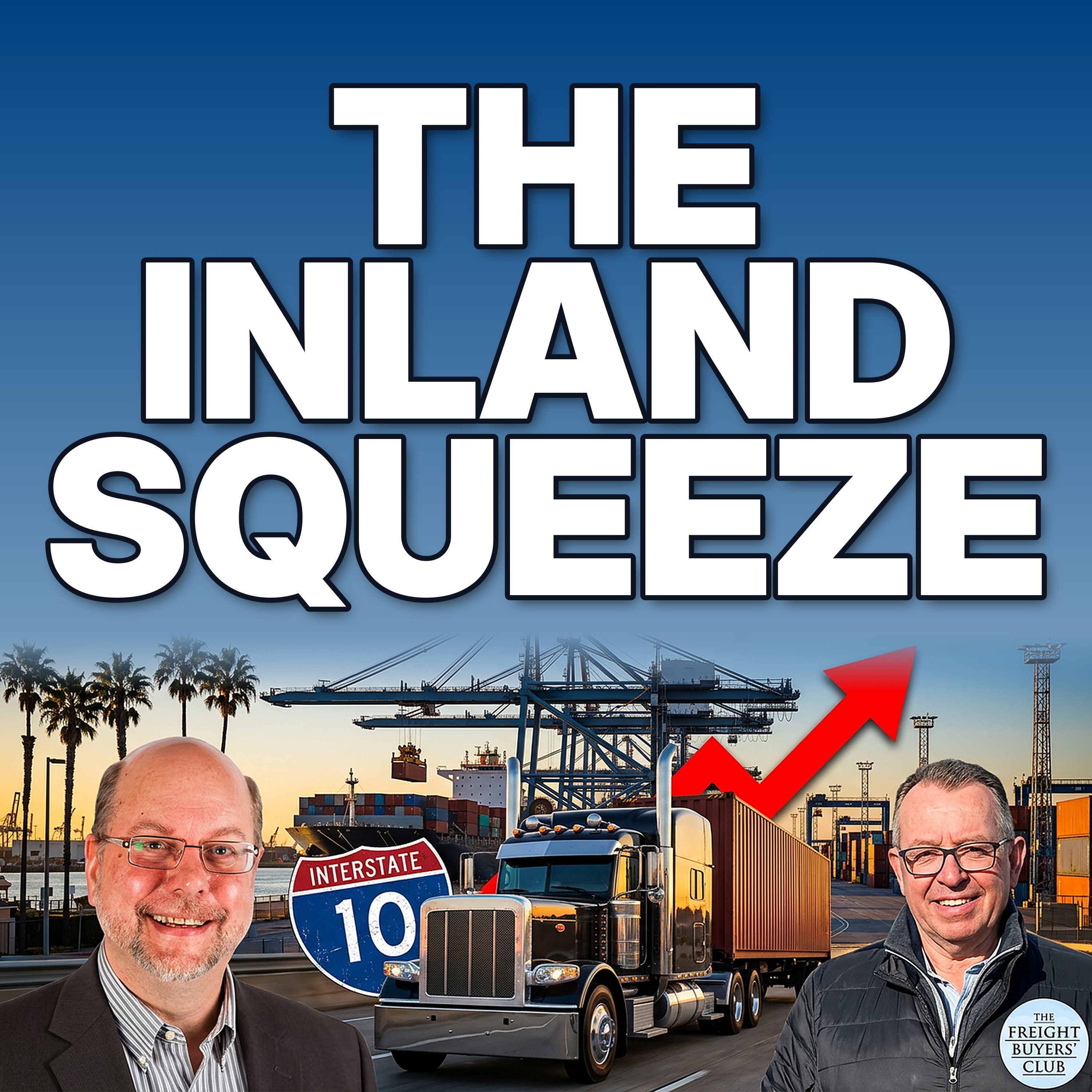
De Merco Express Group hello and welcome to the Freight Buyers Club. I'm Mike King. In this week's episode, we're going stateside and inland. The big US west coast entry points have just had record months. We're in the midst of the air cargo peak season. Truck rates are running about a third higher than last year. Diesel is over $6 a gallon and drivers are leaving the industry faster than ever. So once your container is off the ship, what's going to cost to move it? And what do importers and exporters need to know as we head into the holidays and into 2027? To help me answer that, I'm delighted to say I'm joined by two giants of the American domestic freight market. Bill Cassidy is senior editor trucking at the Journal of Commerce, where he's been since 2009, and he co chairs JOC's excellent inland distribution Conference. He's been reporting on Trucking since 1984, so there aren't many cycles in this he hasn't seen up close. Bill, welcome to the show.
[00:02:29] Speaker C: Thank you very much, Mike.
[00:02:30] Speaker A: Thanks for coming on. And Dean Croke is printable analyst at DAT iq, part of DAT Freight and Analytics. DAT previously dial a truck. He's also the host of the DAT Freight Market Update, which gives you everything you need to know about where U.S. trucking is heading each week.
Aside from being America's favorite trucking guy, Dean also doubles as the most popular Aussie in the US Since Crocodile Dundee. So I'm told. How you doing, Dean?
[00:02:59] Speaker B: Oh, good.
What a great intro. Thank you.
[00:03:04] Speaker A: Okay, before we get into some of these issues, I just want to settle something before we start, and I don't want to offend anyone, including you guys, seeing that you've done me the courtesy of coming on. Now on the Freight Buyers Club, we cover freight markets all around the world.
And the only one where people. People call it the freight market is basically US Domestic. So can you shed light on this for me, please? What's it all about? Why is that?
[00:03:32] Speaker C: I think it's the centrifugal nature of America to an extent. You know, it's exceptionalism. Freight market.
[00:03:40] Speaker A: Freight market, Yeah.
[00:03:42] Speaker C: I mean, there are lots of freight markets. It's a big one.
It is a very big one in terms of the dollar amounts that are thrown around and the amount of freight that's thrown around. I think that the U.S. domestic freight market at the Journal of Commerce, of course, we focus a lot on international freight movements, on containerized trade. You look at what's actually happening in the US Freight market, and I think it is in some cases, the size of the actual amount of goods being moved surprises people.
It surprises people, importers and exporters who are more involved in the international side.
Certainly it's one of the biggest freight markets. There are lots of freight markets. And what happens here often has some relation to what's happening in other parts of the world as well. Obviously, I think I'm going to call
[00:04:33] Speaker A: this podcast, the podcast that should have been called the Freight Market.
So if we use that phrase for anyone listening in, we're talking about the US Domestic, domestic in land markets.
[00:04:43] Speaker C: Right.
[00:04:44] Speaker A: Okay, before we start, a big shout out to our sponsor, Democratic Express Group, your best partner on the Trans Pacific trade, and a call to action. If you enjoy our free content, please do like, comment and share on social media.
Come on, ladies and gents, press that button.
Dean, let's set the scene because I want to start with the numbers. Truckload spot rates are up by about a third on last year. But I've been listening to your excellent podcast and you keep saying that's not because there's more freight.
What's going on in the market? Cause I can't make those things join up.
[00:05:16] Speaker B: Yeah, it's the first time this has happened. Bill's probably got better perspective. I've only been here 26 years, but Bill's freight cycle knowledge is on another level. So I'd love to get his take on this because I've not seen anything like a relatively flat freight market from a demand perspective reprice a market cycle so aggressively in basically a six month period this year. And it wasn't because of, you know, more demand for more loads on trucks. It was just that we had this massive exodus of capacity from the industry, which I think was the hangover from the doubling of capacity during the pandemic.
So fast forward six years and we're now seeing the stragglers. And it turns out a lot of them shouldn't have been on the road. Some of them in recent road check week results, something like 16% of drivers had no commercial driver's license at all.
And so like, cause as a driver, I've been out on the road in my truck driving and I would have drivers go past me in my truck and I'm thinking it's almost, this is a five year view. I'd been thinking it's as if these guys had never been in a truck before and got their license off the back of a cereal packet. Well, it turns out that's exactly what had happened.
So this year we've seen a really aggressive stance taken by the current administration on drivers from other countries. Drivers that don't have the right immigration status, drivers that don't speak English properly or can't meet the English proficiency standard.
We've had all sorts of activity around cabotage on our southern border carriers from Mexico, adding capacity by coming much further into the country. And of course, driving schools, they've got rid of something like 16,000 driving schools.
But what's really happening behind the scenes, Mike, is Immigration Customs Enforcement, or what we call ICE here.
They're out on the roads helping the DOT and transport authorities enforce some of these regulations.
And it's terrifying. I was in my truck over the summer, did about 6,000 miles in 11 states on vacation and conferences. And I had my first ICE experience.
When you pull into a fuel island to get diesel, there are ICE officers waiting at every fuel island to check everybody.
[00:07:37] Speaker A: Wow.
[00:07:38] Speaker B: And they will knock. You mentioned pulling into a rest area somewhere in France and a quiet little area and people bang on the door of the truck and want to check your immigration papers. Like it's a frightening experience. So absent regulations and statute and codifying some of these regulations that have been on the docket, it's changed People's behaviour like you don't need regulation to actually change behaviour when enforcement is so aggressive in truck stops. So we've seen a massive exodus of carriers that don't check all the boxes. And in simple supply and demand terms we've got far less trucks now for the same number of loads as last year.
[00:08:16] Speaker A: There's a lot to unpack there, dear. Firstly, I'm trying to imagine you driving to work in a truck and then I'm trying to imagine I stopping you and going, where the hell's that accent from? Well, why has he got a truck, Mike?
[00:08:26] Speaker B: So I've got a show truck, right? So I go to truck shows in this big beautiful black Peterbilt and I pull into the fuel island and. And of course they're looking for people that can't speak English or speak differently. And of course I open my mouth and the guy goes, you could see his eyes light up because he thought, oh, we've got a non domicile CDL driver here that's from another country that probably hasn't got the right paperwork.
So I let him, I strung him along for a little bit. And then of course I always carry my passport and global entry and every other document that I've got. So we had a bit of fun with it, but it was not fun for other people that are legitimate truckers, been here for a long time, safe drivers just. It's terrifying what's going on. So it's a very different trucking industry and a lot of people are leaving just because of the aggressive enforcement that's been going on since January this year.
[00:09:20] Speaker A: So these rates that we're seeing that we've got on screen, the, the reefers, the flatbed, the standard trucking rates, they're all at these highs for those watching on Spotify and YouTube. Put another graph up here now. And the rate as we've got now, these are miles clear of the nine year average and have been for most of this year. Can you walk me through how things have varied as the year gone by? You're suggesting here that this is all supply side, but then we've also had these other things going on and maybe you can knit them together because from the freight buyers club side of things, we've been covering front loading. So this international element of it, of front loading ahead of the tariff changes in July and then we've had these impressive volumes into the west coast port. I don't know how much does that move the domestic needle? And at the moment, I mean, I know this is not heavy volume, but it's heavy value. We've got the air cargo peak season, holiday season.
So how does all of that play out alongside what you're saying on supply?
[00:10:15] Speaker B: So the numbers that we've got there on the screen are kind of our national average numbers and they really mask what's going on at a freight market level. And some of these freight markets are pretty big, particularly the west coast one around Los Angeles that you just touched on. Imports in the Los Angeles are sitting at about 19% higher year over year. In fact, it was one of the biggest Septembers that we've seen on the TEU import side, I think Port of Los Angeles hit a 118 year record in terms of the total number of movements. So this is of course ahead of retail season over here. The ability of the American consumer to buy things is just. It never ceases to amaze me given all the geopolitical risk and economic uncertainty here. But the numbers, how it flows. If you said the national average for freight was, you know, around 225, excluding fuel for dry vans as the national average.
[00:11:10] Speaker A: Right. This is per mile.
[00:11:11] Speaker B: Per mile, yeah. If you go to the Port of Los Angeles, where these imports are surging into the country in record numbers, it's almost a dollar per mile higher outbound loads out of Los Angeles. And if you go to where the, where a lot of the imports end up in Phoenix in these warehouse distribution markets, which is sort of where your fulfilment comes from for online ordering or a secondary move to another fulfillment center on the east coast, there's this west to east movement of goods through various warehouse and distribution markets. So nationally it's $2.22 if you go to. It's almost a dollar higher in Los Angeles. But if you go to where a lot of this Vol moves out into the desert In Phoenix, it's $4.42amile.
So it's well over $2amile higher on one of the busy lanes. So you said, how does it affect. On certain lanes and certain markets there's incredibly high spot rates to move freight. And that's sort of. And because the average masks the highs and lows, you don't really get a sense of how that plays out in individual markets. But that's a good example.
[00:12:19] Speaker A: Yeah, I'm hoping to catch up with Gene Sirocco from the Port of la. I bumped into him at PSA in Singapore, so I'm hoping to them in London next week at the IAPH conference. Sorry Bill, were you coming in There.
[00:12:30] Speaker C: Yeah, I was just for a second, Mike. You know, I think one thing that jumps to my mind hearing Dean talk about the supply issues is that it's not simply a matter of, you know, supply going up and down, you know, expanding or contracting. I think it's also dislocation of supply and that, you know, when you have such variance lane by lane in terms of costs, I think what ends up happening is that trucks wind up following the higher prices. They wind up not being where people expect them. So if people can make a lot of money in, say, the Texas oil fields right now or hauling resin, they might not be available to haul other things out of the port of Houston. And that, again, has an impact on rates going up in the Gulf Coast. But I think that dislocation is a. It was a real issue back during COVID and I think it's a real issue again today.
[00:13:27] Speaker A: Dislocation. How about diesel prices, though? I mean, as we're looking at these numbers through 2026, how much of this is just the cost of fuel?
[00:13:34] Speaker B: I was just going to add that because the dislocation that Bill talks about is a great point, because carriers are being very selective about lanes they run not just based on topography, in terms of mountainous areas that burn more fuel, but lighter loads that don't burn as much fuel, and then certain lanes that have fewer empty miles in between loads because the empty miles are just burning diesel. And I think that's a big reason why we've seen so much dislocation in the market. Carriers have really scaled back the amount of empty miles and their willingness to run into markets where they're going to be exposed to a freight imbalance. And to give you an example, California has always had the Highest diesel at 8.24. Today, it's almost $3 a gallon difference between California and Georgia.
[00:14:19] Speaker A: That totally changes all of the economics and fleet management. And. Okay.
[00:14:23] Speaker B: And the rise from diesel pre war to today hasn't been even across the board. It's different for regions and different for states. So carriers have sort of gravitated to markets where diesel is the most favorable and the freight volumes are the most
[00:14:36] Speaker C: consistent, as they would do.
[00:14:39] Speaker A: Same with any other market, even in the market. Bill, I just want to go through some JOC numbers, but I just need to get this out of my head because it's sort of. It's just hanging there. Do you drive to conferences in your own truck?
[00:14:51] Speaker C: I only wish that I did.
My experience in trucking, I have had some work experience on loading docks. Long, long ago, but never. I've only driven the truck on a test track and that's probably a good thing.
[00:15:05] Speaker A: I mean I can drive a forklift, but it doesn't quite really doesn't really do it, does it? In romantic. No, no, no. All right, well let's drop that okay pill. Dat's numbers are based on what the broker pays the carrier. And we get some numbers up here. The Journal of Commerce tracks the other side what shippers pay for a spot truckload. It bottomed out around $2. We just covered this a little bit, but I just want to hear how these numbers might differ. So it was around $2.20amile through 2024. Most of 25 it's up to about 3.30, which. Which is close to where it was at the height of the pandemic boom. Now there's a few things from your stories that I just wanted to bring together because you wrote in September recession wasn't over yet. And you've also written that manufacturing is picking up a gear. So the S and P global PMI is high since 2022, but also that consumer confidence is at a 12 year low. So please unravel all of that for me, please, if you would.
[00:16:02] Speaker C: Well, part of the problem is things keep changing on us, don't they? Every week the story is different but I think overall in general what you're seeing is yeah, we have.
Whether it's a two speed economy. I think the best description I've gotten is the K shaped economy.
And that's a new one on me. The K shaped economy may not be restricted to the freight market, but it basically is. You have the K and the upper part of the K is the upper income crowd. The higher, the lower branch of the K that rests on the bottom is everybody else.
[00:16:39] Speaker A: So maybe the ah, okay, so inelastic demand, elastic demand. Right, or the other way around.
[00:16:44] Speaker C: Yeah, yeah. So perhaps the 75% on that bottom leg of the K is not spending as much. They don't have the discretionary spending. They are living on a paycheck week to week, month to month. They're the ones who are feeling the brunt of higher inflation, higher fuel prices. Whereas the top branch of the k is that 25%, 10% whatever it may be, that has enough income to continue spending freely.
And apparently they're doing it. And I think that's part of what we're seeing with the consumer spending numbers when we oppose them to the consumer confidence numbers which otherwise don't seem to make a lot of sense.
So you still have at least the stronger American consumers, the more affluent American consumers going out there and buying goods. But you know, they're not buying goods the way they did back in 2020 or 2021, 2022. That's back when we all like ordered like three refrigerators within a 12 month period.
You know, so you could keep your beer on your porch as well as in your kitchen. You know, you had to have several refrigerators for that. But, you know, yeah, we're now ordering much smaller goods online and, you know, not so much the, the durable goods that we were ordering back then. So that of course generates a different kind of freight demand. And I think, you know, this is where we're seeing again kind of a dichotomy or a gap between our perceived, you know, hey, the Cash Freight index, the shipments index is up two months in a row. You know, the PMI, the S&P Global and the ISM PMIs are up.
Freight demand must be finally rising. Then I go out and I talk to people and they tell me, well, it's about the same. It's about the same as it was a year ago.
So we're all wondering at what level when you see the PMI rising, the S and P global PMI is 55.9. I think the ISM number is just a little bit lower.
When you see those numbers rising and they've risen pretty well, how high do they have to rise before it translates into freight on the docks?
And nobody can give me a good answer.
I wish I had a really good answer for you on that. And I could say when it hits 60, we're going to see freight demand really kick off, but I just don't know. But it does tell me that there's a lot of the demand that we're seeing.
It might be from freight that has been bought into the company, into the country. I'm sorry, ahead of schedule because of tariffs, which you talked about a little bit earlier.
[00:19:34] Speaker A: Yeah, yeah, there was a big change in the tariffs. Right. So the IPA were ruled illegal by the Supreme Court in February. Then we had a six month temporary arrangement that ran out July 23rd.
So the story from the shipping side of this was lots of front loading before that point and then we were expecting a big drop off, but that didn't quite happen. How? It was explained to me from shippers themselves, in fact.
[00:19:57] Speaker C: Yeah, So, I mean, we have all this freight that's come into the country. We have more demand apparently within the country, but I think the demand that we're seeing it's an improvement year over year now, but it's a very small improvement.
So I don't think people should get too excited by it. I think that hopefully it's going to continue.
I think we're more, we're more than likely to see more demand in the rest of the fourth quarter leading into the first quarter next year.
But you know, I don't think it's going to be anything like what we saw in 21, of course or just in the post Covid period.
So that it's good. But I mean the headwinds are there as well and the headwinds of course are inflation and you know, the cost of diesel fuel and you know, the housing market, you know, which is a big contributor to US freight demand. And that's just not going anywhere right now.
Not with interest rates being so high.
[00:21:03] Speaker A: Yeah, yeah, of course. So. But I just an interesting one in terms of that demand, there's a JOC US Coastal port Dreyad Raich which we're showing on screen now, big increases as we're seeing across the other trucking markets. But there's a real surge out of the US Gulf port.
What's driving that?
[00:21:23] Speaker C: Part of that is resin exports and these are the rates. So it's not volume. But what's happening is as more capacity is diverted to resin exports or to infrastructure projects within Texas. And data centers are big in Texas. Oil of course has always been big in Texas.
So when there's more demand in those areas, I mean the data center question reminds me a lot of fracking back about what?
[00:21:56] Speaker A: That was a massive booster of these markets, wasn't it?
[00:21:59] Speaker C: Right, it was. And a lot of people said, hey, I could make so much money hauling sand for fracking. I mean I'm going to go do that. And so they do. And there's not as much available for typical drayage or typical truckload and that affects the rates. So I think we're seeing a lot of that. It's not so much that this is not necessarily dependent on the volume. I think that a lot of the increases here in the port rates reflect the fact that drivers have gone elsewhere and there are fewer available at these ports and that's pushing the outbound rates up. You know Dean, am I off, off the reservation there?
What do you think about that?
[00:22:45] Speaker B: I was thinking a lot about the bifurcated economy or the two tiered economy that we've got because you touched on single family housing which is down. If you look, we had about almost 900,000 single family homes built in September. That's 25% less than during the peak of the pandemic, which was sort of our last boom cycle. And then you go to, you say, well, okay, that drives a lot of contract freight for roofing, you know, lumber, dimension framing, lumber, flooring, things that are contract freight that haul on open deck carriers. And then you go to the AI data center side of it because parts of flatbed or open deck here are booming, other parts are really hemorrhaging.
You go to data centers and infrastructure on the spot market because you've got to remember a data center is built in the middle of nowhere and it's not a contract, it's not a repetitive contract negotiation. So it's mostly a spot market play. The large data center companies have built or are building something like they're going to spend about $750 billion on data center infrastructure this year. It's a staggering number. And I did some math on it the other day.
There's about, it's something like 100,000 loads per gigawatt of construction.
This is everything from hardware, GPU racks, concrete rebar machinery, all those sorts of things. So the data center side of the economy is driving open deck freight through the roof. And then you look and say, okay, well, what's another example of a sector that's doing poorly? Farm machinery. Agricultural machinery is down about 25% year over year because farmers are hurting, prices are high, diesel is higher, fertiliser's higher. Their trade markets, their tariffs have removed some of their markets. So even in open deck, flatbed, specialized, some sectors are doing well, others are doing really poorly. And I think that's sort of the story of the freight market this year.
[00:24:48] Speaker A: So just on the AI or the hyperscale of the data center, this is driving different elements of the market. We on the freight bike club, we've got an air cargo monthly that we do, I do with Neil Jones Shaw called air cargo impact. And we're always talking about AI and semiconductor demand. But obviously this is not high volume, this is high value. But the other end of this is these heavy specialist shipments while these plants are being built. That really drives the trucking market.
[00:25:13] Speaker B: Exactly. Yeah. I mean, there's a big component of made in America also has a big component of imported goods in them. Whether you're talking servers, racks, transformers, switch gear, cooling systems, I mean, batteries. China supplies about 40% of U.S. batteries. You've got copper and steel. There's so much of what comes in on the air Cargo side, that's incredibly valuable.
But from a pure trucks going into a data center, the vast majority is concrete and then you get down into dry vans, which is a smaller percentage.
But it's what because of the location and the nature of where data centers are, that's what's driven the spot market. And Mike, it's held up the flatbed and to a larger degree the truckload market for the last two years. Absent AI data center build out since ChatGPT in 2022, the trucking freight market here in the US would be in much, much worse shape. And I don't know that we can estimate how much it's provided to the trucking market, but it's substantial to the point where you see vastly different freight rates in the spot market versus the contract market, which again is unusual. You don't normally see spot and contract separate apart and become dislocated as much as we're seeing right now.
[00:26:31] Speaker A: And it's a short term boost as well and in many different ways. I think if you look at capital investment, a big data center, so you might employ one person per billion versus the average for that billion would normally create 100 jobs. Now it creates one. I mean so these are short term employment benefits or freight market benefits. But what happens after?
[00:26:54] Speaker B: It's a big question because we are seeing some headwinds from both community and state and local governments are pushing back against data center infrastructure. It's going to be a very big topic in the midterm elections coming up and I think it'll extend into the next presidential election. I think data centers are becoming a really big headwind for a lot of carriers because this is almost like a bubble that's about to burst. We've ridden this wave for a little while and I think at some point freight volumes start to really taper off once these data centers are built or get shelved.
And I think that's the next warning sign that I'm going to watch for is when data centres that are planned don't go ahead.
[00:27:34] Speaker A: Yeah, a lot of interesting questions around that in Europe and elsewhere as well. We're going to take a short break there. When we come back, consolidation, a big court verdict, those midterms that you were just talking about, railroads, the holidays and what 2027 looks like for anyone moving freight in the US are you struggling to manage today's complex tariff environment?
Work with a3PL that combines global shipping with an expert knowledge of trade. Complex appliance Demerco Express Group connecting Asia with the world since 1971.
Welcome back. I'm Mike King. I'm with Bill Casti of the Journal of Commerce and Dean Croke of Dat.
C.H. robinson is buying RXO for $5.8 billion, the biggest logistic deal ever in the U.S. i think if you're a shipper, what does this sort of consolidation look like?
How does that affect you? Bill?
[00:28:31] Speaker C: Not as much as you might expect from the size of the deal. And that's because of the size of the third party logistics industry, like trucking, like truckload in particular, the 3 PL industry. That third party logistics industry is huge and is fragmented, you know, so C.H. robinson, $16 billion US billion dollar company, the largest freight broker in the United States. I think Dean has got about 12 billion just in freight brokerage revenue, let alone the forwarding revenue, the global revenue.
It's a fraction of the total market.
It's a few percentage.
[00:29:13] Speaker A: So it doesn't really make that much difference. It's a big deal, but it doesn't really change anything for anyone who's buying.
[00:29:21] Speaker C: I think it helps drive certain things. I mean, I think what C.H. robinson seems to be doing here is looking for certain types of customers, I believe looking for perhaps greater density, market density in certain areas or in certain fields and services.
They're not gaining, I think a lot of technology necessarily directly from RXO. They're talking about applying their own lean AI platform across RXO's business as well.
But I think that increasingly a lot of the activity that we're seeing in terms of mergers and acquisitions is going to be about what services can I bolt on to my core and can I add greater last mile. And that Rxo does bring C.H. robinson a big last mile component that it got from XBO back when it was part of XBO and which XBO built by rolling up a lot of individual last mile companies back in the last decade. So for shippers, you're seeing some of the biggest suppliers add on new services, perhaps gain new technologies.
And what those companies want to do is try and get you as the shipper just to come to them.
So you're the one stop shop.
[00:30:51] Speaker A: Interesting. I've got another story, Bill. I wanted to run another C.H. robinson story. So it's this $600 million verdict against a Texas judge has just upheld. This is the case. Go back to 2021 when there was a fatal accident and three people were killed.
It's a big award. Does this change who carries the risk when a truck crashes? And is there anything shippers should be thinking about in terms of how this might roll out to them or not.
[00:31:19] Speaker C: I think indirectly it does change the equation. I mean, this has been a more and more pressing issue, I think in the past year as nuclear verdicts, as we call them, huge verdicts against large companies and accident cases multiply.
At the Inland 26 conference, our journal of Commerce and the Distribution conference in Chicago last month, this was one of the biggest talked about topics. And it not just C.H. robinson and what, what the verdict, when it came down would mean, but for shippers, I think the big question is how do I, how do I protect myself? How do I know that the carrier, my 3 PL or my broker is hiring is safe and how far should I insert myself into that vetting process to ensure that I'm not going to be liable for a major accident case?
And if you're a major shipper with a big well known name, you're already being drawn into these cases. So I think it has really shaken the marketplace and a lot of shippers are now having second thoughts or third thoughts about when they use freight brokers, how they use freight brokers, what they're going to require them to do to vet the carriers and what practically they can do. I think there's a huge issue, Dean, we can go into this maybe how you actually vet who is coming to your gate every day.
You know, do the shippers, can the shippers get the information on who the driver is going to be? Is it the same driver every day? In most cases you're a big operator, probably seeing hundreds of different people a week.
How do you know each one has been vetted?
[00:33:16] Speaker A: How do you know, Dean?
[00:33:18] Speaker B: Well, you really don't. And that's the problem that I think everyone's got and they miss in this debate. I did a LinkedIn post on it this week and it comes back to, you know, a carrier can pass every check, tick all the boxes, and the carrier can still send the shipper a driver with no CDL license or medical card.
Right. So those two alone are about five times greater than the English language proficiency violation. And I think this is where a lot of people get caught up in the litigation and the lawsuit side of things because the probability of an accident hasn't changed. Just because you check all the boxes doesn't mean that you've reduced the exposure to accidents because you can be 100% compliant with your hours of service or your working kind directive in the EU and sound asleep at the wheel at the same time.
Right. So a lot of people think that all of this compliance is going to somehow make us safer. No, it won't. That probability hasn't changed. So the probability of nuclear verdicts still remains.
It just means that if we have more checks and balances and protect ourselves from a, you know, process, paperwork, documentation, we might be better off. And I think that's got to be tested in court. And we're seeing some of that now where some of the, there's some exposure for some brokers, particularly those that have used carriers in the past that have been operating illegally with ELD devices that have been falsified.
[00:34:53] Speaker A: Okay, thanks, Dean. Oh, sorry, Jordan, come back in.
[00:34:56] Speaker C: Bill, just, just briefly, I mean, you talked about ELD devices being falsified. It's really, it's a bit mind boggling. The ELD mandate, electronic logging device devices in the United States. The mandate came out in 20, late 2017. It was fully enforced in 2018.
You're supposed to, with few exceptions, have an electronic logging device rather than a physical driver's logbook, a paper logbook.
This was supposed to do away with logbook falsification. All the cases where you had drivers with four or five different logbooks that they, you know, they'd have one that had the real hours and then they'd show one to the inspectors and yeah, so you're supposed to do away with that. And it seems that it really hasn't done away with that, that instead we've just found new, more inventive ways to falsify logs, to falsify electronic logs. So there you go. And you never underlook the ingenuity of someone involved in trucking.
[00:36:03] Speaker B: The difference between the EU audience and our American audience here is how drivers are paid.
So the incentive to falsify your logs and do more miles and do them differently and be more creative is because you're paid by the mile. Whereas in Europe, as I understand it, there's an annual salary and you've got like a 36 hour work week. You've got a 90 kilometer an hour speed limit. So there's a different mindset about how drivers think about work because of the annual salary component. Whereas here there's an incentive to do more. And because drivers spend so much time not driving on shipper and receiver loading docks, by the time they get on the road, there's a real incentive to do more miles as creatively as they can. And of course, that's where the accident risk comes from that results in things like Montgomery and all of the other lawsuits that we're seeing.
[00:36:53] Speaker C: Dean, I really suspect that there's always been a certain portion or percentage of trucking that operates in a black market style. Fact.
[00:37:04] Speaker A: Yep, for sure. That's true in the UK as well. That's our family business. That was. Not that they're not the illegal ones, by the way.
[00:37:12] Speaker C: Yeah, you know, I think it's always been there. It goes back to the 1930s when trucks were first really taking over from railroads and you had what they called, you know, gypsy truckers or wildcatters who had, you know, basically, you know, drive. It's the Drive by Night movie, if you remember that movie with Humphrey Bogart, you know, where they're out, you know, trying to get any load they can just to get by.
So that helped bring on economic regulation of trucking in the 1930s in the US but, but this has always been here. And I do wonder if the current regulatory crackdown, it's not necessarily aimed directly at these, all these truckers we're talking about.
I think it's interesting when we find out we're getting, we're picking up more of the people who not just don't meet English language proficiency requirements, but who don't have a license at all, which could be. It could be an immigrant who's not driving legally, not here illegally. Or it could be. And here, I mean, the United States, I'm sorry, to my global audience. Or it could be there's only one
[00:38:23] Speaker A: market and there's only one us or
[00:38:26] Speaker C: it could be an American citizen, you know, who doesn't have a license and you know, so I do wonder if the regulatory crackdown is going to have the impact of compressing that layer of illegal trucking further.
And if it does, does that really have a direct impact on the level of cargo theft that we have seen in the past, you know, five to 10 years, which has been enormous.
[00:38:53] Speaker A: Yeah, we covered that a bit on here. Yeah.
So if we can move on, guys, because we're going to run short of time and I would really want to get your views on the midterms, which are 3rd of November. It's not far off now. Dean, how important are they for trucking, for broking? What's going to drive the trucker vote? And what are the association saying?
[00:39:13] Speaker B: Yeah, I don't know that anything's going to change the trucker vote.
Heck, we've got diesel prices well north of $6.40 today. And it's like an eye roll.
Like we had trucker convoys and protests all across the country in 2022 when diesel hit 5 bucks 80 over the summer this year it's been crickets and it caught me by surprise. And of course the reason is that higher spot rates have cushioned the blow. So that's the difference this time around. I've got friends of mine who hope diesel stays higher for longer to squeeze all the low margin carriers out really.
And I was shocked by.
And he's a long. He does 3,000 miles every week from Jacksonville to Florida and Jacksonville, Florida to Los Angeles and back. So he's burning a lot of fuel. It's like it's up around 45% of his operating costs. And he wants Diesel to stay high because he gets the fuel surcharge. So he's getting the 88 cents a mile on top of the, you know, the $2.60 to run his reef across country.
But then there's another group that are really hurting and they are exiting the industry. We don't know in terms of how many, what the percentage is that's leaving, but there is a certain cohort. So I don't think diesel's the story.
Most of the truckers voted for the current administration. I think they're all in on a lot of the regulatory platform around EVs, autonomous vehicles, electric vehicles, no speed limiters for trucks.
The Republican Party here tends to have a focus on less regulations, not more. So I think they'll continue to support their vote because to change that, that would mean going back to a Democratic profile which would mean more regulation, not less. So I think truckers are pretty stuck in there with their views and their vote and I don't see them changing at all. Even though diesel prices are at record high levels.
[00:41:09] Speaker A: I was surprised to hear that bill we cover tariffs and how US trade policy affects international shippers traded in the US what are you looking at in the midterms?
[00:41:21] Speaker C: Certainly I think that if Congress changes hands, if the Democrats take control, even just of the House, which is predicted right now, but lots of things can happen in the next two weeks.
I think that the tariff issue is going to not go away, but become much less disruptive, much less volatile.
You know, certainly I think that Congress is going to work to take back some of its own authority when it comes to spending.
And that, you know, would put dampers on the White House efforts to use tariffs for foreign policy tools.
Would that have a big impact? I think that yeah, it'll certainly give people a little bit more stability which I think they are looking for. It may not be the issue most people vote on when they go to the polls.
But I think that in terms of the performance of the economy, the chaos that we have seen in terms of supply chains that result from the use of tariffs, the way they have been used in the past in this by this administration, I think that, yeah, it will have an impact.
I don't expect any impact on the regulatory area when it comes to trucking because I think that most of the things that are being done would probably get more bipartisan support, certainly. I mean, the Democrats would rather see a bit more emphasis on EVs and climate change and, you know, different types of energy development.
But I don't think that really comes until there's a different administration. I don't think that just having a Democratic Congress will have that much impact on that.
[00:43:17] Speaker A: Well, we'll see later in November what sort of starts unwinding. Dean, I just want to get into railroads a little bit. You talked before about that, how truckers are basically following the money and this changes the availability of truckers in certain areas. How does that lean into what's going on on the railroad side of things and what does that interaction mean moving into 2027 for international shippers say, if they're in the west coast or the East Coast?
[00:43:46] Speaker B: The shift we've seen this year was driven initially by fuel surcharges where there was a migration from road to rail because the fuel surcharge is less in terms of the total landed cost of the freight.
What we've seen though is that has stuck. And so when we talk to our shippers in our network, intermodal has become a viable part of their transportation network planning, not just somewhere to go when we can't find a truck.
And I thought that was very interesting in terms of some of the survey because as Ari Ash at the Journal of Commerce with his Intermodal Saving Index will tell us, shippers save about 34% on spot versus road and about 30% versus contract versus road truck contract. So there's substantial savings on a contract and spot level. But I think the real tell this year was how tight truckload capacity got because trailer on flat car, where you literally put a 53 foot trailer on a flat car, up 15% year over year and up 12% year to date. So we're seeing this shift from road to rail, either with 53 intermodal boxes or 53 foot road trailers, increase substantially this year. But the intention is for it to stay longer as a viable outlet for certain types of freight.
[00:45:05] Speaker A: And on the rail side as well, we've got this big Union Pacific in Norfolk. So they're looking to create a first coast to coast railroad in America.
Bill, quick update on that. Where is it up to? When's it getting approved? Is it getting approved? What would it mean for a shipper? We're running out of time so I'm asking a lot of questions quickly.
[00:45:23] Speaker C: Hasn't been approved yet. Still has a long way to go.
Members of the STB still have questions about whether this really improves competition for shippers or service for shippers.
Although up certainly says it, I think it's I've forgotten exactly what the number is of conversions from road to rail they anticipate, but it's pretty high.
But you know, there's still questions about whether having a true transcontinental railroad would mean that much more to shippers than the current status of the intermodal network. But obviously I think, you know, it's going to be unwinding over the next year.
So perhaps we'll see something later next year or in 2028 in terms of final approval. But I wouldn't say that it's a done deal yet and to expect it to just sail through. I think there's going to be a lot more questions asked.
[00:46:24] Speaker A: Thank you. Nice and succinct. As we're finishing up a final question for you both. Looking at next year, what are the one or two things that will decide the US Inland market and what should a freight buyer do about it? Now? Dean, do you want to go first?
[00:46:39] Speaker B: Yeah. I think tight supply is going to be the leading story this year. I think demand will stabilize.
I can't imagine how crazy this market will be if demand takes off and becomes broad based.
But I'm watching very closely AI data center numbers, interest rates and the amount of spending that's going on around AI data centers, I think that will lead the market. But I think my broad view of 2027 is very tight driver supply.
So this will be a tight market for brokers to find available capacity that they can vet and for carriers to find drivers that want to sit in a truck and haul freight all across this country. That's going to be the story for next year.
[00:47:18] Speaker A: And Bill, last word to you.
[00:47:21] Speaker C: I think the driver supply issue rather than the truck supply issue, I'll just echo Dean there a bit and I'll mention that Knight Swift, one of the largest truckload operators in the US And a large less than truckload operator now yesterday or the day before had said in their earnings call that, you know, they are putting a lot of investment into driver recruitment and driver training. And they feel the companies that can actually build their driver pool are going to do much better when it comes to growth next year than companies that don't. And maybe that's an obvious answer, but I think that it still slips by a lot of people. They also feel that they can do this without having broad driver wage increases and have said that just throwing more money at the problem in terms of wages won't necessarily bring us more drivers, or they might be there for three months and then go someplace else.
So I think that's going to be a bigger issue than it's been in a long time.
The demand issue.
The economy is expected to grow. The US Economy is expected to grow. I think it's expected by S and P Global to grow in the low. It's like between 2.1 and 2.5. I'm not quite sure the exact number, but it's kind of the growth that we've seen 10 years ago. Most of what we've seen since the Great recession back in 2009, excepting a year or two that we saw a bit faster growth.
So it'll be decent growth, but it won't be spectacular growth.
If we did see stronger freight demand either from a stronger performance of manufacturing, we would definitely see much higher transportation costs and the capacity crunch, which is bad as it is right now due to all the supply issues Dean's talked about would just get worse. And I've had actually had carriers tell me, thank God demand's not stronger right now because we would really be in trouble.
[00:49:35] Speaker A: Really. Okay, well, that's a nice place to finish. Bill Cassidy, senior editor for trucking at the Jailer of Commerce, and Dean Croke, principal analyst at datiq. Thank you both so much for joining me. But thank you also for inspiring me because I've now got realized. I've got two new additions to my bucket list. I've been to Mardi Gras loads of times in New Orleans, but I've never been to the JOC Inland Conference. I've got to get there at some point. We've got to make it happen.
And I've never driven to work in a truck, so clearly this needs to be done.
[00:50:09] Speaker B: Come on over.
[00:50:10] Speaker A: Come on over. Yes, we can. Maybe we can drive to the Inland Conference together.
[00:50:13] Speaker C: You can drive the Inland Conference with Dean. Yes.
[00:50:15] Speaker A: Yeah, yeah.
[00:50:16] Speaker B: There you go.
[00:50:17] Speaker A: We're doing it. We're doing it. Thanks, guys. Thanks for joining me today.
[00:50:20] Speaker B: All right, thank you, thank you.
[00:50:21] Speaker A: And thanks also to Demerico Express Group for sponsoring the show and Karen Matthews for sterling production work. You can find us on all major podcast platforms@the freightbuyersclub.com and of course in video on Spotify, YouTube. And if you enjoy what we do and want to help us keep this content free, please do take a second to like subscribe and leave a comment or give us a share on social media. I'm Mike King. See you next.