Episode Transcript
[00:00:03] Speaker A: Hello and welcome to the Freight Buyers Club. We're here in Air cargo China and here in Shanghai. And this episode is brought to you by DiMerco Express Group, your freight forwarder for connections from Asia to the rest of the world. Today, I'm delighted to say I'm joined by Aichtin Saray, who's the CEO of Global GSA Group, one of the biggest GSA's out there.
How are you? Welcome to the Freight Buyers Club.
[00:00:29] Speaker B: Thank you, Mike. All good. Thank you for having me over here. And let's say not one of the biggest, but it's okay, you're growing, you're growing.
We are in the right direction, let's say it like this. And yeah, it's good to be here in Chiang Hai.
[00:00:44] Speaker A: A lot of our customers, they're in the business of buying freight, but they don't necessarily know how that business structure works for an airline or for a GSA connection. Can you explain a little bit about what is a gsa? What is a gssa?
[00:00:57] Speaker B: GSSA for us is a general sales and services agent. That means that we are representing several airlines in terms of cargo in a country or region or sometimes even worldwide.
We are some kind of intermediary between the freight forwarder and the airlines in this business.
And yeah, this job we do already since 31 years now or this year.
[00:01:24] Speaker A: 31 years.
[00:01:25] Speaker B: Yeah, 31 years.
[00:01:26] Speaker A: And out of those 31 years, how would you say this year has gone? Because it's been, let's say, tumultuous.
[00:01:33] Speaker B: Okay. This business is.
It's of course very sensitive business. What we are inside.
Yeah, politics is a huge.
Has always a huge impact in this, in.
In the industry.
But these are chances, these are opportunities for us and so far, result wise, etc, we are doing great actually. Yeah, we are not everywhere in the world, but we are very.
What is it? Leash. There is very decent carries in our portfolio who can really anticipate in such crisis situations. And we are following the trend. We are following sometimes we are setting up the trend and yeah, it's going good. Rather than complain, let's say it like this. But yeah, conflicts are always, never nice neighborhood. You see certain.
Yeah, the fuel prices and the prices go up and down, etc. But we hope that it is stabilized at some point. But we are there and then we find our way. We have our connections with our allies and customers and it's okay.
[00:02:34] Speaker A: You've talked in the past about politics re engineering trade routes almost and this is something we have covered a lot. Whether it's Container shipping or air cargo on this podcast, is this all related to like US trade policy or is this, is there something more structural to this? What were you, what's your reference to that? Because it certainly comes out in the stats.
[00:02:53] Speaker B: No, I, honestly speaking, I have the idea that is more US related. Yeah. Or western us, eu.
And as soon as you have a little bit political tensions left and right, the first who are feeling this in the business is the air cargo industry. Unfortunately, when certain embargoes come up or when certain conflicts are happening in the market, we are the first one who can feel this. But at the other side, the world does not stand still, of course. So you see a major shift towards the apec, towards India for example, towards South America where you see these countries popping up more and more and then saying, hey, we are also here. Africa is another reason, of course.
[00:03:37] Speaker A: Still, yeah, Sub Saharan Africa has really been taking off. Whether you look at air cargo volumes or container shipping volumes.
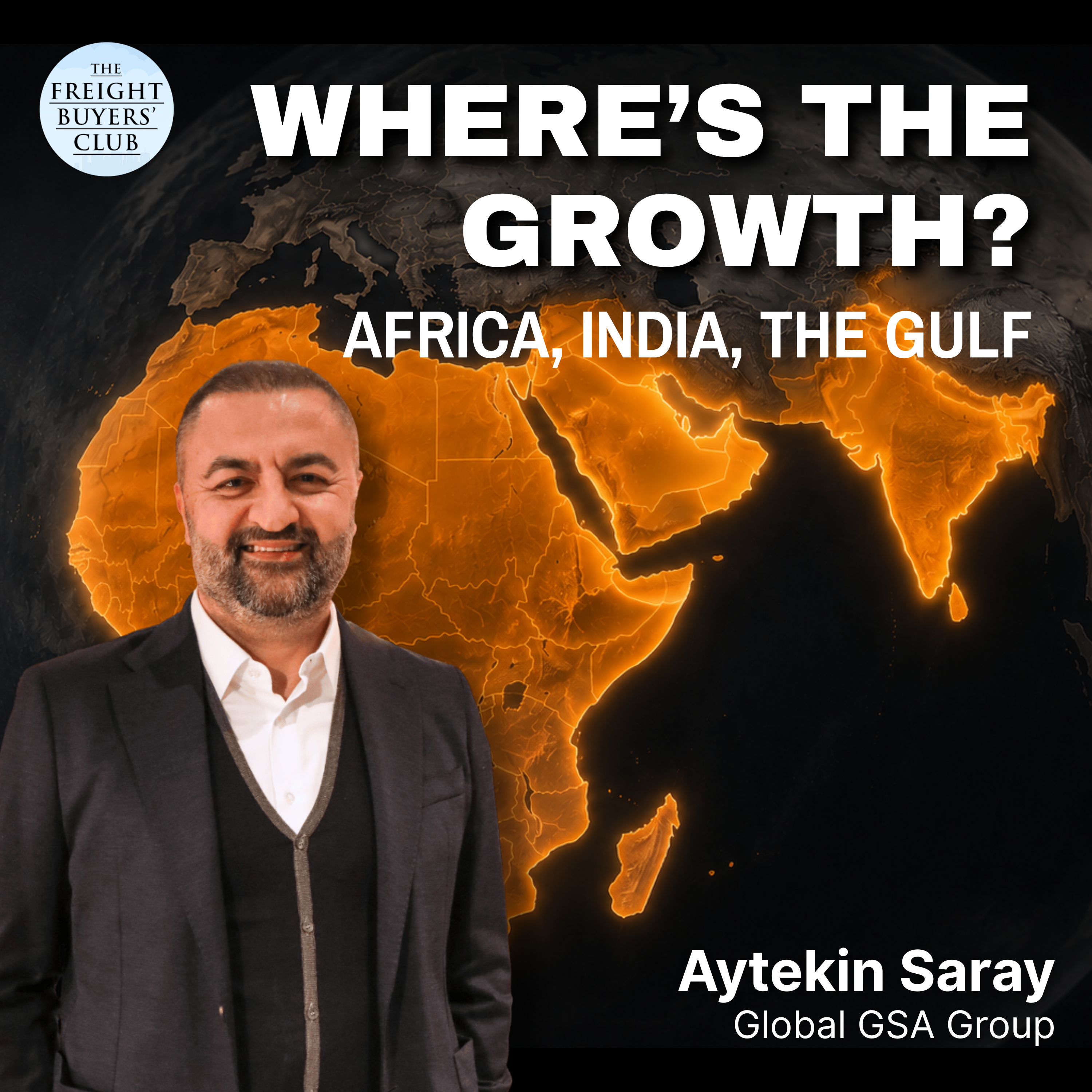
[00:03:43] Speaker B: Absolutely. For us those are all chances. Of course, especially for global, you have real players who are more or less everywhere. But Africa is still a big gap. In my opinion, the Indian subcontinent for us as global is a big gap.
South America is something where we have now already three, four countries. We have a footprint inside, but we can roll it out to more destinations here inside. And this is all spreading the risk one way or the other way to be merely a global player in this GSA business.
[00:04:14] Speaker A: When you say those areas like Africa or India are a gap, what do you mean by that and how do you fill that gap?
[00:04:20] Speaker B: If you really look to the existing GSA networks, not all of them are really active over there. Africa is a big gap, so even the competition is not really active over there.
The Middle east, for example, we don't really have GSA companies setting up like global, like ECS or World Freight Capital. And these are in my opinion niche markets where we really can develop this for the, for the future. And this is definitely an opportunity where I say like, okay, we would like to jump inside that and we need to be one of the first ones jumping around over there. And I think it's a good opportunity to grab that chance.
[00:04:58] Speaker A: Have you got a timescale for how you see that rolling out?
[00:05:00] Speaker B: We are already now looking into the Egyptian market, We are in the Pakistani market. This will be launched any moment that we have set up from zero something over there and we have already airline partners signing up with us. So yeah, step by step we are looking into the region. Saudi is another one where I'm really interested in, to open up something as a representation and then see what's going to happen for the future. But there is a trend that for the future these markets will develop 100% it's going to happen.
[00:05:31] Speaker A: With some of these developing markets, do you face any particular challenges with, I don't know, maybe the operations efficiency or the infrastructure?
[00:05:39] Speaker B: Yes and no. I mean infrastructure in one way for me it looks like, you know, sometimes you think like, okay, hey, I don't know it like this and is it going to work? But surprisingly, for example, when I was in, in Pakistan, the, what is it the last three months really jumping in and out.
Surprisingly, it happens. It happens, you know, so it's, it's also very fast. So at one point it looks like a little bit chaotic. But at the other side, once you know how the system ticks a little bit, once you know how the market and the people tick, then, then I can really fastly anticipate to that and make it happen. So yeah, it's good. In my opinion instead of having so many rules and then trying to find your way in between, you can easily do that kind of thing. So it's good. I think it's very easy.
[00:06:29] Speaker A: If your supply chain runs through Asia, why not work with a company that has been connecting Asia with the world since 1971? Demerco Express Group.
You've talked in the past about GSA and being a hyper integrated partner. What does that mean for your airliner customers or what does that mean for people who are moving freight?
[00:06:56] Speaker B: Yeah, for us, you know, compared to, how can I say that? Compared to the past. Today with Global GSA Group, we have these tech solutions with what we have in the group Pardotech and everything that is behind it there that the business cannot continue as it was in the past. This is clear. But what we want to do with this hyper thing is that we would like to introduce all the high tech stuff, what we have inside to the customers. We believe in that a pure GSA side will not work, but pure, the technical tech side will also on a budget. And the combination of this will definitely make the difference for the future. So for certain airlines, for certain weight grades, for certain shifters, we are very fastly integrating all the high tech opportunities we have in our hands so that we can serve our customers much, much better. Especially with the younger generation today they are much more in the, in the computers and on emails and everything. I was in the past picking up the phone and doing my things with the phone.
[00:07:58] Speaker A: Yeah, yeah, yeah.
[00:07:59] Speaker B: We all went we all went absolutely. So but that that changes and in this concept we are trying to be one of the leaders inside and I think we are on the right track to implement all those stuff and you know, if we can bring it to certain level that it is acceptable for the market but also for my company because I still believe that it is people's business to make the next step for certain carrier or region that then that's going to definitely be worse.
[00:08:28] Speaker A: So I think you're part of a bigger group that's got, it comes with well within that group there's plenty of automation tools or AI tools. How does that help you and is there a threat with all of this technology that maybe we lose the human element? I mean are people still going to be making phone calls in five or 10 years?
[00:08:45] Speaker B: I'm maybe a little bit old fashioned but as I said I'm the telephone guy from the past and I don't think that this is going to be happening. You have these high tech companies who said ah, GSAs are not necessary and today you see a shift over there going to the GSA side. We are in the GSA business but we said also hey, for certain airlines, let's say who has so many booking workload, the pure getting new people, new people, new people and the compensation for that doesn't work. So we need to implement the high tech solutions inside and it's a combination. So we have the infrastructure of the GSSA already everywhere and we have also in house Targotech, our you know, IT developer who can bring all these high tech stuff inside and the combination will definitely make the difference because pure the system does not bring me the shipment what I need to survive for the next next round. But if you have let's say a carrier size Turkish Airlines who has, I don't know, 3000, 6000, 8000 shipments a month for example. Yeah. For a smaller weight rate you need this automated system in order to win time and in order to be able to reply back in time the emails, let's say for the customer. So in that respect we are winning of course with the combination of GSA and the high tech.
[00:10:00] Speaker A: What we have here, do you think? Well, maybe not necessarily just this but maybe it'll play a part. We see in most elements of the supply chain a degree of consolidation. You know, even within your group there's more than one gsa. So are we going to see more consolidation do you think? And where does that leave you?
[00:10:17] Speaker B: I think yeah, I think that that one way, the other way is going to happen.
You see that of course, with the forwarding side, through what is it, the last 10, 15 years there tremendous changes has happened. And with the GSA side, the traditional gsa, let's say, where you say, like, okay, worldwide players, you have maybe two, three companies who are doing this business. If you go to local heroes, you have many, but today too many.
Everybody is a little bit having capacity left and right. They call themselves GSAs and they pop up on the market and without any control. How can I say that the rate policy or really some kind of a sales policy in hand, they are killing the market sometimes, which is affecting everybody, you know. And I think that there definitely something is going to happen. And as I said, we are already part of a bigger group. So if one day our group decides to do an acquisition left and right or go together with another group. Yeah. Then that is inevitable. That is going to happen. Definitely.
[00:11:17] Speaker A: What does winning look like for you in that conversation?
[00:11:20] Speaker B: For us, at one point you start to see yourself like a capacity provider. So GSA is one thing, but if you take algog, I think, if I'm not mistaken, about 7% market share worldwide is a number. This is something.
And yeah, the bigger your capacity gets, what you have in your hand, the more you have coverage, the more you can also. How can I say that? Sit in front of the large forwarding companies or maybe even the E commerce guys and offer them worldwide solutions. What covers us for the future today? In the past it was only yingjsa selling purely the capacity. But today, from being GSA for certain smaller airlines, up to total cargo management, we can manage for that, you know, up to trucking, handling, everything included, we can do that. And when I started the business, this was for me like a dream, let's say where I was like, okay, how is it possible? Is it going to happen one day? But we see that it is happening. So the more power you get in terms of capacity, in terms of worldwide coverage, the more things you can also produce for the future for the industry. This is for sure where I believe in death and entry.
[00:12:31] Speaker A: As you mentioned, the future of the industry.
Let's finish on some projections. If you had to pick three, what would you say were the biggest three trends that people should be watching when they look at the air cargo supply chain or the demand and supply side that affects it?
[00:12:46] Speaker B: I think from my side, yeah, this consolidation part for the GSSA is something that we have to be alert on. Let's say this can make a big difference.
I'm curious about The Amazons and the Timus and oh my God, what they're going to do, you know, one is selling cars, another one, do they want your business?
I don't know. That is something what is making me a little bit more curious, let's say.
But the ITR side, you know, and the airline side also because the larger airlines are, when they, when they reach a certain point, they think that they can do everything themselves worldwide. But then small conflict happens left and right. They start to cut jobs and they start to get salaries and they start to cut their everything. So I think, you know, we are there as a GSA and I think we can make a very good combination of and complete each other in this business. I predict that 60, 70% for the future will still look into the GSA sites and it does not mean that they have to give everything to us. We can do it partly we can do it jointly, we can do, I don't know if they want worldwide for them Total Fargo Management, but at the other side you have so many other airlines, regional airlines or local airlines popping up, low cost airlines popping up where they in the beginning do not see cargo as you know, as a money maker but at the end the flight is going back on work.
[00:14:17] Speaker A: Yeah. Yes.
[00:14:18] Speaker B: And with these total Cargo management packages what we are offering left and right, they all of a sudden see the millions and millions coming inside and they think hey, what is it? I mean the past was empty, was not used capacity and today we get 15 million, $20 million for the capacity what we have anyway in the 5. So I think there also there are many opportunities popping up and coming up in the market where we can definitely be a partner inside and make a difference for them. And every penny counts at the end of the road for us, but also for these carriers because the air freight is not cheap and it will not be cheap for sure for the future.
So there we have to see how we can make the maximum out of the market for the whole industry taking sere.
[00:15:02] Speaker A: Thank you very much for joining me today on the Freight Buyers Club.
[00:15:04] Speaker B: Thank you very much.