Episode Transcript
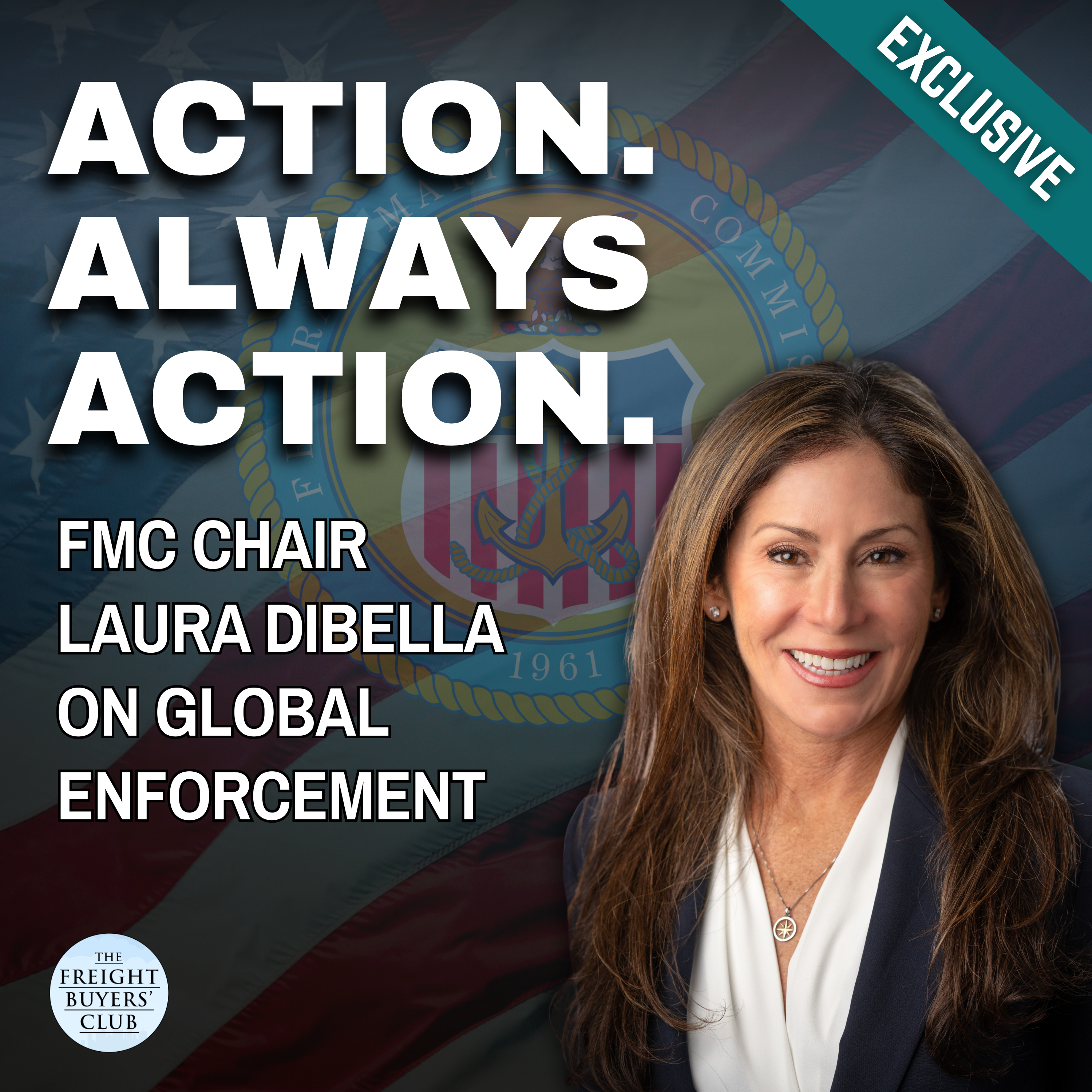
[00:00:03] Speaker A: Welcome to the Freight Buyers Club. This content is produced with the Miraco Express Group, your best supply chain partner option in Asia. And I'm Mike King. Coming up is my exclusive interview with Laura DiBella, the new chair of the Federal Maritime Commission, which originally appeared in our TPM 26 preview episode at the start of February. We're releasing this as a standalone because Laura makes some significant statements every shipper needs to hear. She's shifting the FMC from reactive to proactive, investigating checkpoints, shadow fleets and rail bottlenecks in middle America before they become crises. She now calls the FMC a consumer protection agency with the power to penalize foreign governments that block American cargo. If you're buying freight or managing international supply chains in 2026, this is essential listening. Enjoy.
And now I'm very excited to say that I'm joined by Laura Dubella, Chairman of the Federal Maritime Commission. Laura, congratulations on your confirmation.
Quite a start with a government lockdown to kick things off. How are you?
[00:01:04] Speaker B: I'm great, I'm great. I'm a little cold, you know, a little chilly. But we're out of the shutdown, so it lasted, it lasted a lot shorter than, than this, this cold snap that we're experiencing right now. And I'm grateful.
[00:01:18] Speaker A: Well, thanks so much for coming on the Freight Buyers Club. We're glad to have you. You've got this fascinating mix of experience. You're Florida Secretary of Commerce, Executive Director of the Florida Harbor Pilots Association.
You've got it's business, it's lobbying, it's shipping, it's politics. Do you think that mix stands you in good stead at the fmc considering you're dealing with other arms of government and then this wide array of stakeholders?
[00:01:45] Speaker B: Yes, definitely. I mean, I've been fortunate enough to wear a variety of hats, both land and sea related and public and private in all aspects. So I like to say I have a pretty proprietary view of the economy, of the global economy, because when you're dealing with economic development at the highest level, but then also at the most granular level, you know, at the county level. So when I first started in economic development and also commercial real estate, you know, you understand, you know, really where the rubber meets the road, but then you, you understand how to look at things from a 30,000 foot perspective and, you know, and all the intricacies and nuances in between. So, you know, I feel very lucky to, to be where I am and to have the experience behind me and be able to talk the talk but.
[00:02:34] Speaker A: Also walk the walk as you sort of reference there. The global trading landscape has been shifting the last few years, particularly right in front of our eyes.
I'm just interested in how this plays out in terms of your ambitions for the commission. I mean, this is a TPM 26 Long beach preview. So what should US industry, US shippers in the international supply chain sector, what should they all expect from your chairmanship, chairpersonship, however you want to say it?
[00:03:04] Speaker B: Definitely.
I want to say more of the same, but a much more expanded global overview of how the US shipper is interacting in the global transportation space and any of the areas that we can help address and help make things more efficient, more competitive and just altogether easier so that commerce can move quicker, people can make more money on all fronts, you know, public, private, you know, whoever it is. And just to keep our economy going, you know, there's always room for improvement. We've changed our, you know, kind of a little bit of a pivot over the past couple years to go from not only continental United States, but take it global. And I see that happening a lot more and I would love to have it to happen a lot more. I think our charter is so broad, it allows us to do so much and I think we've only scratched the surface of what we can actually do.
[00:03:59] Speaker A: Just on that the international reach of the fmc. I'm very interested in exploring that. You did say in another interview, I think it might have been for a good friend of this podcast, Paul Berger at the Wall Street Journal. I think you told him that now is the time to really put our foot on the gas and that President Trump is mandating we resurrect US Dominance in the maritime arena. They are quote, what does that look like in practice for FMC policy and American shippers and that wider global community?
[00:04:29] Speaker B: I think, well, it is always, it's always a benefit to have the support of your president, you know, and what you are looking to do. You know, the FMC is not new as you know, has been around for a very long time. But you know, the focus and attention on maritime altogether has really not been there until, you know, thanks to, shall we say, Covid. But then, you know, you know, really thanks to our president today with what is happening, you know, the monies and resources turn towards, you know, shipbuilding, you know, everything as far as US interests are concerned. But then also it's our. That's not in our wheelhouse, of course, but we're certainly supportive of that. But then how can we, the FMC help on the American shipper side which certainly supports the industry altogether. So we want to take advantage of this time and really, really exploit all of the attention and the love that we are receiving and want to enact the policies, you know, in the best way possible. Let's face it, we only have three more years with this president.
So we need to hurry. Things don't happen quickly in our world, and we need to hurry and get the United States, you know, at the forefront, get the attention that they need, and get American cargo, you know, where it needs to be, as quickly as possible.
[00:05:44] Speaker A: No one's ever asked me to sort of take on a role like you've got here. People listening will not be surprised whatsoever about that. What's that process like? How do you get told, okay, this is your. Part of what we're trying to achieve. You know, who has that conversation with you is that the president is. Just take us through that process of the commissioning element of it?
[00:06:03] Speaker B: Yeah, it's. It's the President through his staff. And then, of course, you know, with. With my amazing team here that has been working as long as they have on many of these priorities. So really delving into our charter, paying attention to what's happening in the world day in and day out, there's quite a bit of reading that we all do here in the agency. And we look for market signaling. We look for all sorts of things that could touch on areas that we could be of assistance. Of course, we get a lot of feedback from the private industry, just the community at large, which helps elevate certain concerns.
But certainly we understand the overarching priority which is protect the American consumer, you know, have a more efficient, competitive global transportation system. But at the same time, you know, where are the pain points? How can we help through and understanding all the, you know, the four corners of our charter? What can we do about it when these issues, you know, good or bad, arise? How can we not only be reactive? And this is like what I'd like to say is a big difference from maybe past to present, not necessarily under me, but continuing through me is the more proactive stance rather than the reactive stance that the FMC has had. How can we help moving forward? Not how can we look behind us and say, oh, well, that shouldn't have happened?
[00:07:26] Speaker A: Well, I'll come back on that because in terms of how I know the FMC from covering this industry for many years and how a lot of people know it, it was about competition, contracts, commercial disputes, detention, and demoria.
Making sure carriers offer space on fair terms, making sure alliances are Fair as well.
But now you guys, you're investigating global choke points, shadow fleets, foreign policy barriers, almost. It feels like a really big remit. Can you explain? I mean, maybe give us some examples. But how do you going about investigating all those other things on top of what you already did? It seems like a big workload.
[00:08:06] Speaker B: It is, it is. And for a mighty team of just over 100, it's. How do you address the priorities and really have an efficient system in place here? So we're handling it quite well and the team is excited, quite frankly. I mean, everyone here at this agency is very passionate about what they do and certainly passionate about what can be done. And that's the, that's like. What I'd like to say is the overarching sentiment that we have here is that we all, I think, quietly understand that there's a lot of Runway ahead of us that we can really tackle as far as supporting the US shipper. So it's really by taking on these new and exciting perspectives, shall we say, or initiatives that are taking a wider lens at the global environment, that's really the exciting point. And what can come out of that and again is what are we going to determine on, on these investigations? I can't say just yet. I mean, you know, we.
[00:09:09] Speaker A: How would you go about looking at a choke point like Malacca or Suez though? How, how do you get into that?
[00:09:15] Speaker B: Well, because it will affect the US Shipper. So how, how, you know, the, the litmus test ultimately is, is the US Shipper affected by this choke point? Yes or no? Yes. Okay, then that's where it goes into the, you know, the investigation column. So same with Suez, Panama Canal, you know, all of the other areas that are mentioned, you know, the Arctic, you know, anything like that.
So that's ultimately the question, the basic question that is asked when anything comes to us, be it an investigation or otherwise, is how is the US shipper affected by this? Or are they. Are they. And then how. If so.
So that's how we, that's where we begin. And then, you know, while we unpack, that there could be, based on the information that comes to, with these investigations, is how we determine how to proceed, either be it within our agency or with, you know, some of our partner agencies that we would work with. So.
[00:10:10] Speaker A: And who would that be? Like the State Department? Other arms of government?
[00:10:14] Speaker B: Yeah, it could be State Department, it could be Department of Homeland Security, it could be Coast Guard, you know, it could be Navy, it could be anyone. It could be anyone. So it really just depends on what and what the conclusions we make within. And then you know, how, how best do we address whatever information we, we uncover?
[00:10:33] Speaker A: So if there's like an investigation into Suez, just so I understand. So you would go, okay, there is, there has been issues for us shippers, obviously because of what's been going on in that region and, and the Houthi attacks on shipping going through the Suez Canal has been closed the best part of two years for most container shipping. We all, we know that so, and we know no one really wants that to continue. But what else can the FMC do beyond that? Is there anything there? I'm just trying to understand, get to the bottom of it.
[00:11:00] Speaker B: As far as the Suez, I can't say because we don't have the information back on that. But probably a better example when you're saying how can we be to help your constituents understand where we take these investigations, our Spain investigation is probably a good one to really bring.
[00:11:24] Speaker A: This goes back to 2024. This is three US flagged naval related vessels were denied access to ports in Spain. Right?
[00:11:32] Speaker B: That's right. That's right. So that investigation is still underway. So I can't say really how we're going to dictate where things will land, all of that. But if we determine that Spain did behave in such a way that prohibited US cargo at ports, they could face penalties, they could face sanctions, they could face denial at our ports. That's the type of outcomes that could potentially happen. I'm not saying that they will.
Once again, we'll know better once all the information is received and determinations are made. But that's just again, the simple authority that we have that we can exercise on a global scale a little bit different. As far as you're talking about the choke points, the Suez Canal. But again, it's unpacking information that perhaps would be helpful to our partner agencies. Maybe not something that would be helpful for us.
[00:12:31] Speaker A: Okay, I see. So there'll be a research element to some of this.
I get you.
When we think about, I know, supply chain pain or call them choke points, whatever, often these are down to things like port access, equipment shortages.
I mean almost anything, not enough capacity at a port and these things happen for all. But other times it's like mistakes. Think Baltimore. Think of the blockage of the Suez during the Suez Canal during the pandemic.
Is there a place somewhere down the road where the FMC looks at these as regulatory issues rather than just things that happen? Is that what we're saying?
[00:13:08] Speaker B: Yeah. And I can, I can actually point to another investigation, you know, with like, flags of convenience. So the flags of convenience investigation, I think, kind of goes down that road in a sense where we're raising the issue. The issue is there, and many in the community obviously understand it very well, but we're raising the issue even further to the highest levels of government, saying these flags of convenience are a threat to not only our environment, but to our economy and for this, this and this reason.
So to take it from the seafarer standpoint and their safety from the reputation standpoint of the industry, but also just the economic carnage that could happen to a port state should any of these dark fleet vessels or flags of convenience type types, you know, experience a terrible catastrophe on the water.
So it is.
We're so used to this us in the. I say we, you know, the industry, we're so used to this conversation day in and day out, but they're not.
So it's, we're really taking, taking this investigation and saying, hey, this is something that needs, needs to go beyond us and policies need to be established at the highest levels to ensure that this doesn't, that we're, we're not faced with these, these problems, nor anyone else for that matter. I mean, yes, we're talking about the United States here, but the US Shipper, but certainly many others would benefit from that exercise.
[00:14:35] Speaker A: We've seen the dangers right before our eyes with the, the shadow fleet of tankers. So flags of convenience is, is another step.
Could we see a safer shipping in the future then? And if so, does the FMC and related government parties in the US have you got that ability to take on a judge and jewelry role rather than a referee for global trade? Is that, is that how we could view it?
[00:14:58] Speaker B: I think so, yeah. I think so, definitely.
[00:15:01] Speaker A: We're certainly talking about more power than the IMO have got.
[00:15:05] Speaker B: Perhaps. Perhaps. I mean, we, we have the, you know, we're.
I read this term the other day and I agree with it wholeheartedly. You know, we've become more of a consumer protection agency. So what does that involve? It could involve a lot of things, a lot of responsibilities and directives that could ultimately come about in different ways.
[00:15:25] Speaker A: For freight buyers, if they're seeing repeated bottlenecks or denied access, or they're not getting, they're not getting the sort of services they want from carriers.
Should they be documenting all this and bringing it to the fmc? And if so, what would you say to them in terms of what you need from them?
[00:15:41] Speaker B: Yes, yes. To start. Absolutely. And I would say as much, as much information as possible. I mean, what we don't. Again, this is Laura dibella speaking here.
We don't want to be the. We don't want to penalize people constantly. Like, it's not our job to penalize people. What we want to do is shape policy through enforcement.
So if we can address an issue before it gets too far, before it becomes too egregious, we provide the arena for that complaint to be addressed and hopefully remedied before it gets to a nuclear point. So I welcome open dialogue for shippers that are experiencing any issues, good or bad, to communicate with us, with our agency because it only helps us do our job, do our job better. But again, I don't think it's ever too early to start communicating with us if there's something that they've identified that could, could hurt, harm what, what they're trying to do.
[00:16:42] Speaker A: Just pulling back from sort of the. I guess we've gone geopolitical a little bit, pulling it back a little bit to the.
To the more mundane supply and demand balance in container shipping. Now, most analysts would say we're looking at a bearish market in 2026. There's way too much supply, not enough demand. Is there anything you're going to be keeping a close eye on in terms of the service levels that American shippers will get?
Maybe linked to things like blank sailings, reliability, anything like that? Service levels, Put it like that.
[00:17:15] Speaker B: Yeah. I mean, in this, no matter the environment, you know, robust or a bit weaker, you know, as the projections are calling for, an area of concern that has come to me just in this past month, you know, that I've been on the job, I think it's officially one month today, is largely has to do with the interior, going back to what we said before. So the central Middle America is experiencing issues with containers. They have their own choke points as it relates to rail and containers and chassis and so on and so forth. So there's, you know, when you're talking about a slowdown that I think will only make that problem more acute because, you know, the containers are definitely not going to get to the interior, you know, at that point. So that's an area that is really rising to the top, shall we say, as far as the area that needs to be addressed in a pretty immediate way, especially after the recent weather events that we've experienced here. You know, they've exposed many of the Achilles heels that still exist in middle America and on the coast.
[00:18:26] Speaker A: Okay. So really looking at that domestic leg of international shipping as well. Just the last one, Laura, to finish up.
So a statement of intent to finish. When shipping lanes tighten or foreign policies disrupt American commerce, what should the industry expect from the FMC under you? Would it be observation, investigation, or action?
[00:18:50] Speaker B: Action. Action. Always action, always action. I mean, we're, we're, we're happy to observe.
[00:18:57] Speaker A: I handed that one to you.
[00:18:59] Speaker B: You did, you did. You absolutely did. So. No, I. Always action, always action. I mean, we're, we do all of the above. We do all of the above. But an action oriented person and certainly, you know, all those that, that work here, I, I defer to action all day long.
[00:19:17] Speaker A: Laura DeBella, chair of the Federal Maritime Commission, thank you very much for joining us on the Freight Buyers Club today.
[00:19:22] Speaker B: Thank you.