Episode Transcript
[00:00:03] Speaker A: Welcome back. This is Mike King and I'm here with Nigel Pusey, the CEO of Container Trade Statistics. So, Nigel, China losing share into the us beholding strong into Europe. The boxers are presumably going from China into somewhere else. I'm hinting we've heard a lot about Sub Saharan Africa and South and Central America as growth market. What are the numbers?
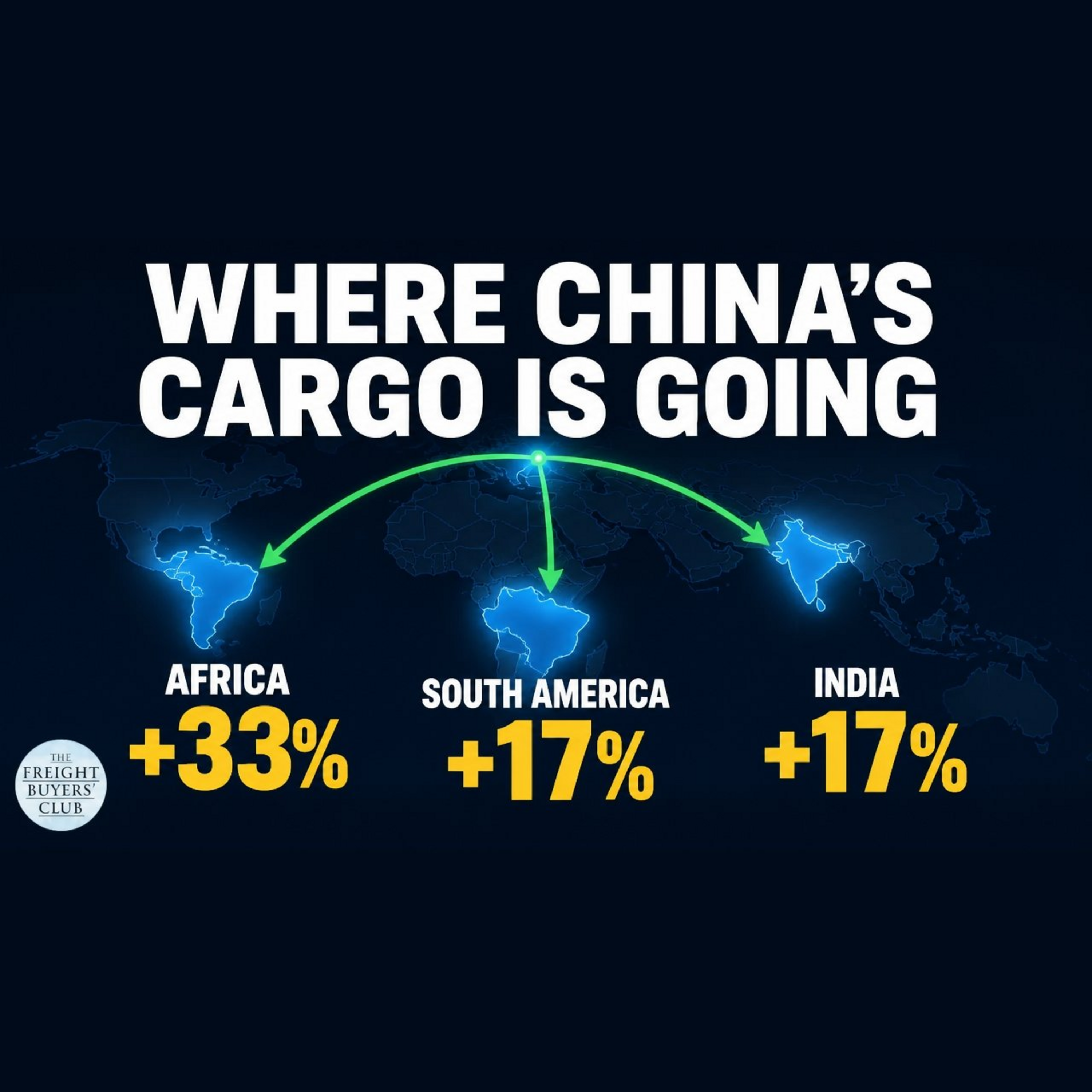
[00:00:24] Speaker B: Yeah, so Sub Saharan Africa as in first quarter is still up 33%, which is incredible volumes. It's a, I believe it's something like a million to use more extra into Sub Saharan Africa than this time last year, which is quite, quite something.
Pretty much driven all out of China largely to West Africa though East Africa is catching up.
So that's the very big one, South America, central. South America is up 17% and that's pretty much largely east coast, largely east coast, Brazil's etc.
And then the other one, which is slightly hidden by what's going on in the Middle east is India is also 17% up year on year. So we've got this constant and this has been now going on since the Q3, Q4, 24. And that's my point earlier that before Trump was even in place, China had made a clearly conscious decision to start moving cargo and finding other markets because they were going to lose, you know, lose it out the volumes to the US and this march into these, the southern state, the southern regions has now continued now for pretty much 18 months. And I don't see it decreasing unless the oil price gets to the point where it starts to affect the GDP increases in the Nigeria. So this is an investment led at its first level is a lot of investment coming in, but it's also an element of consumer demand as well. And that may tail off if the oil price continues to rise for the rest of the year.
[00:02:03] Speaker A: That sub Saharan Africa, up 33% really struck me. It just made me start thinking about quite a few of the little other things that are going on economically. This feels to me like it's a long play for China because they've been investing and building infrastructure right across Sub Saharan Africa or large swathes of it for various reasons. Some of it's to get hold of resources, some of it's to build political capital, some of it's to make money on those investments. We've also seen though, at the same time massive investments in ports and logistics just from European carriers as well as from China. Is that enabling these sorts of numbers, do you think?
[00:02:43] Speaker B: Yes, I don't think it's something you'd achieve this Volume growth in the likes of Lagos or Timor or if you didn't see some significant improvement in port efficiency, I mean you can load as many boxes off you like, but if you can't get them to their final destinations rapidly, any port congestion as we've seen during COVID years can happen quite rapidly. So I think we're definitely seeing a massive improvement in the quality of port terminals. We're seeing 20,000 TEU ships go into Lagos and this is almost unheard of, you know, even five, six years ago. So yes, you did need port efficiency and, and largely because I, you know, for instance, one of the big projects that we've been looking at is this railway in the Western Africa which is, I think they call it the Great Belt Railway or whatever that has had this massive import of Chinese machinery going in in terms of building that infrastructure project.
It's a UN based project, but China's the major supplier of goods into it because they're the only ones with the sort of machinery capability at the price they can afford. So West Africa is having a massive logistics revolution it seems to me at the moment. And it's going to be fascinating.
We're starting to see exports come out the other side, which is a fascinating change. You've got lots of capacity going in there from the lines, which is driving the price index. You know, I mean, I think the price of cargo out of West Africa is half what it was this time last year. And that's largely driven by lines going, gosh, we need to be into this market suddenly getting a large amount of capacity in there and price dropping to cope with that capacity increase.
[00:04:28] Speaker A: Bigger ships, more capacity.
[00:04:30] Speaker B: Yeah, no, exactly. So, and that's the way this trades. What, these trades work?
[00:04:34] Speaker A: Yeah, I've seen that, seen that myself a little bit in East Africa. The new railway from Mombasa into Nairobi and then there's roads right through Uganda filling into the whole Rift Valley area. I mean it's revolut. There's been a hangover there in terms of what people think about those Chinese investments and who's benefiting from them. But there's no doubt the infrastructure is massively improved and that creates lots of
[00:04:55] Speaker B: business opportunities for import, export and again there, Mombasa is a classic example of the port which probably didn't function.
Everybody believed it could function well, it just needed somebody to come in and manage it, you know, who had the experience and you know, and there are a lot of big international pork companies moving into these areas and Mosbasa has had a massive value increase. You know, we overshadowed by what's going on in West Africa. But East Africa has similar, similar increases in the last years as well.
[00:05:25] Speaker A: Well, if anyone wants to check out a feature I did last year on South Africa, the good, the bad and the anc that really does dive into how port efficiency can benefit or hinder trade. I think you could probably see what's been going wrong in South Africa has been going right in West Africa.