Episode Transcript
[00:00:03] Speaker A: Hello, Mike King here. This is a clip from a recent episode of the phrase Buyers Club produced with the kind support of Democo Express Group. In it, I'm talking to the ever excellent Elna Had Lund, who's the port specialist at Drury.
We're looking at how the closure of the Strait of Hormuz is rapidly reshaping logistics and and investment across the Middle East.
Welcome back to the Freight Buyers Club. I'm Mike King and I'm with Elna Hadland. Elna, I think we've heard quite a lot about port not doing quite enough to keep up with demand, but I think there's also plenty of evidence out there about how quickly these investments can happen when necessity bites. Let's have a look at the Middle east because I think that's what we're seeing over there.
So on the one end of this scale we've got DP World's flagship Hubbard Jebel Ali. They saw a 90% drop in throughput in Q2 for obvious reasons around the Hormuz closure. It's knocked it straight out of the world's top 30 ports. Before we look at the huge investments happening in the region, can you ever see Dubai or some of those other big Gulf ports fully recover their volumes or even their status? Because when I'm looking at it myself, if I'm being honest, I find it hard to see a future where people really view the Gulf and Hormuz as risk free again, even though I understand things can change geopolitically very quickly indeed.
[00:01:36] Speaker B: I'm with you, Mike. It's a difficult, I mean, we're still, it's a live situation, we're still in the middle of it, but it is difficult to see how you could ever re establish that status quo. Given the players involved. It would need to be a major event for a back to normal type scenario to emerge.
So I think just reinforcing that, the future for the ports within the Gulf actually just remains really, really uncertain at the moment. It's a really challenging time.
[00:02:02] Speaker A: Okay. What we have seen is a lot of supply chain innovation, basically frenetic workarounds. We've covered this quite a lot on the Freight Buyers Club. So I'll just summarize it.
Essentially what we've got is a whole bunch of long overland routes have been established to reach the Gulf while also avoiding Hormuz. This is from outside of the Strait or it's across from the Red Sea or it's overland from elsewhere. Even as far as the Mediterranean. It has been a good time. Let's put it that way to own a trucking business in that region. There are signs though that these routes might become more permanent over time. Trade and oil pipeline investments are moving forward, but we're also seeing some huge bets on new terminals and I'm going to run through a few of those.
First Corfican, still inside the UAE but outside Hormuz. We've got a $2 billion investment pledge there. The plan from Gulf Tayne, the operator is to take it to 10 million TEU capacity port within three years. And already since start of March, weekly throughputs up from 8,000 TEU to 65,000 or thereabouts.
Fujairah again still in the UAE but outside the Gulf. DP world obviously of Jebel Ali fame in Dubai, is investing hundreds of millions there. Now over in Saudi Arabia at Jeddah, we've got a new $434 million terminal on the Red Sea side. This is a joint venture with French container line cmacgm. So a container line buying the capacity it needs there.
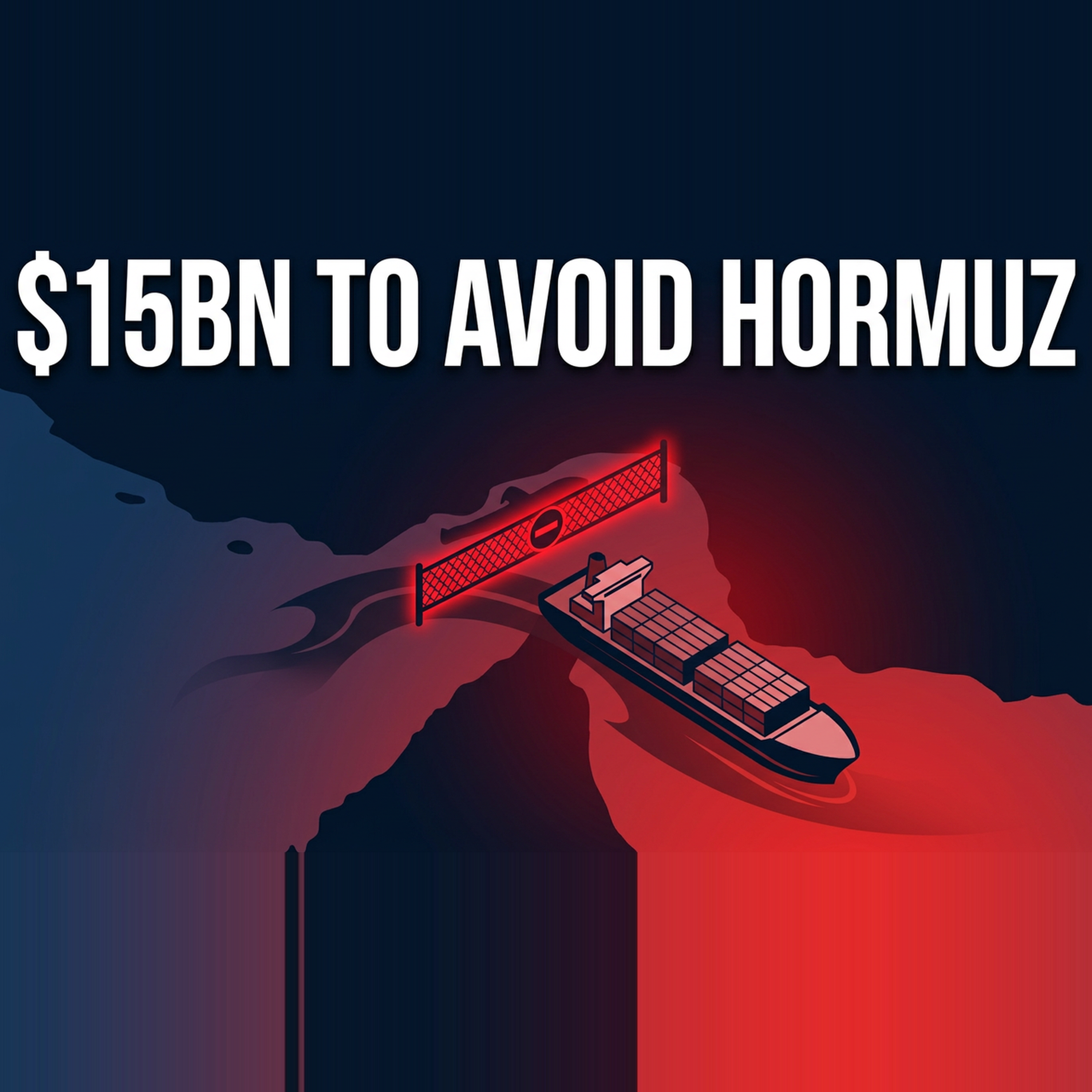
And in Oman, Solala's revenue up 20% already plus a 3 billion dollar rail line. A new overline corridor is being built. Skip the strait entirely. Again, those terminals are outside the Strait of Hormuz. So there's just four port related developments looking at about $15 billion plus committed in just a few months since the outbreak of war.
Is this, Eleanor, is this just hedging against future conflict around Hormuz? So like a Plan B or do you see this as a long term strategy designed essentially to de risk trade with the Gulf and these developments are happening almost in real time.
[00:04:20] Speaker B: Well, also let's not forget that DP World and APM Terminals have done a joint venture in Jeddah as well. So certainly I'll just take Jeddah. That's a separate thing, separate market. Jeddah is a viable commercial port in its own right. Very different prospect. So I think we just need to look at the UAE and Aman projects separately. So Jeddah commercially viable, although predicated on Red Sea security situation improving.
When we look at the projects that are in direct response to the straits, I think it's important to remember that some of these were in process before the situation. So it's always been an issue at the back of the mind, Oman wanting to have rail links to the upper Gulf and seeing it as a potential gateway, albeit with obstacles to overcome. They've been talking about rail for a long while. This has been an accelerator for the UAE ports. It's very much seeing this whole situation of efficiency versus resilience playing out in real time. Absolutely.
So important to view these as you've already done in the context of what else are they doing? Because there's more important trades to the Gulf than containers. So obviously a lot of containerized trade is the food and provisions and the manufactured goods that people rely on. But the wealth comes from the liquid bulk trades. So what are they doing there? And if they're putting in place resilient options for these trades, then putting in place resilience investments for the container trade is just as important.
So I very much doubt actually looking at them, that these projects would stack up commercially, which is why they've not been delivered to date. There must be some kind of government guarantees written into all of these concession agreements or contracts for the construction.
And I think it comes back down to necessity. Accelerating and pushing forward processes. So core for Kahn has definitely moved up. But the processes you would normally have in place to basically shift from being a clan shipment hub to being a gateway hub, they haven't got the gate facilities, they haven't got. They're doing bonded corridors and they're moving goods towards ports which have got the processes set up because they've had to.
So longer term, these alternative gateways, they're going to need to look at those processes and almost like move them back into the customs processes, the finance processes and everything else that goes on at a port will need to be relocated and redesigned around alternative gateways as well. So it's not just about the infrastructure, it's about getting those processes that sit behind trade upgraded and realigned to the new normal as well.
[00:07:00] Speaker A: If your supply chain runs through Asia, why not work with a company that has been connecting Asia with the world since 1971? DiMerco Express Group, just on Jeddah. I was over there less than a year ago, so before the war, at a grain and bulk shipping conference actually. And it struck me that maybe they were ahead of the game here because Saudi's been freeing up the grain market. It wants to become a hub for the gcc. It was building storage facilities, the rail system was being upgraded. So it could always be the like, almost like a reserve in case of these sorts of problems happening in the future.
It's almost like they would already imagined. Unlike some of the major players on the geopolitical front now, Hormuz could be closed. But do you these investments on the container side at Jeddah, were these. Did. Were these moving forward prior to war or they've been accelerated or have these been started because of war.
[00:08:02] Speaker B: I think the two investments of Jeddah were prior to or the two announced investments were prior to the Iran crisis as it stands now. But I think Saudi's got unique geography in the fact that it has two major gateway ports at Dammam and Jeddah and a major market in the center of the country. Therefore investments in cross country transport were already in place plus its Vision 2030 projects was looking to diversify the economy and carve out a new role for Saudi Arabia as a regional logistics lead amongst many other things, tourism, sustainable energy, all kinds of other things going on under Vision 2030.
Certainly the war will have accelerated this but they've got common investors across majority of the port sector with the public infrastructure fund holding shares in all major ports and they've been very proactive in developing ports beyond oil and gas.
So I think we just need to recognize Saudi as it wasn't that it was doing this specifically in case of war, it just happened to be better prepared when the war came because of its unique geography and its long term vision to diversify its economy.